
 EN
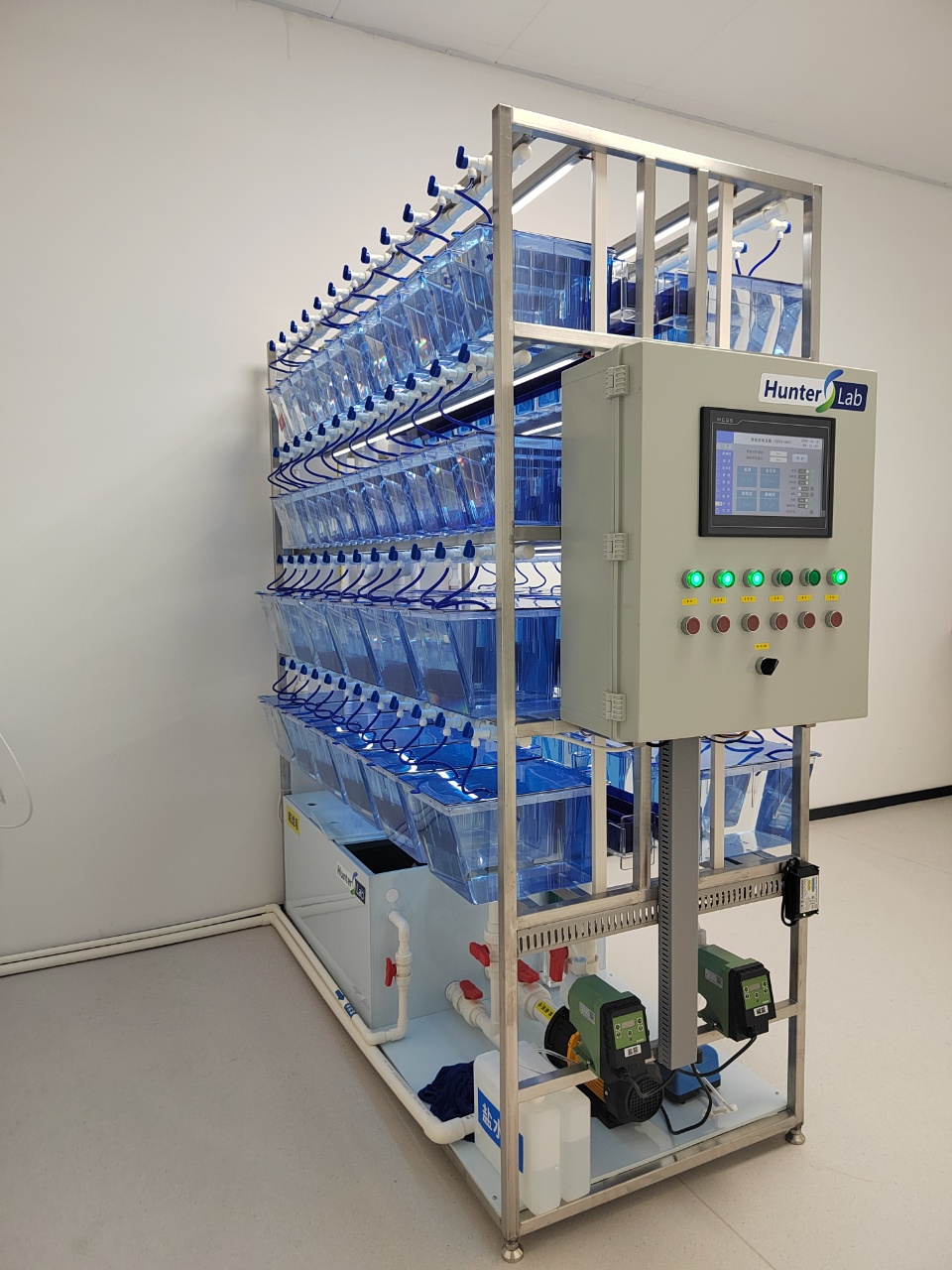
Light Is a Cue the Reproductive Axis Reads
Zebrafish do not spawn because a calendar says so. They spawn because light, temperature, food, and social cues line up in a pattern the brain can predict. Among those cues, light is the most repeatable and the easiest to control. A zebrafish reproduction system with light cycle integration treats photoperiod as a regulated input, not a background condition. The tank still needs clean water, good nutrition, and healthy broodstock. Yet the timing of the light signal often decides whether a colony produces embryos in a tight window or scatters spawning across the morning. Standard husbandry references, including The Zebrafish Book, commonly describe a 14 hour light and 10 hour dark cycle for adult colonies, with a transition that mimics dawn and dusk. When that rhythm is stable, the reproductive axis gets a consistent signal. When it is not, the fish still live, but the timing of reproduction becomes harder to manage.
What Light Cycle Integration Changes in Daily Operation
Integration means the lighting schedule is tied to the controller that runs the room. Instead of a plug-in timer that can drift or be unplugged, the system manages sunrise, sunset, intensity, and sometimes spectral output. It can also coordinate feeding, water changes, and embryo collection. The practical result is less human intervention at the exact moment when fish are most sensitive. A sudden overhead light at 6:00 a.m. can trigger a stress response. A gradual ramp over 20 to 30 minutes gives the pineal gland and retina a chance to register the change. Spawning predictability improves because the cue is consistent, not because the light is brighter. In many facilities, the spawning window narrows to the first part of the light phase. That narrower window makes collection easier and reduces the chance that embryos sit in tanks for hours. It also helps technicians start a day with a known task instead of a guessing game.
The Biology Behind a Predictable Spawning Window
The reproductive axis in zebrafish runs through the hypothalamus, pituitary, and gonads. Light information reaches the brain through retinal pathways and direct photoreception in the pineal complex. Melatonin production falls as light rises, and that shift helps set the timing of ovulation and spawning behavior. Females usually release eggs shortly after dawn under a stable photoperiod. Males respond with courtship and sperm release. If the light cue is irregular, the hormonal cascade still happens, but the timing becomes fuzzy. A fuzzy window is a problem for studies that need staged embryos. It also complicates breeding programs that depend on predictable output. Temperature matters too. A room that swings a few degrees between day and night can blunt the effect of a perfect light schedule. Water quality, stocking density, and diet add more variables. None of those factors disappear when a controller is installed. The controller simply removes one source of variance that is otherwise difficult to control by hand.
Where Manual Lighting Starts to Drift
Manual lighting fails in boring ways. Someone flips a switch late after a holiday. A timer loses its settings after a power outage. A bulb ages and changes spectrum. Seasonal changes shift the natural light coming through a window. None of these events looks dramatic, but each one sends a different signal to the fish. Over weeks, the colony may still spawn, yet the timing spreads out. Staff then spend more time checking tanks and less time planning experiments. The table below compares common outcomes for manual and integrated light control. The values are directional and depend on room design, husbandry, and broodstock condition.
| Criterion | Manual or Timer-Based Lighting | Integrated Light Cycle Control |
|---|---|---|
| Photoperiod accuracy | Can drift after outages or manual changes | Held by controller schedule |
| Dawn and dusk simulation | Usually abrupt on and off | Gradual ramp available |
| Weekend and holiday consistency | Depends on staff coverage | Consistent without daily reset |
| Sync with feeding and collection | Often separate schedules | Can be coordinated |
| Spawning window repeatability | Variable | More consistent in many setups |
| Operator workload | Repeated checks and corrections | More setup, less daily adjustment |
A Case From a University Fish Facility
A university fish facility had a common problem. The broodstock room used wall timers, and the morning light came on all at once. Spawning happened, but the window was wide, and collection times varied from day to day. During a renovation, the team moved to a controller that managed a slow sunrise, a fixed 14:10 photoperiod, and a separate dim night light for maintenance. Feeding times were shifted to the middle of the light phase. Within a few weeks, the morning spawning window became easier to anticipate, and staff could plan embryo collection with less guesswork. The change did not fix every tank. Some lines remained inconsistent, and water quality issues still needed attention. The improvement came from removing one source of noise from a system with many variables. No single adjustment solved the whole problem, but the daily rhythm became a dependable starting point.
Limits, Trade-Offs, and Hardware That Keeps Rhythm
Light cycle integration is not a cure for poor husbandry. It will not compensate for overcrowding, poor diet, or disease. It cannot make every genetic line spawn on command. It also adds cost and complexity. A controller needs programming, backup power, and occasional calibration. In rooms with many racks, wiring and heat management need thought. The best results come when light control is treated as part of a larger environmental plan, not a standalone gadget. For laboratories that need repeatable embryo production, the investment often pays back through better scheduling and less wasted time. Hunter Lab supports this work with manufacturing discipline, quality control, and supply chain services that keep reproduction hardware consistent. The goal is a system that holds its rhythm, so the fish can hold theirs.








