
aquatic-toxicological-exposure-system, aquatic-toxicological-exposure-system, /aquatic-toxicological-exposure-system
EN
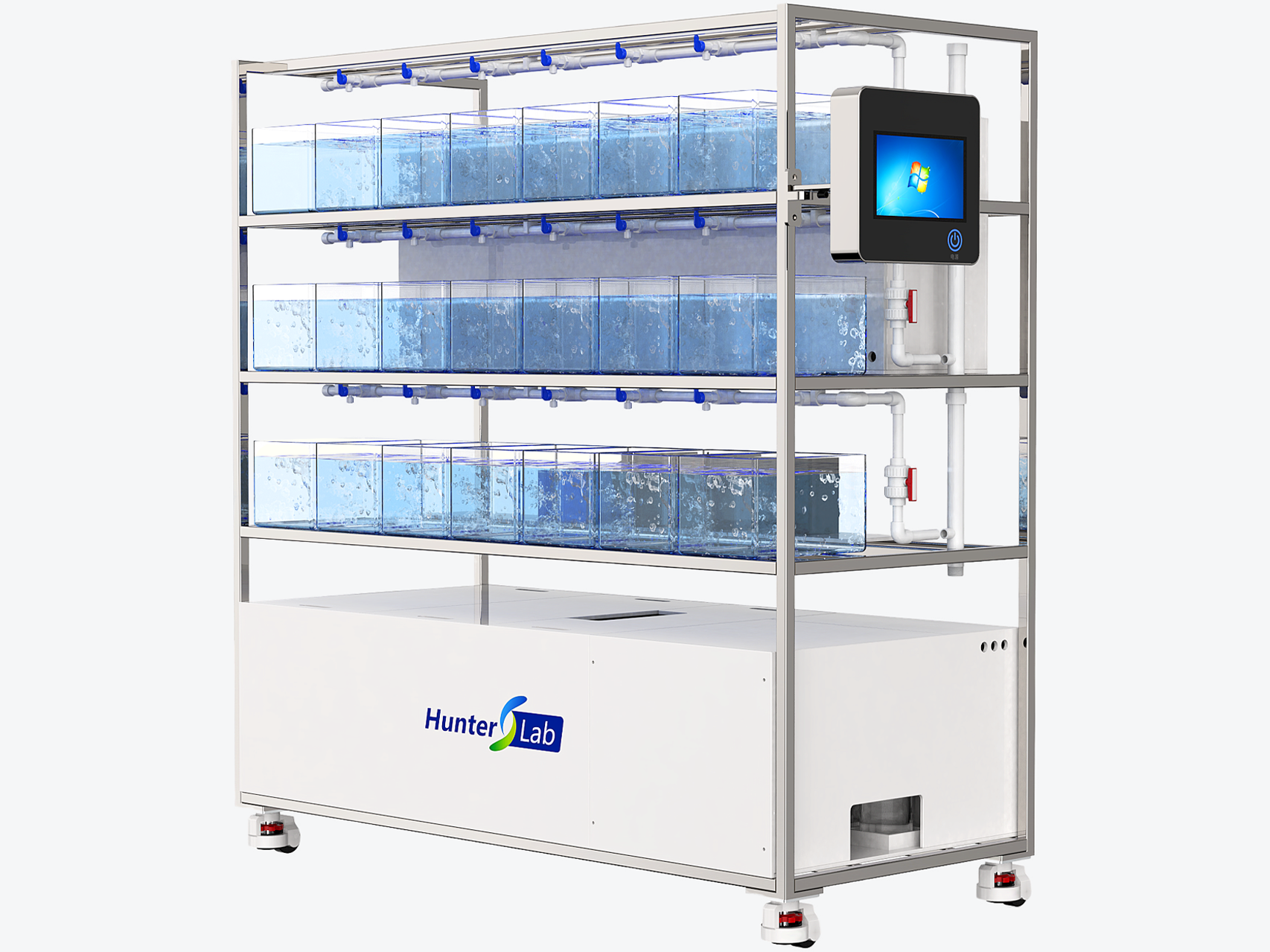
The Zebrafish Toxicology Exposure System is a standardized, modular exposure platform engineered for aquatic model-organism toxicology research. Built around a 316L stainless-steel frame with food-grade U-PVC plumbing, the system integrates two parallel rows of three tiers to provide 6 independently operable experimental units, each containing three high-transmittance glass aquaria (5 L or 10 L selectable) for triplicate parallel exposure. Integrated features include programmable dosing, individual temperature control, automatic drainage, photoperiod simulation, and online water-quality monitoring with 24-hour data logging. The platform supports static, semi-static, and flow-through exposure regimes, enabling simultaneous parallel testing at 6 different concentrations with full experimental reproducibility, operational safety, and data traceability for chemical ecotoxicology assessment, early drug safety evaluation, environmental pollutant screening, and developmental toxicology studies.
An aquatic toxicological exposure system is a controlled laboratory platform designed to expose aquatic model organisms—most commonly zebrafish (Danio rerio)—to defined concentrations of test substances under repeatable, documented conditions. This type of aquatic toxicological exposure system supports static, semi-static, and flow-through exposure regimes, enabling researchers to run acute, subchronic, and chronic toxicity studies that meet regulatory guidelines from OECD, EPA, and related bodies. For procurement teams evaluating equipment for a regulated research environment, the central question is not just whether the aquatic toxicological exposure system works, but whether it produces data that can withstand audit review and serve as evidence in a regulatory submission.
Zebrafish have become the preferred model organism for aquatic toxicology because their optical transparency during early development allows direct observation of physiological responses without surgical preparation. Their genetic overlap with human biology makes zebrafish data increasingly defensible in translational safety assessments for pharmaceutical, cosmetics, and environmental compliance applications. In practice, the quality of the data depends heavily on the stability of the exposure conditions—particularly water quality. A lab running zebrafish toxicology screens can find that seasonal variation in municipal water supply shifts the conductivity of system water, subtly altering larval baseline parameters across months without any obvious environmental trigger. This is not a protocol failure; it is an aquatic toxicological exposure system specification issue that purpose-built platforms are designed to address. Labs with a dedicated zebrafish water quality monitor oem solution integrated into their exposure setup are better positioned to maintain reproducible baseline data across seasonal and batch variation.
Not all exposure systems are equivalent, and the difference between a general aquatics housing unit and a dedicated aquatic toxicological exposure system matters substantially for data integrity. Key design features to evaluate include:
Aquatic toxicological exposure systems serve a range of study types across pharmaceutical, environmental, and safety testing contexts:
The right aquatic toxicological exposure system depends on several factors that vary by lab context. Rather than treating this as a single specification comparison, it helps to work through the key decision criteria sequentially:
What regulatory standard must your data meet? If your study must satisfy a specific guideline (OECD, EPA, ICH, or a national equivalent), confirm that the exposure system design—chamber configuration, concentration maintenance method, monitoring integration—matches the study design requirements. In practice, labs that specify the regulatory endpoint first tend to avoid costly retrofit decisions later.
What exposure regime does your protocol require? Static, semi-static, and flow-through exposure each impose different demands on the platform. Flow-through requires integrated dosing pumps and calibrated delivery lines; semi-static renewal requires programmable scheduling and automated drainage; static is simplest but constrains the study duration and compound classes that can be tested reliably.
How many treatment groups will you run simultaneously? A system with six independently operable units accommodates a full dose-response series—typically five concentration groups plus a control—in a single experiment, which is the configuration that most OECD guideline studies require. A modular platform designed for six groups is a more practical long-term choice than a smaller fixed system that limits future study designs.
Do you need integrated water quality monitoring? Integrated online monitoring is preferable for GLP-adjacent studies because it generates a continuous, system-level data record. Pharmaceutical buyers who need to demonstrate that instrument data was not manually transcribed into a LIMS without an automated audit trail should specify integrated data logging as a non-negotiable requirement when sourcing an aquatic toxicological exposure system.
Will you need custom configuration or OEM fabrication? Research programs with non-standard study designs may benefit from zebrafish custom equipment fabrication rather than a catalog configuration. CROs and institutional core facilities that need systems pre-configured to internal SOP parameters before delivery should confirm whether the supplier offers zebrafish custom equipment fabrication services. A zebrafish swim test system oem arrangement—where the buyer specifies configuration parameters and the supplier builds to those specifications—is a practical option for organizations with documented protocol requirements that differ from standard catalog offerings. Zebrafish swim test system oem and zebrafish custom equipment fabrication availability varies by supplier and should be confirmed during vendor evaluation.
Does your broader program include zebrafish genotyping workflows? Some exposure studies use transgenic or mutant zebrafish lines that require genotyping confirmation. While the exposure system itself does not perform genotyping, planning tissue collection at study endpoints without disrupting the exposure record should be addressed during system configuration if a zebrafish genotyping protocol is part of your overall experimental design. A documented zebrafish genotyping protocol that is compatible with your exposure system's sample collection workflow avoids post-hoc procedural conflicts.
For institutional procurement teams in Asia, Europe, and North America, acquiring an aquatic toxicological exposure system from an international supplier involves considerations beyond technical specifications. Export documentation, instrument qualification packages (IQ/OQ), and post-installation audit trail support differ meaningfully between vendors. The instinct to evaluate systems only on specification sheets is understandable, but beyond a certain point, the documentation package and vendor support capacity matter more to a QA reviewer than marginal differences in a flow rate specification.
Commercially sourced aquatic toxicological exposure systems with traceable manufacturing records and instrument qualification documentation give pharmaceutical customers the evidence base needed for vendor qualification. Labs relying on custom-built or academic systems often find that this documentation cannot be retrofitted retroactively. When the requirement is demonstrating that your aquatic toxicological exposure system meets instrument qualification standards, a commercially documented platform is the practical procurement path.
Buyers evaluating internationally sourced equipment should confirm that the supplier has verifiable experience managing cross-border orders and laboratory instrument export compliance—not just domestic sales. Lead time, installation support, and post-delivery parts availability are areas where international procurement differs substantively from domestic purchasing. Requesting prior international delivery records and clarifying the scope of after-sales support in your region are reasonable due diligence steps before committing to a platform.
 EN