Zebrafish Lab Accessories and Consumables: A Procurement Overview
Selecting the right accessories and consumables for a zebrafish research facility is a decision that compounds over time. Unlike capital equipment purchases that happen once every several years, consumable and accessory choices repeat with every experiment cycle—and the wrong selection does not just create a one-time problem; it creates recurring friction across every protocol run. Most procurement managers working with zebrafish labs find that this category warrants more systematic evaluation than it typically receives at the initial facility setup stage.
This overview covers the main accessory and consumable categories relevant to zebrafish research workflows, with a focus on the decision criteria that matter most when evaluating options across housing, spawning, and supporting supplies—whether you are equipping a new facility or standardizing an existing zebrafish breeding colony.
What This Category Covers
Zebrafish lab accessories and consumables encompass the supporting equipment and supplies that make daily research operations functional: housing tanks, spawning systems, feeding devices, sorting consumables, imaging aids, and routine maintenance supplies. The category spans both durable accessories—items purchased infrequently but critical to system integrity—and high-turnover consumables that require reliable, repeat sourcing.
The scope of this category matters because it directly affects experiment reproducibility and animal welfare. Accessories that do not maintain consistent water chemistry or adequate containment create variable baselines that undermine results from any zebrafish toxicological exposure system, regardless of how well-calibrated the imaging or analysis platform is. In our experience, most labs identify their accessory standardization gaps later than they should—usually after a run of inconsistent baseline data rather than before it.
Two product types illustrate the range of this category:
-
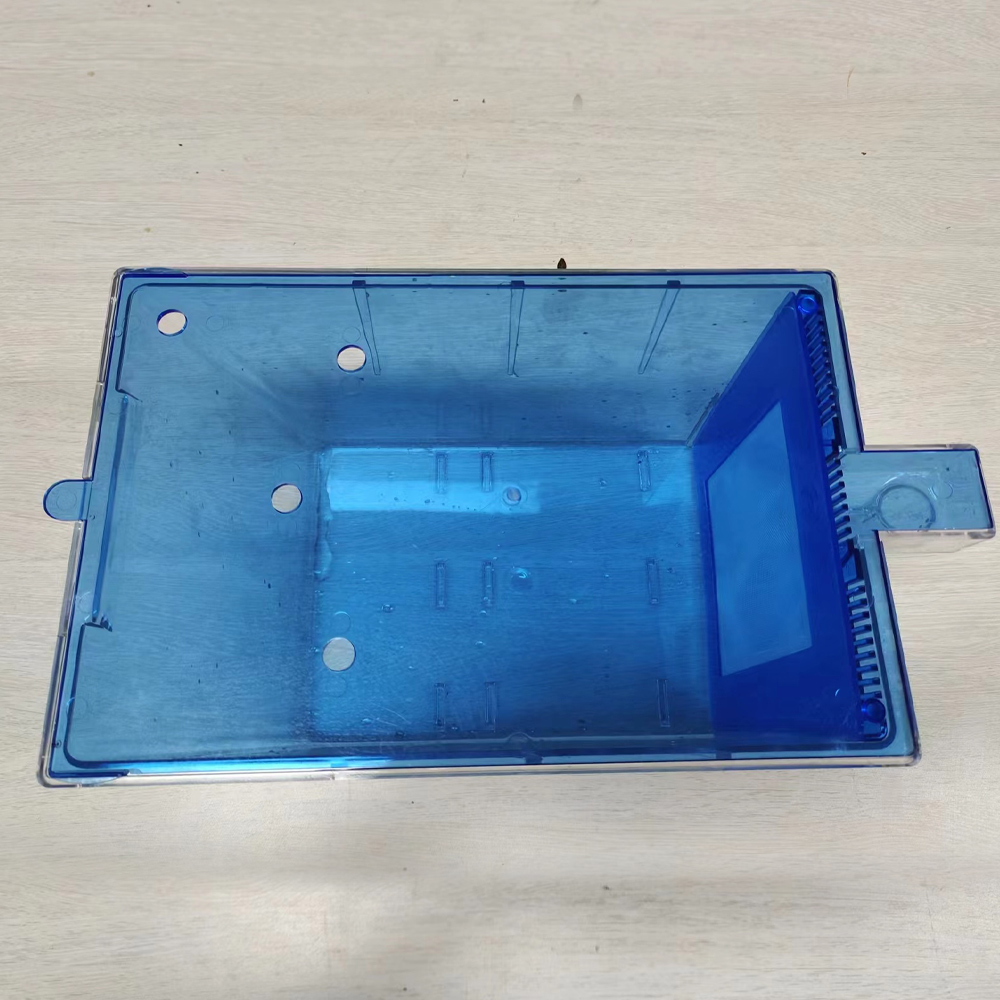
Zebrafish Housing Tanks: Injection-molded from food-grade polycarbonate (PC), available in 1.5L to 10L formats. Fully autoclavable for biosafety compliance and manufactured to ISO 13485 standards, these tanks provide exceptional light transmittance for routine health monitoring and outstanding impact resistance for daily handling in busy lab environments.
-
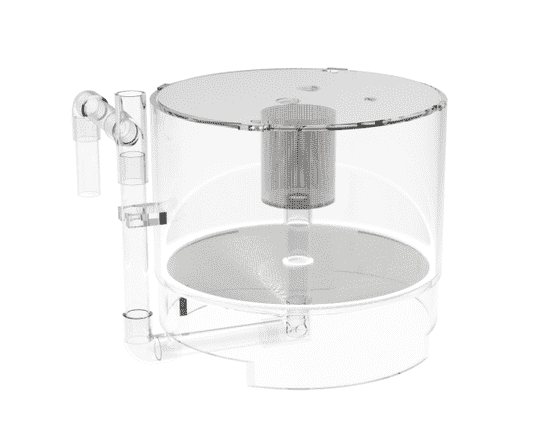
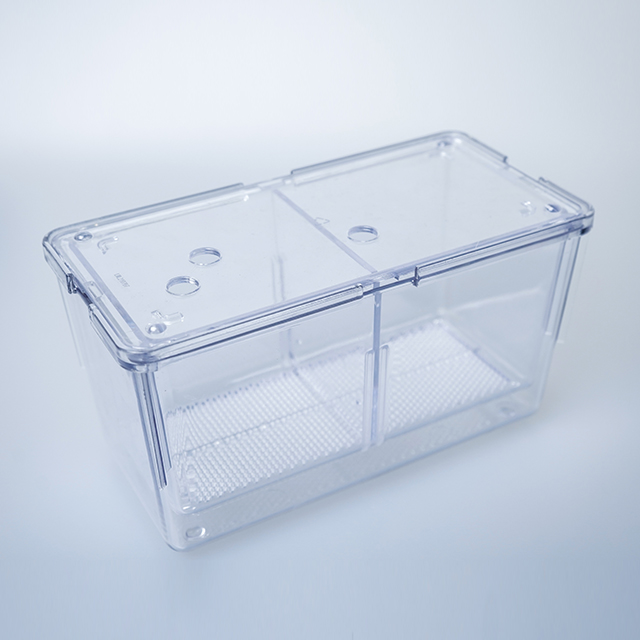
Zebrafish Spawning Tanks: Compact 2L polycarbonate units with a bottom mesh floor and removable central divider. When the divider is removed and mating is triggered by the light cycle, eggs fall through the mesh to the bottom compartment—preventing cannibalization and enabling reliable embryo collection for both small-scale studies and larger zebrafish breeding colony management workflows.
Key Product Characteristics to Evaluate
When evaluating accessories and consumables across suppliers, the characteristics that most often determine long-term suitability differ from those that appear first on specification sheets. Most purchasing decisions focus on upfront price and listed material grade—but the factors that usually drive more significant downstream impact are:
-
Material compatibility and autoclavability: Food-grade polycarbonate (PC) is the standard for zebrafish housing and spawning containers. Autoclavable construction is not optional for labs running biosafety protocols; it affects both animal welfare outcomes and cross-contamination risk between cohorts.
-
Tank volume and colony scale matching: Tank volume should match the scale of the zebrafish colony being managed, not just the bench space available. A mismatch between tank volume and colony density is one of the setup steps that rarely appears in onboarding documentation but consistently causes water chemistry instability when overlooked. Nobody in the methods section typically flags this—but the consequence shows up as a persistent baseline variability that is hard to trace back to its source.
-
Functional specificity between housing and spawning: Spawning tanks with mesh floors and removable dividers are functionally distinct from housing tanks. Using housing tanks as spawning vessels is a common protocol shortcut that usually costs more time in failed collection runs than it saves in procurement complexity. If throughput is the binding constraint, standardized spawning vessels make sense. If embryo collection reliability matters more, purpose-built spawning tanks are the better starting point—even if the per-unit cost is higher.
-
Ease of cleaning and visual inspection: High light transmittance in tank material supports routine health monitoring without disturbing animals. Tanks requiring significant disassembly for cleaning add per-cycle labor that is often underestimated in total cost of ownership calculations for consumables and accessories.
-
Supply chain consistency: For consumables in particular, lot-to-lot consistency and reliable local sourcing matter more than initial unit price. Batch changes in commonly used lab supplies can silently shift baseline parameters in zebrafish experiments—a problem that is much harder to diagnose after the fact than a failed instrument calibration.
Common Applications Across Research Segments
Accessories and consumables support the full zebrafish research workflow, but the specific priorities differ across customer segments—and procurement guidance that conflates these segments usually fails to serve any of them well.
For academic labs running zebrafish breeding colony management alongside behavioral or cardiovascular phenotyping studies, the primary concerns are protocol consistency across operators and reliable consumable sourcing within grant funding cycles. Accessory standardization directly affects inter-operator reproducibility, which in turn affects whether data from different lab members can be pooled without retroactive confound analysis.
For pharmaceutical and health supplement companies running zebrafish toxicological exposure studies, the emphasis shifts toward documentation traceability, material certifications, and compatibility with validated SOPs. In regulated or GLP-adjacent environments, relevant quality standards exist for equipment and consumables in this area—buyers are advised to verify the applicable standard for their specific jurisdiction and product category, as requirements vary by region and may be updated.
For cosmetics companies and nutraceutical researchers entering zebrafish-based safety testing, the primary challenge is often practical: understanding which accessories integrate with existing imaging platforms and which consumable choices create supply chain complexity. Most labs in this segment find that starting with a standardized accessory set—even a minimal one—reduces the number of uncontrolled variables during initial protocol development.
How to Choose: Accessories and Consumables Decision Framework
The right accessory and consumable configuration depends on factors that vary by lab. A structured evaluation approach covers the following:
-
Colony scale and experiment throughput: Tank volume ranges from 1.5L to 10L. Matching volume to colony density prevents water quality variability that cannot be compensated by other protocol adjustments downstream.
-
Autoclavability requirements: Confirm that the full accessory set meets this requirement, not just the primary tank. Mixed-material setups often create autoclave workflow gaps that are discovered operationally rather than during procurement review.
-
Separation of housing and spawning functions: Dedicated spawning tanks provide more reliable embryo collection than adapted housing containers. For any lab managing zebrafish breeding colony operations at meaningful scale, purpose-built spawning vessels reduce protocol variability and embryo loss rate.
-
Consumable sourcing model: Labs with access to local supply chains can often reduce lead time risk and simplify procurement by consolidating accessory orders with a supplier that has established domestic sourcing relationships. This is particularly relevant for labs in Asia, where documentation and consumable recommendations from Western vendors may reference suppliers that are not locally available—creating a localization gap that requires significant independent problem-solving to close.
-
Single-vendor consolidation feasibility: Managing multiple vendor relationships for zebrafish lab accessories adds administrative overhead that compounds over time. Where the accessory portfolio is broad enough to support consolidation, a single supplier for housing, spawning, and consumable supplies reduces purchase order complexity and simplifies quality documentation across procurement cycles.
Why Accessories and Consumables Warrant Systematic Procurement Attention
The recurring nature of consumable purchasing means that accessory selection decisions have a longer compounding effect than most capital equipment choices. An academic lab that receives grant funding for initial equipment often underestimates the ongoing consumable and maintenance cost—and program continuity depends on establishing reliable supply lines before the funding cycle creates urgency. Every item on a well-designed pre-run checklist for zebrafish accessory maintenance traces back to a specific failure: tank volume mismatch, inadequate autoclave clearance, or a consumable batch change that was not flagged before an experiment run are all recoverable problems, but only if the procurement documentation is structured to catch them before they affect data quality.
Hunter Lab's position in the zebrafish research equipment market includes established relationships with domestic zebrafish reagent and consumable suppliers, which means the recommendations provided are actionable within the supply chain context of labs in China and the broader Asian market. For labs consolidating zebrafish equipment across housing, spawning, and analytical functions, a single-supplier relationship reduces the coordination overhead of managing separate vendor qualification processes for each accessory category.
Whether you are setting up a new zebrafish facility, standardizing an existing zebrafish breeding colony, or expanding into zebrafish-based toxicological exposure research, the accessory and consumable decisions made at the outset of a program define the baseline reliability of every experiment that follows.

 EN