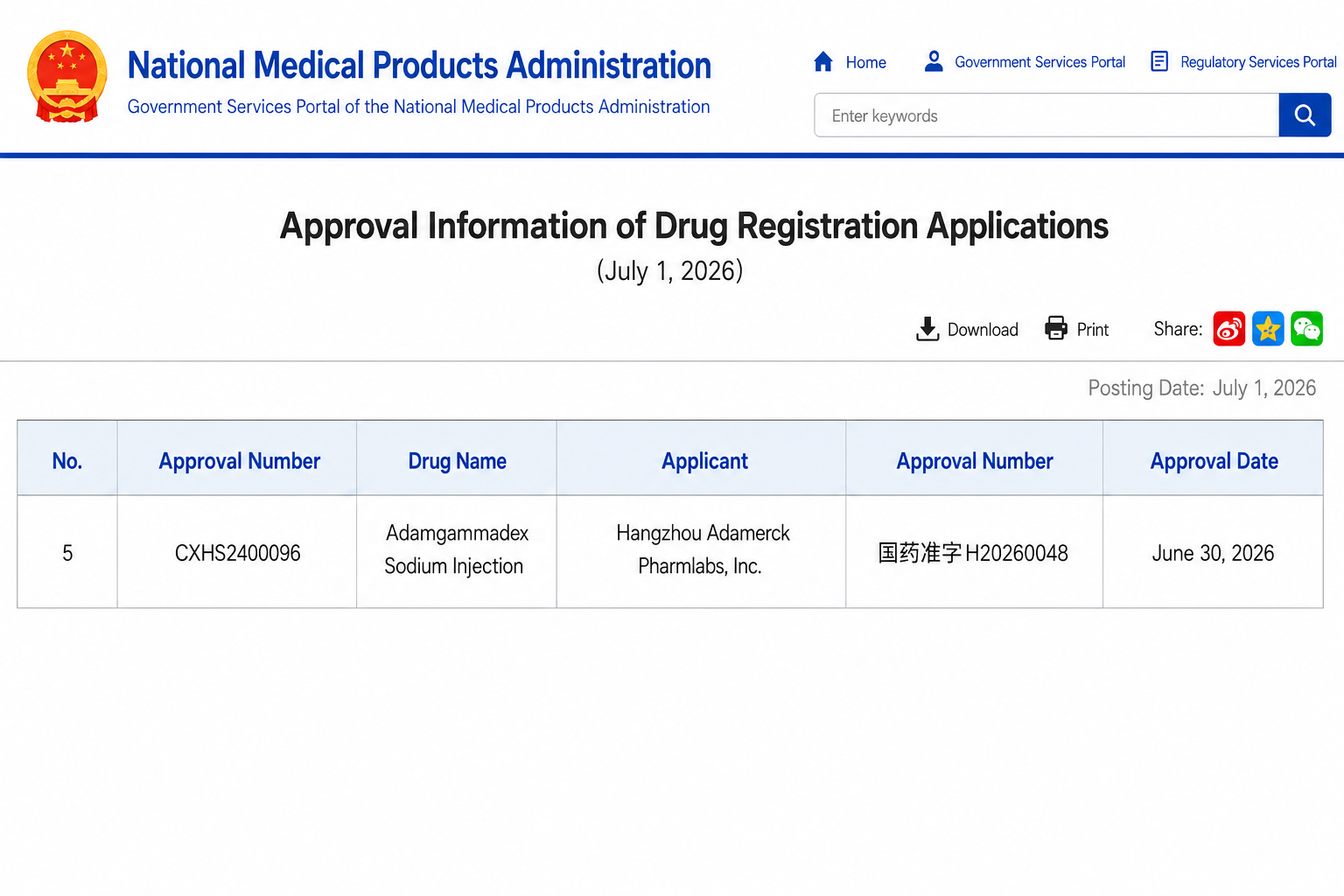
On June 30, 2026, China's National Medical Products Administration (NMPA) approved Adamgammadex Sodium Injection — a Class 1 innovative compound developed by Hangzhou Adamerck Pharmlabs, Inc. for reversing aminosteroid neuromuscular blockade during general anesthesia. Hunter Laboratory's zebrafish safety screening contributed directly to the drug's preclinical development. Hunter Laboratory built a comparative zebrafish safety screening assay specifically designed to evaluate cyclodextrin-based reversal candidates in direct head-to-head comparison, providing early in vivo evidence that supported the identification of Aom0498 — the molecule that became adamgammadex sodium — as the lead development candidate over the reference comparator.
Preclinical Drug Safety Evaluation Challenges in Reversal Agent Development
Neuromuscular blocking agents are used routinely during general anesthesia to facilitate intubation, optimize surgical conditions, and support mechanical ventilation. After surgery, complete and timely reversal is clinically essential — residual blockade can compromise respiratory function and delay recovery. Sugammadex validated selective encapsulation as an effective reversal mechanism, and pharmaceutical developers have continued pursuing next-generation reversal agents with differentiated properties and independent intellectual property.
Early preclinical drug safety evaluation for cyclodextrin-based reversal candidates is genuinely demanding. Adverse responses of interest — including hypersensitivity-like reactions, cardiovascular changes, and coagulation-related effects — are often subtle, dose-dependent, and difficult to detect in cell-based assays that cannot capture integrated whole-organism physiology. A complementary in vivo comparison model capable of evaluating multiple candidates in parallel was needed before escalating to more resource-intensive studies. Zebrafish pharmaceutical research has increasingly met this need across drug development programs where integrated biological responses are central to candidate differentiation.
Hunter Laboratory's Zebrafish Safety Screening Approach
Hunter Laboratory collaborated with Hangzhou Adamerck Pharmlabs to develop a dedicated zebrafish safety screening assay for comparing neuromuscular block reversal candidates. Zebrafish embryos are optically transparent, enabling real-time observation of blood circulation and flow, vascular integrity, cardiac activity, hemorrhage-related phenotypes, and locomotor behavior — biological responses not fully reproducible in cell-based systems and difficult to observe in opaque animal models.
In zebrafish drug discovery and zebrafish toxicity evaluation programs of this type, the ability to run direct side-by-side comparisons of multiple candidates at multiple dose levels under identical conditions is a practical advantage that distinguishes this platform from other early-stage evaluation tools. The assay was specifically designed to detect hypersensitivity-like and bleeding-related safety signals at the dose ranges relevant to the development program, generating a comparative safety window that would be difficult to establish using conventional approaches at the same development stage.
Key Findings from the Zebrafish Safety Screening Assay
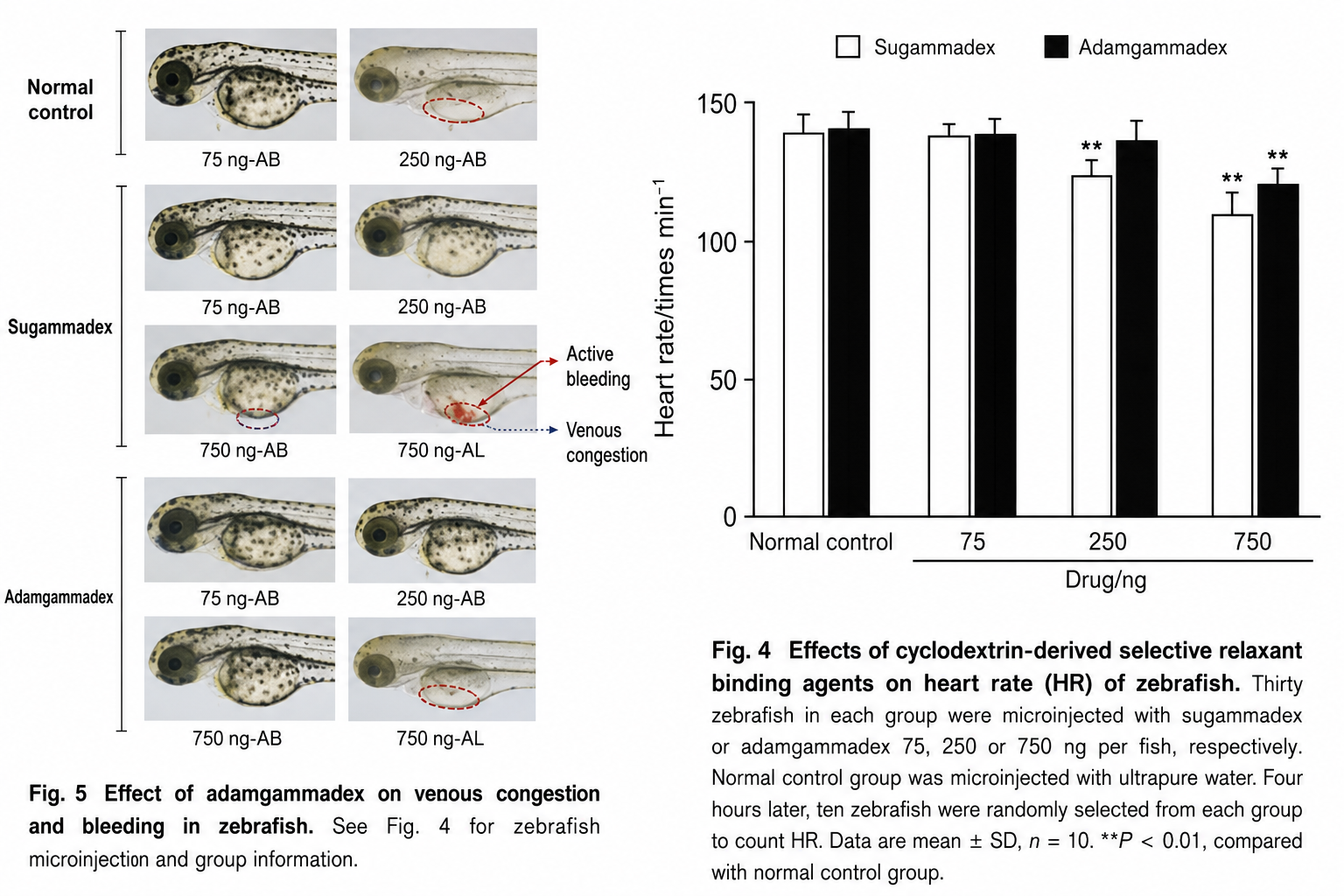
The zebrafish safety screening assay produced a clear dose-dependent response with the comparator compound at increasing concentrations. Aom0498, by contrast, showed a markedly different profile: no corresponding hypersensitivity-like response was detected even at an exposure level three times the comparator's response-associated dose. This result defined a meaningful comparative safety window between the two development candidates.
For the zebrafish drug discovery evaluation, this safety differentiation was a valuable early output. The data did not substitute for conventional toxicology studies or clinical trials, but it provided a layer of in vivo biological context that supported the case for Aom0498 as the lead candidate — reducing dependence on more resource-intensive models for initial prioritization and helping the research team commit resources with greater confidence.
From Zebrafish Pharmaceutical Research to Clinical Outcomes
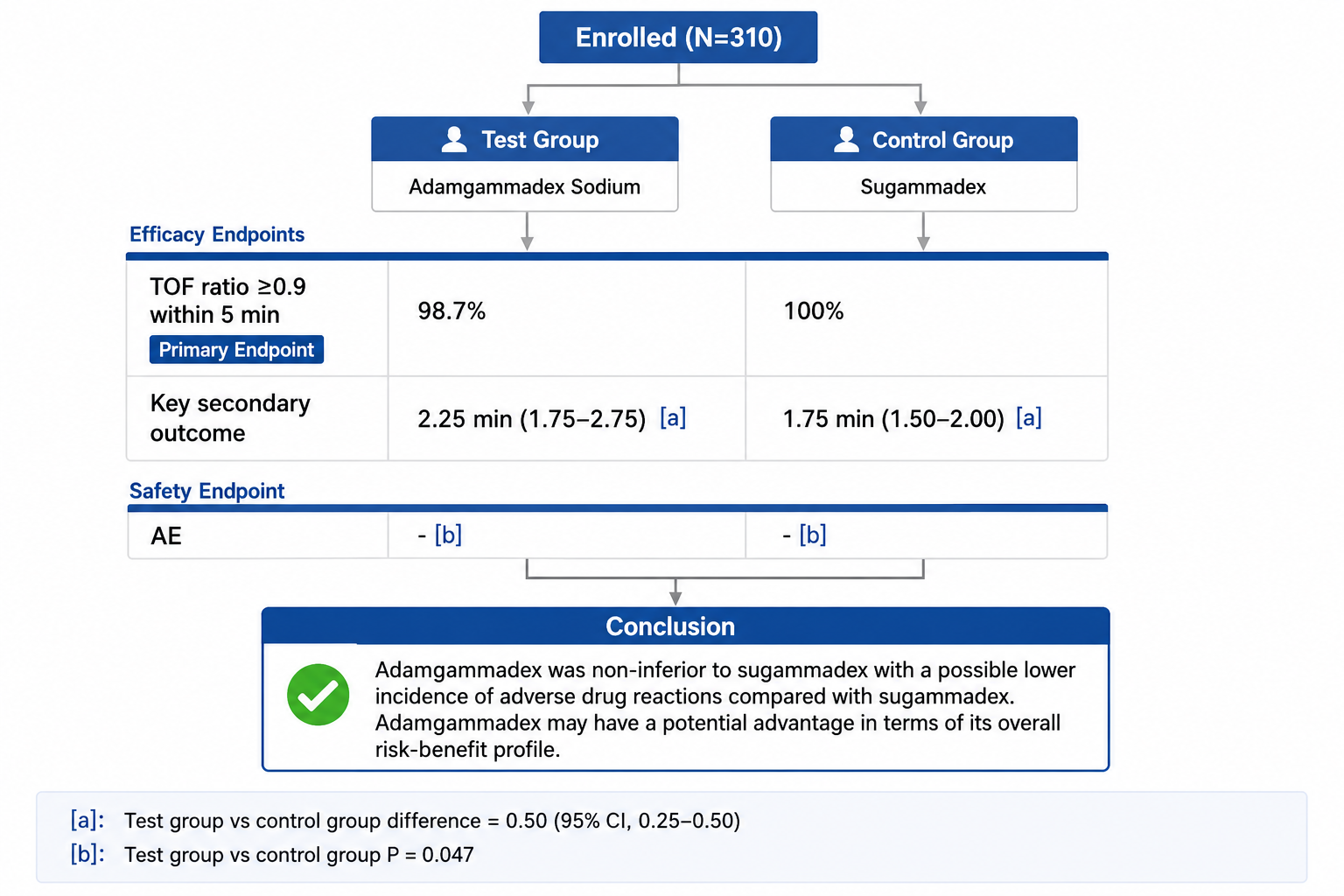
Subsequent clinical studies evaluated adamgammadex sodium in patients requiring reversal of rocuronium-induced neuromuscular blockade. The drug demonstrated a favorable safety profile in adverse events of special interest — including hypersensitivity reactions, bradycardia, and laryngospasm — and the overall direction of these findings was consistent with the comparative profile established in Hunter Laboratory's earlier zebrafish pharmaceutical research and preclinical drug safety evaluation work.
This directional alignment illustrates the practical value of early in vivo biological screening — not a replacement for mammalian studies or clinical trials, but a reliable input that helps pharmaceutical teams act on candidate differences at a stage where better information leads to more confident and cost-effective development decisions.
Why Zebrafish Safety Screening Adds Value in Early Drug Development
Zebrafish safety screening occupies a useful gap between cell-based assays and mammalian model studies. Cell assays provide targeted molecular data but cannot reproduce integrated whole-organism physiology. Mammalian studies offer greater biological complexity but are poorly suited to rapid, cost-effective comparison of multiple early-stage candidates across several dose levels. This platform combines intact-vertebrate biology — conserved cardiovascular, vascular, immune, and neurological systems — with transparent embryos, multiwell format compatibility, low compound consumption, and quantifiable endpoints across cardiovascular, vascular, behavioral, and morphological dimensions.
For zebrafish drug discovery and zebrafish toxicity evaluation programs where meaningful candidate differences depend on whole-organism context to detect, this combination of biological relevance and experimental scalability makes early comparative screening genuinely actionable — improving development decision quality without disproportionately increasing time or resource commitments.
Hunter Laboratory's Pharmaceutical Research Capabilities
Hunter Laboratory is a dedicated provider of zebrafish pharmaceutical research and zebrafish drug discovery services with over 20 years of zebrafish technology experience. Hunter Laboratory has partnered with more than 200 domestic and international pharmaceutical companies on preclinical drug safety evaluation, efficacy assessment, disease modeling, and mechanism research. Zebrafish experimental data generated by Hunter Laboratory have been included in eight NMPA clinical trial application filings — a direct indication of the quality and regulatory relevance of Hunter Laboratory's work.
Hunter Laboratory has completed more than 12,000 research projects for over 3,000 clients and partners, led the drafting of 26 industry standards and two expert consensus documents, filed 98 patent applications, and contributed to more than 380 SCI-indexed and core journal publications. Four of Hunter Laboratory's zebrafish industrialization projects have been reviewed by expert panels — one was rated as reaching an internationally leading level, and two as reaching an internationally advanced level. Hunter Laboratory's service platform spans zebrafish models, mammalian models, cell-based assays, organoids, human clinical efficacy studies, and skin explant models.
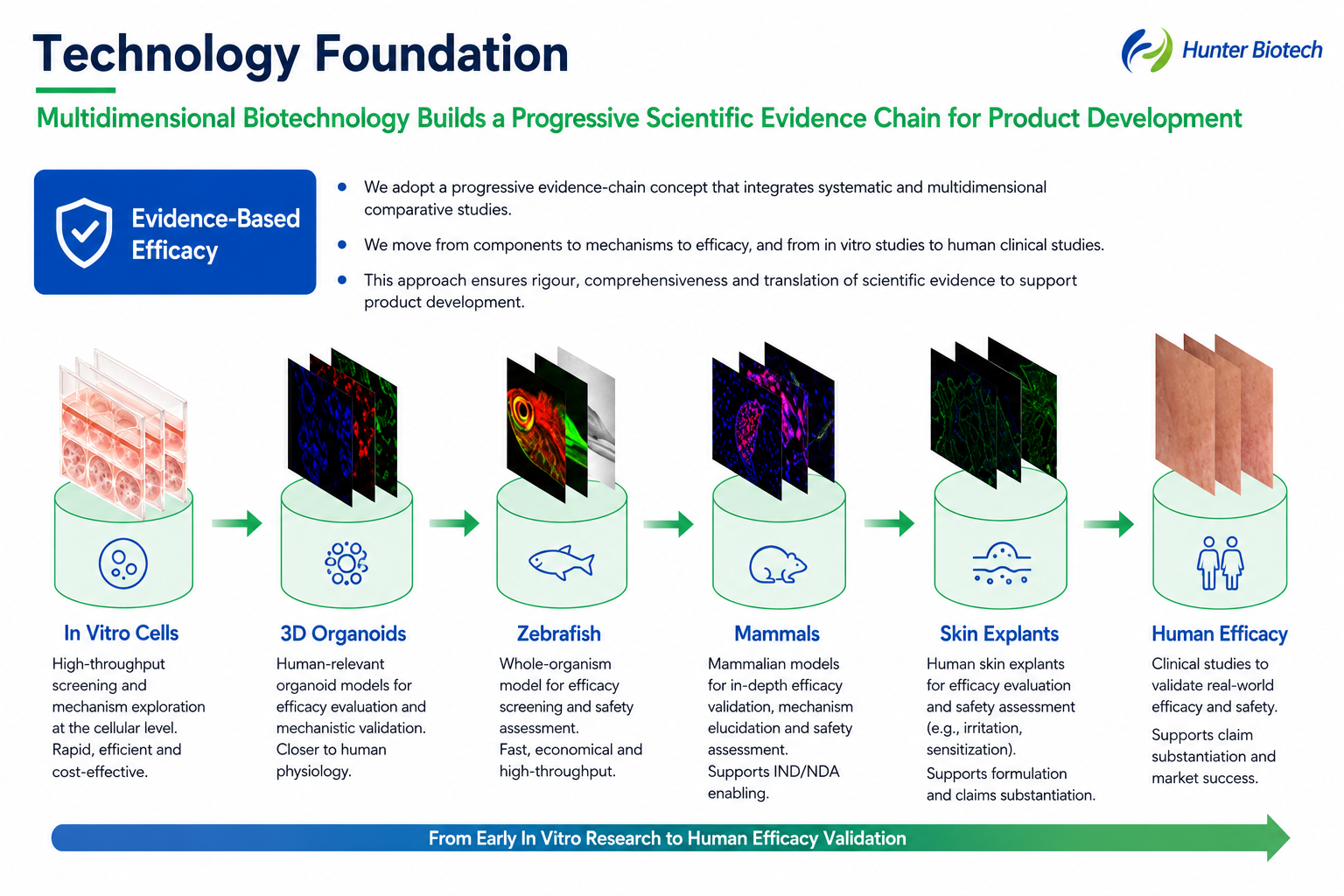
The approval of Adamgammadex Sodium Injection is a concrete example of how purposeful zebrafish toxicity evaluation and early comparative in vivo screening can contribute decision-relevant safety evidence during pharmaceutical development. Hunter Laboratory will continue advancing its zebrafish and multidimensional biotechnology platforms — supporting drug developers from early candidate screening and preclinical evaluation through to late-stage evidence generation, with a consistent focus on helping teams identify the right compounds, faster.

 EN








