
 EN
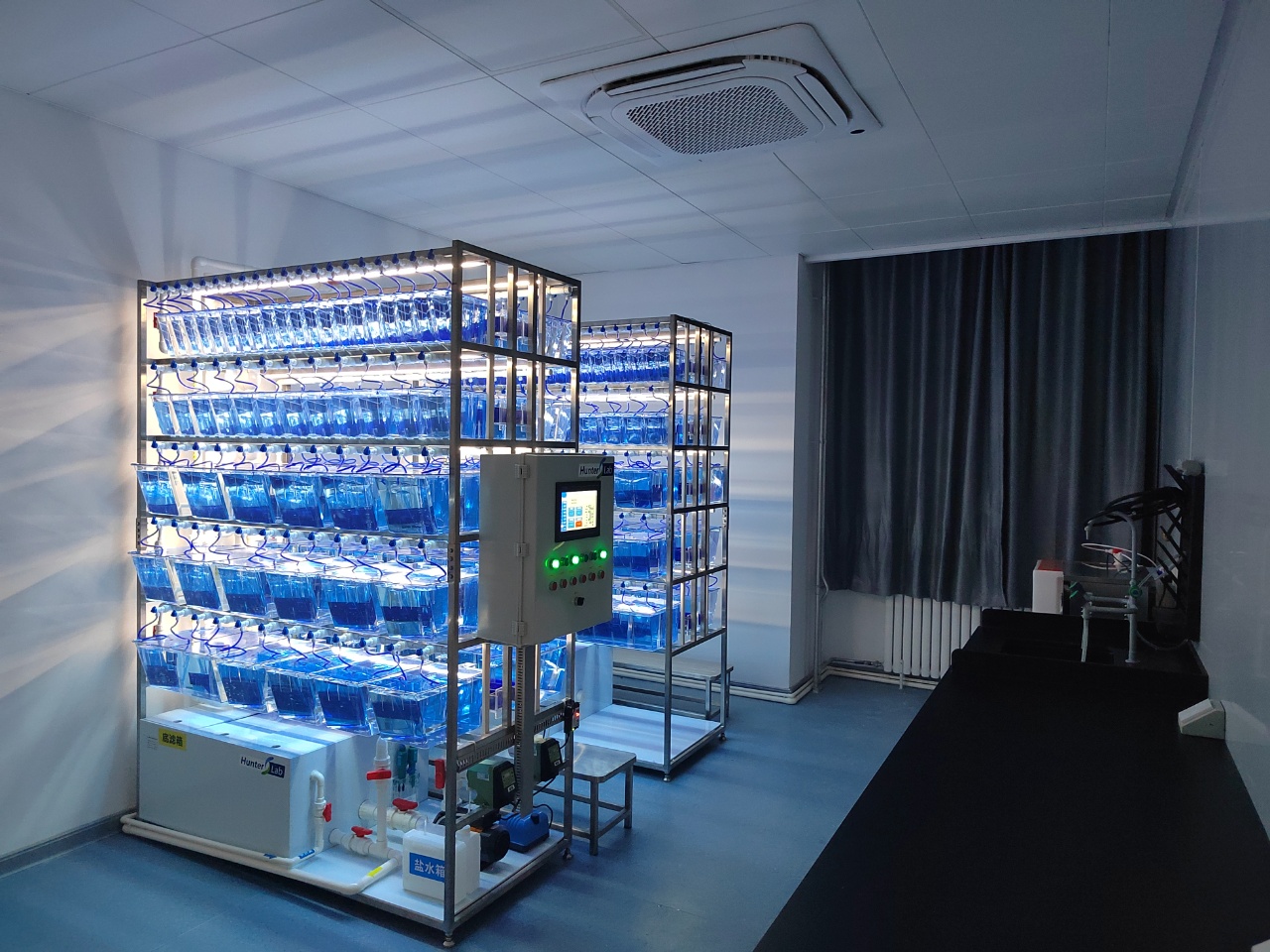
A zebrafish room can look stable while its daily routine is not. Someone turns lights on early before a visit, another person delays darkness while finishing tanks, and a weekend handover relies on memory. A Zebrafish Light Cycle Controller turns those small, repeated decisions into a defined environmental condition. For a core facility manager, that shift matters because light is not merely a room-service item; it is part of the husbandry context that can affect how fish, breeding schedules, and experiments are managed.
Many facilities use a fixed dark–light schedule, often 10 hours dark and 14 hours light, although the appropriate program should follow the institution’s veterinary, animal-care, and protocol requirements. The value of a Zebrafish Light Cycle Controller is not that it chooses the schedule for you. It carries out the approved schedule consistently, makes changes deliberate, and gives staff a clearer starting point when they review an unexpected observation.
Light timing is an experimental condition, not a background task
Zebrafish respond to daily illumination patterns, and light-dark timing is commonly treated as a standardized husbandry parameter. When one cohort experiences a late transition while another does not, timing becomes a quiet source of variation. That does not mean every difference in a result comes from lighting. It means a facility should avoid adding preventable uncertainty when studies depend on repeatable routines.
A Zebrafish Light Cycle Controller makes the intended light cycle explicit: when lights start, when they stop, whether a gradual transition is used, and who may change the program. This can be particularly useful when multiple research groups share one facility, when staff cover holidays, or when animal rooms are accessed outside ordinary hours.
What manual switching really costs a facility
Manual control rarely fails because staff do not care. It fails because people have competing priorities. A technician may be handling a delivery, a student may assume someone else changed the lights, or a timer may be adjusted after a power interruption without documenting the change. A Zebrafish Light Cycle Controller reduces the number of routine handoffs that depend on memory.
The operational value becomes clearer when you consider the indirect work:
- staff time spent opening and closing a daily lighting routine;
- questions after an unplanned schedule change;
- inconsistent start times for breeding, feeding, imaging, or behavior work;
- difficulty explaining whether a lighting deviation occurred during a study window; and
- the burden of training every new team member on a task that can be standardized.
In this sense, a Zebrafish Light Cycle Controller supports efficiency by moving routine execution from people to a documented control process. It does not replace good husbandry judgment. Staff still need to inspect conditions, respond to alarms, and decide how to manage a legitimate exception.
Consistency supports more useful records
A practical Zebrafish Light Cycle Controller should help a facility answer basic questions after the fact. Was the scheduled program active? Was it manually overridden? Did an outage occur? What time did normal operation resume? Even a simple event record can make troubleshooting more disciplined.
That record matters because studies often involve a sequence of events rather than one isolated measurement. If spawning, larval collection, dosing, or imaging happens at defined times, the facility’s daily lighting schedule belongs in the broader chain of environmental context. A Zebrafish daily lighting schedule Controller gives managers a way to separate a known schedule deviation from an unknown one.
Where automation helps daily workflows
Breeding and collection windows
Teams often plan breeding-related work around a regular daily rhythm. With a automated lighting-control system, staff can organize preparation around a known transition rather than around whoever is first in the room. That is helpful for shared schedules, but the exact timing and breeding workflow should remain specific to the animal-care operation’s approved procedures.
Behavior and imaging studies
For studies that are sensitive to time of day or illumination conditions, a stable daily lighting schedule provides a clearer baseline. A automated lighting-control system cannot standardize water quality, handling, temperature, or experimental setup. It can standardize one environmental input so those other controls are easier to interpret.
Staff coverage and expansion
As a zebrafish animal-care operation grows, manual routines become harder to supervise across rooms and shifts. A automated lighting-control system gives new staff a visible, repeatable system to follow. It also lets the manager define who can edit a schedule, rather than leaving a critical setting to an informal handover.
What to evaluate before choosing a controller
The right automated lighting-control system is the one that fits the animal-care operation’s electrical layout, approved husbandry plan, and staffing model. Instead of starting with a feature list, start with the questions your team will need to answer on a normal weekday and during a disruption.
- Schedule flexibility: Can the controller support your approved daily program and any planned weekday or seasonal variations without encouraging ad hoc edits?
- Transition design: If your program calls for ramping or staged lighting, can the automated lighting-control system coordinate that sequence in a clear way?
- Override controls: Can authorized staff make a temporary change, and can the animal-care operation record why it happened?
- Power recovery: After an interruption, does the controller retain the intended daily lighting schedule or provide a clear recovery procedure?
- Room-level fit: Can it handle the lighting zones your animal-care operation actually uses, rather than forcing all racks into one unsuitable program?
- Verification: Can staff check the current state without guessing whether an indicator light reflects the active schedule?
A automated lighting-control system should be evaluated alongside light uniformity, tank placement, room access, emergency procedures, and the animal-care operation’s local animal-care requirements. Automation is most useful when those elements are considered together.
Implement automation as a controlled change
Before activating a new automated lighting-control system, write down the existing program, the desired program, the owner of the settings, and the contingency plan for a power or equipment fault. Run a verification period: compare the programmed transitions with what staff observe at each lighting zone, confirm that clocks are synchronized, and make sure people know how to report a deviation.
It is also sensible to communicate the change to research groups. If a team records collection or testing times relative to lights-on, they need the same definition of lights-on that the automated lighting-control system uses. This modest planning step can avoid confusion later.
The business case is consistency with less routine burden
For a small room, manual lighting may seem manageable. For a busy or shared zebrafish animal-care operation, the recurring cost is not just a few minutes at a switch. It is the ongoing reliance on consistently completed handovers, the limited visibility after a disruption, and the variation that enters when routines shift. A automated lighting-control system gives the animal-care operation a repeatable process that staff can verify and maintain.
Hunter Lab focuses on zebrafish instruments and applications, so the discussion should begin with the animal-care operation workflow rather than a generic timer specification. If your team is comparing automation options, define the approved daily lighting schedule, room zones, recovery requirements, and documentation needs first. Those requirements will make it easier to determine whether a automated lighting-control system is a sensible addition to your husbandry and research operations.








