
 EN
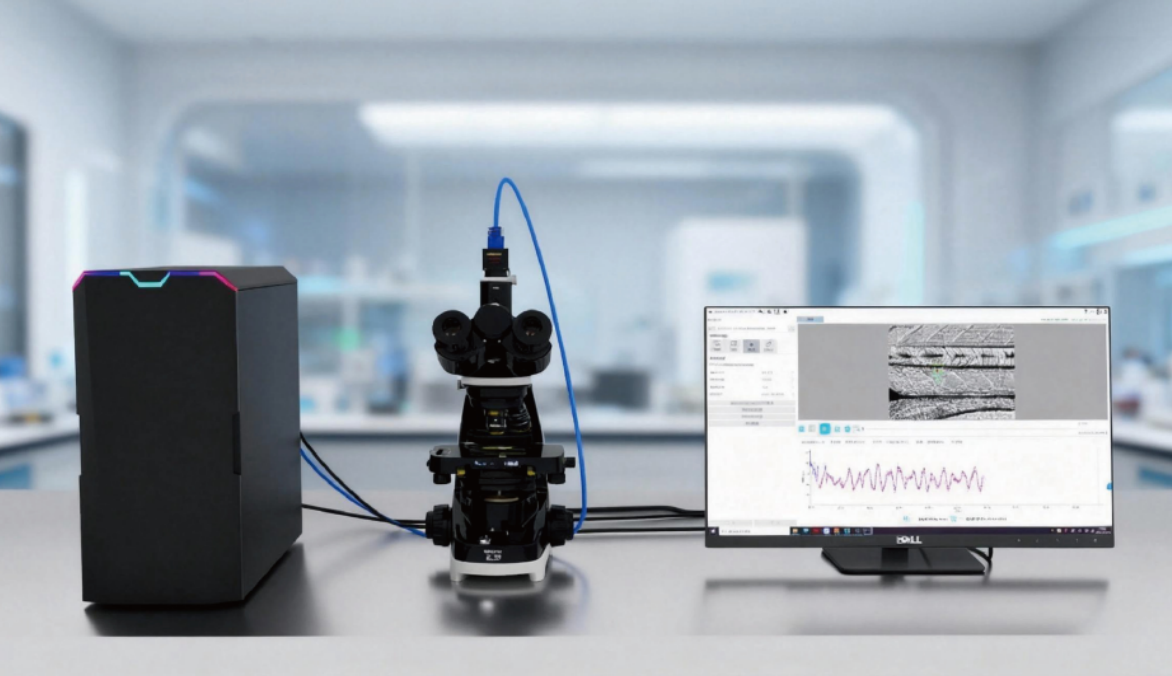
Why Modular Software Architecture Matters in Zebrafish Behavioral Analysis Systems
A Zebrafish Behavioral Analysis System is often discussed as though it were a camera, chamber, or tracking application. In practice, it is a chain of decisions: how video is acquired, how trials are defined, how animals are detected, which metrics are calculated, how questionable runs are flagged, and how results are exported. When those decisions are locked together in one opaque program, a small change in an assay can turn into a disruptive platform change. A modular software architecture makes that chain easier to inspect, validate, and adapt.
That matters particularly in shared facilities and growing research teams. A facility manager needs a Zebrafish Behavioral Analysis System that works for a new student running a basic locomotion assay as well as an experienced scientist refining a stimulus-response workflow. The goal is not to make every experiment complicated. It is to keep the parts that should be stable, while allowing the parts that legitimately vary to change without rewriting the entire workflow.
What “modular” means in a behavioral workflow
Modular software does not simply mean a long menu of optional features. It means that distinct jobs are separated into understandable components with defined inputs and outputs. In a Zebrafish Behavioral Analysis System, those components commonly include acquisition setup, experiment metadata, region-of-interest definition, tracking, quality control, metric calculation, visualization, and export.
For example, a laboratory may keep its acquisition module consistent across a study: the same camera configuration, light program, background, and trial timing. It can then use a different analysis module for total distance, bout structure, thigmotaxis, social preference, or stimulus-linked movement. This separation protects comparability. It also makes it clear whether a change came from the animals, the experimental conditions, or the analytical rule.
That distinction is important because video is not automatically a measurement. A session can produce a large amount of image data. The meaningful result depends on the tracking and analysis choices applied afterward. A modular Zebrafish Behavioral Analysis System documents those choices rather than hiding them inside a fixed workflow.
Why one fixed workflow becomes a bottleneck
Fixed software can be convenient when every experiment is identical. Behavioral programs rarely stay that way. Larval and adult fish may require different arenas, body-detection assumptions, sampling rates, or endpoint definitions. A pharmacology group may need blinded batch handling and predefined summaries, while a neuroscience group may need event-aligned trajectories or custom regions of interest. Trying to force both through a single all-or-nothing setup often produces workarounds that are hard to reproduce later.
A modular Zebrafish Behavioral Analysis System lets a team preserve validated core settings while adding a controlled extension. The tracking module can be updated without changing how files are acquired. A new report template can be tested without changing the raw-video archive. An analysis plugin can be evaluated on a reference dataset before it is used for an active study. That is a more manageable form of customization than asking every user to rebuild an entire protocol.
There is also a practical cost issue. The hidden cost in a behavioral workflow is often not the first software license; it is repeated manual reconciliation when files, naming conventions, and calculations no longer agree. A Zebrafish Behavioral Analysis System with clean module boundaries can reduce that avoidable rework by making handoffs explicit.
Customization without losing comparability
Customization is valuable only when it is governed. Teams should decide which settings are assay-level constants and which are permitted to vary. For a Zebrafish Behavioral Analysis System, constants may include the approved acquisition profile, animal stage, arena layout, quality thresholds, and calculation definitions for a primary endpoint. Permitted variations may include a study-specific stimulus schedule, a secondary metric, or a visualization view for exploratory review.
This is where modular software earns its place. A configuration layer can store the approved defaults, while an analysis layer can expose documented options. Rather than copying and editing an old project folder, a user can select a versioned template and record the specific deviations. The resulting data package is more interpretable because the changes are visible.
Manual scoring remains useful when a sample is small, phenotypes are unusual, or an algorithm needs validation. Automated analysis becomes more valuable as throughput rises, but it should be introduced with a comparison set that reflects the laboratory’s own imaging conditions. A modular Zebrafish Behavioral Analysis System supports this transition: manual annotations can be kept as a validation module, while automated tracking is assessed against them instead of being treated as a black box.
Validation is easier when modules have clear responsibilities
Behavioral results can be sensitive to illumination, reflections, animal density, camera position, and region definitions. A system designed as one monolith can make troubleshooting ambiguous. If a distance metric shifts, is the cause the camera feed, the detection threshold, the smoothing method, or the reporting calculation? A modular Zebrafish Behavioral Analysis System narrows the question because each step can have its own checks.
- Acquisition checks: confirm that expected video, timing, and environmental metadata are present.
- Tracking checks: inspect missed detections, identity swaps, and improbable trajectories.
- Analysis checks: verify units, time windows, exclusions, and calculation versions.
- Reporting checks: ensure that figures and exports identify the configuration used.
This does not eliminate the need for experimental controls. It does make a Zebrafish Behavioral Analysis System more auditable when a result deserves closer scrutiny. In a multi-user facility, that audit trail also helps trainers distinguish an assay-design problem from a software-use problem.
How modular architecture supports growth
A research group may begin with one assay and a modest number of recordings, then add new behavioral paradigms, camera arrangements, or collaborators. Replacing the whole platform every time the scope changes is disruptive. A modular Zebrafish Behavioral Analysis System can grow by adding a supported module, retaining the original acquisition and data-management practices where they remain appropriate.
For institutions, this also improves training. New users can learn a standard acquisition and review path first. Advanced users can work with validated configuration options and specialist analysis modules later. The workflow stays approachable without treating expertise as an afterthought. Hunter Lab’s zebrafish-focused perspective is relevant here: practical adoption depends on the whole research workflow, not only on a single piece of equipment.
Looking back at many facility workflows, the change worth making early is defining the data contract between modules: file names, metadata fields, quality flags, and version records. It addresses ambiguity before it spreads into downstream analysis and reporting.
A practical evaluation checklist
When evaluating a Zebrafish Behavioral Analysis System, ask whether the architecture supports your current assay and the next reasonable change. Useful questions include:
- Can acquisition, tracking, analysis, and export settings be reviewed separately?
- Can users save and version assay templates without altering raw data?
- Can the system record configuration changes, exclusions, and quality flags?
- Can a new metric or region definition be validated on reference recordings before deployment?
- Can different user roles follow the same approved workflow while accessing the level of customization they need?
The right Zebrafish Behavioral Analysis System is not necessarily the one with the most features. It is the one whose software architecture lets a laboratory make deliberate changes, preserve evidence of those changes, and keep behavioral data interpretable as research needs evolve.








