
 EN
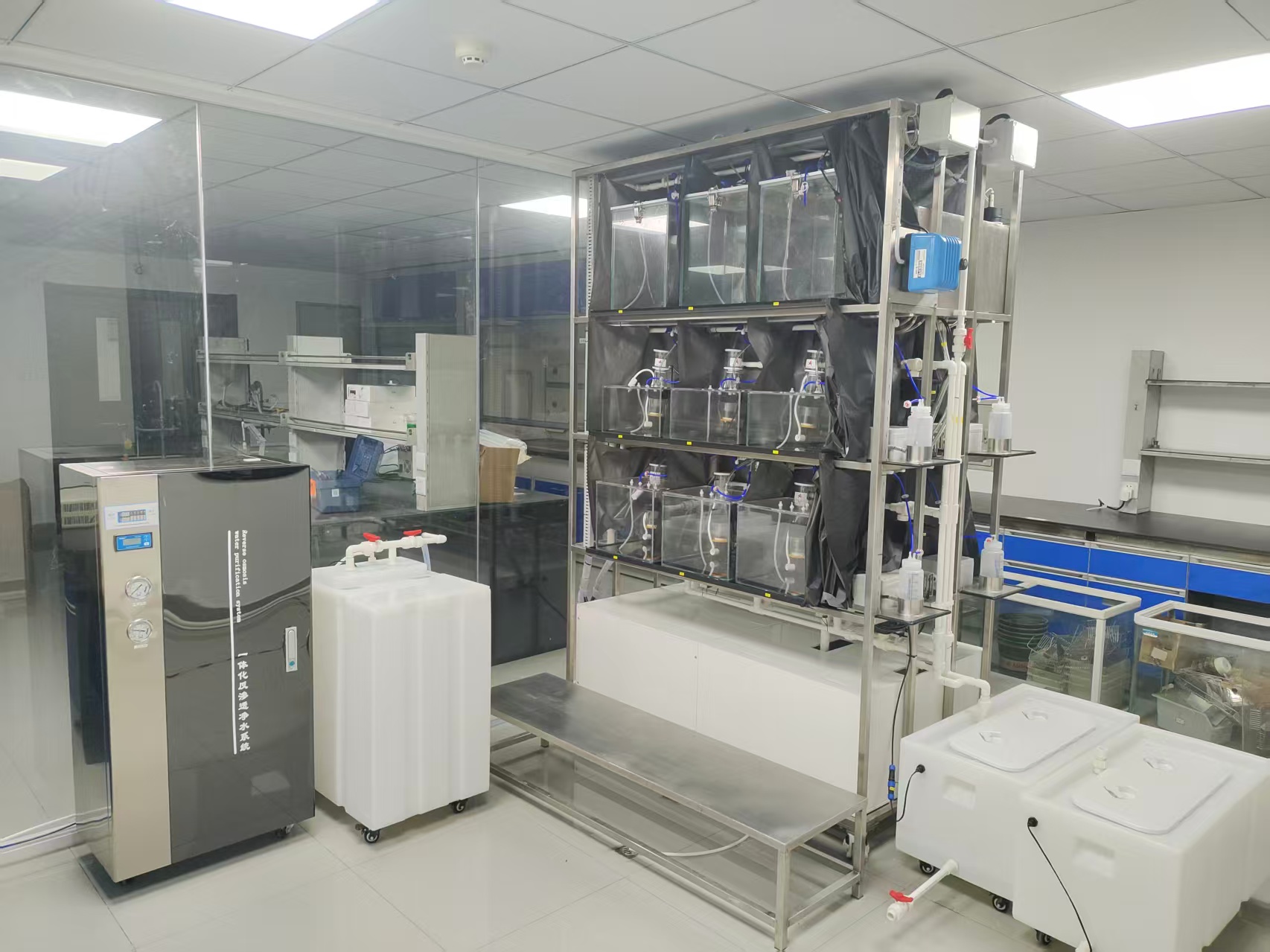
Why large zebrafish facilities rely on automated feeding systems for daily operations
At a small scale, feeding can feel like a simple husbandry task. In a large colony, it becomes a timed, documented, multi-person process that affects staffing, consistency, and the ability to spot exceptions. A Zebrafish Automated Feeding System gives managers a way to make daily feeding more repeatable while keeping trained staff focused on observation, care decisions, and facility work that cannot be delegated to equipment.
The practical value is not that a Zebrafish Automated Feeding System removes judgment. It is that the system can carry out a defined routine at the same time and with the same programmed delivery logic, while people retain responsibility for feed preparation, water quality, animal condition, and corrective action.
Scale turns feeding into an operations problem
Large facilities rarely struggle because staff do not understand how to feed fish. They struggle because the same dependable routine must be delivered across many tanks, rooms, cohorts, and shifts. Manual rounds can vary when staff schedules change, a tank list is updated late, or a busy morning produces interruptions. Those variations may be subtle, yet they are difficult to reconstruct later.
A Zebrafish Automated Feeding System is therefore most useful when it supports a written feeding plan rather than replacing one. The plan should identify the population groups, feed type, feed windows, expected delivery settings, cleaning responsibilities, and the escalation route when the planned routine is not completed. For large facilities, that shared operating record is often as valuable as the automated delivery itself.
Published work on the open-source Zebrafish Automatic Feeder describes fully automatic daily feeding and standardized food delivery in its studied setting. That result is a useful proof of direction, not a universal promise: each facility still needs to validate feed behavior, biological outcomes, and cleaning requirements with its own stocks, water system, and husbandry program.
Consistency matters more than simply saving a few minutes
The strongest argument for a Zebrafish Automated Feeding System is consistency. When programmed delivery is paired with a verified recipe and a record of exceptions, a facility can reduce avoidable variation in the feeding routine. Teams can then distinguish a husbandry deviation from an experimental or biological observation more confidently.
That does not mean every tank should receive an identical setting. Larval groups, adults, breeding groups, quarantine populations, and research-specific cohorts may have different instructions. A well-run Zebrafish Automated Feeding System makes those approved differences explicit in the schedule instead of relying on a verbal handoff. Before deployment, managers should ask: which groups truly share a program, which require separate settings, and who is authorized to change them?
For daily operations, the better target is traceability. If an operator sees uneaten feed, unusual behavior, a blocked line, or a missed delivery, the record should tell the team what was scheduled, what actually occurred, and what follow-up was taken. Automation makes this documentation easier only when the facility treats logs as an active management tool.
Where the labor saving really comes from
The labor saving from a Zebrafish Automated Feeding System is not just the time removed from a feeding round. It comes from reducing repetitive travel, lowering the number of handoffs, and making routine timing less dependent on one person being available at one moment. That can be meaningful when several rooms or racks must be served every day.
Still, a credible labor saving calculation must include the work that remains: preparing feed, loading and cleaning equipment, checking delivery, reviewing exceptions, maintaining the device, and training staff. A Zebrafish Automated Feeding System should be assessed against the full workflow, not against an unrealistic picture of completely unattended husbandry.
A simple baseline is often enough. Track manual feeding minutes, the number of staff involved, late or missed rounds, and time spent resolving routine variation for several representative weeks. After a controlled rollout, track the same measures with the Zebrafish Automated Feeding System. The facility can then make a local decision based on actual staffing patterns rather than a generic return-on-investment claim.
How automation improves handoffs and coverage
In a shared resource or research facility, staffing changes are normal. Vacations, weekend rotations, illness, onboarding, and unexpected facility work all create handoff risk. A Zebrafish Automated Feeding System provides a stable reference point: the programmed schedule, the feed preparation method, and the exception log can be reviewed by the incoming team member.
We have found that a schedule alone is not enough. The useful question is: can a new technician tell within minutes whether a delivery happened as planned and what needs attention next? A Zebrafish Automated Feeding System is most effective when its alerts, logs, tank maps, and standard operating procedures answer that question without guesswork.
This is especially important for large facilities with multiple users and research priorities. The equipment creates repeatable actions; the operating model creates accountable decisions.
What to validate before making feeding automation routine
Before treating a Zebrafish Automated Feeding System as part of normal care, run a documented pilot. Start with a limited representative area rather than changing every rack at once. Compare the planned and observed delivery, inspect feed distribution, monitor residues, confirm cleaning access, and establish a manual fallback procedure.
- Feed compatibility: Confirm that the feed format, preparation method, and storage window work with the chosen setup.
- Tank-level suitability: Identify cohorts that need distinct schedules or human review.
- Verification: Define who checks that scheduled deliveries occurred and how exceptions are logged.
- Cleaning and maintenance: Assign routine sanitation, calibration checks, and response ownership before launch.
- Continuity: Keep a practiced manual procedure for outages, maintenance, or unusual husbandry needs.
A Zebrafish Automated Feeding System should also fit the facility’s broader welfare and research controls. Automation cannot substitute for trained observation. Staff still need to recognize when a tank, cohort, or system condition calls for adjustment beyond the programmed routine.
A practical decision framework for managers
Consider a Zebrafish Automated Feeding System when manual rounds consume substantial predictable time, when handoffs create consistency risks, or when records are too weak to explain whether a feeding deviation occurred. It may be less urgent when the colony is small, schedules change constantly, or the team cannot yet support routine maintenance and verification.
For daily operations, begin with the operational question rather than the device question: what repeated task needs to become more consistent, and how will the team prove that it did? If the answer includes clear schedules, local validation, accountability, and a fallback plan, a Zebrafish Automated Feeding System can become a reliable part of facility management.
Hunter Lab focuses on zebrafish instruments and applications, so facilities evaluating a Zebrafish Automated Feeding System can benefit from a discussion that starts with their husbandry workflow, not a generic equipment checklist. The goal is a dependable routine that supports staff, animals, and research teams as the facility grows.








