
 EN
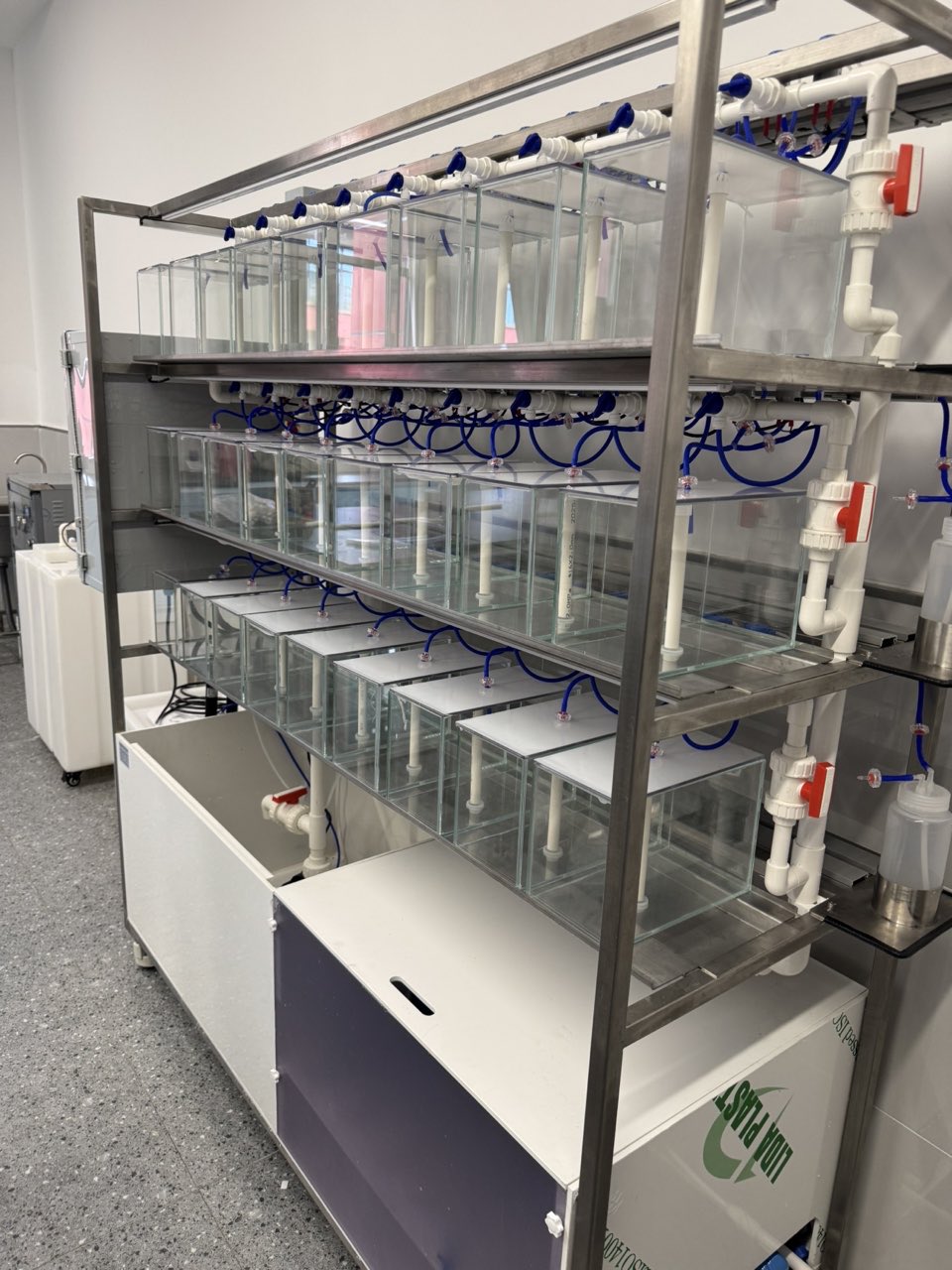
Why Is a Zebrafish Reproduction System Essential for Pharmaceutical Toxicology Testing?
In pharmaceutical toxicology, an assay is only as credible as the biological conditions behind it. A Zebrafish Reproduction System is essential because it helps laboratories produce synchronized, traceable embryos and maintain stable breeding cohorts for studies that ask whether a compound affects development, fertility-related biology, or the health of the next generation. It does not replace mammalian studies or establish human safety on its own. It gives teams a controlled, information-rich starting point for prioritizing risk and designing follow-up work.
The distinction matters. A one-off embryo exposure can reveal an acute developmental signal, but pharmaceutical toxicology often needs to know whether that signal is consistent across batches, related to parental condition, or shaped by exposure timing. A well-managed Zebrafish Reproduction System turns breeding from a variable upstream event into a documented part of the test method.
Reproducible embryos are the foundation of interpretable testing
Newly fertilized zebrafish embryos develop quickly and can be observed directly during early life stages. That makes them valuable for toxicology and testing, provided that embryo age, fertilization quality, parental history, water conditions, and exposure start time are controlled. If those inputs drift, a laboratory may mistake background variation for a compound-related effect.
A Zebrafish Reproduction System supports repeatable collection by defining breeding groups, spawning windows, egg collection procedures, and cohort identification. In practical terms, it lets an analyst compare like with like: embryos from known adult groups, collected within a specified interval, allocated to controls and dose groups under the same handling rules. This level of traceability is especially useful when a result must be reviewed weeks later by another scientist or compared with a repeat run.
Why the system matters for pharmaceutical toxicology
Pharmaceutical candidates can affect more than survival. Depending on the study question, teams may examine developmental progression, morphology, hatching, behavior, cardiac activity, or later reproductive endpoints. A Zebrafish Reproduction System helps place those observations in a biological context by preserving the link between the parental cohort and the offspring used in the assay.
That connection is valuable in pharmaceutical decision-making for three reasons:
- Controlled biological supply: Planned mating and collection reduce uncertainty about embryo availability and developmental timing.
- Better root-cause review: When an endpoint changes, study staff can examine husbandry logs, breeder condition, collection timing, and exposure records rather than attributing every difference to the test article.
- More useful escalation decisions: Consistent findings can support a decision to refine dose selection, assess a metabolite, add mechanistic endpoints, or move to a more appropriate model.
For example, OECD Test Guideline 236 describes a 96-hour fish embryo acute-toxicity approach using newly fertilized zebrafish eggs. Its familiar apical observations include coagulation, lack of somite formation, lack of tail-bud detachment, and lack of heartbeat. Those endpoints are not a reproductive assessment by themselves, but they show why reliable fertilization and precisely timed exposure are fundamental to defensible early-life-stage data.
Reproduction control protects study validity
In a busy drug discovery program, speed can be helpful only when the data retain their meaning. A reproduction workflow should therefore be designed around controls, not just output. Adult sex ratios, age ranges, strain or line, acclimation, feeding history, light cycle, water quality, and spawning setup can all influence the availability and condition of embryos. The exact controls should match the facility’s validated procedures; there is no universal configuration that fits every laboratory.
One common mistake is to treat a poor fertilization day as a downstream plate-handling issue. In reality, it may begin with breeder condition or an uncontrolled change in the spawning environment. A useful system makes that investigation possible because it records what happened before the embryos reached the exposure vessel. If the baseline changes after a water-system adjustment, for instance, the appropriate response may be to pause cross-run comparison and establish a new baseline rather than force a pharmacological interpretation.
What to standardize in a zebrafish reproduction workflow
A practical Zebrafish Reproduction System should make the following items visible and auditable:
- Breeder identity and cohort history: record line, age band, sex, health observations, and prior breeding use.
- Spawning conditions: document pairing or group design, collection window, light-cycle relationship, and collection apparatus.
- Embryo acceptance criteria: define how fertilization, normal cleavage, developmental stage, and obvious irregularities are assessed before allocation.
- Exposure linkage: connect each embryo batch to the compound, formulation, concentration verification plan, controls, and plate or vessel map.
- Environmental records: retain relevant temperature, dissolved oxygen, pH, conductivity, and water-quality observations according to the protocol.
- Deviation handling: state what happens when spawning, fertilization, control performance, or environmental conditions fall outside acceptance criteria.
This is not paperwork for its own sake. It is what enables a toxicologist to distinguish a true treatment pattern from a batch-specific reproductive or husbandry problem.
From a screen signal to a responsible decision
The strongest use of a Zebrafish Reproduction System is as part of an evidence chain. A developmental or reproductive signal may prompt repeat testing, concentration confirmation, exposure analytics, a different life stage, or orthogonal work in another model. It should not be used to claim clinical safety, human reproductive risk, or regulatory acceptance without the additional evidence required for that question.
This is particularly important for compounds whose metabolites may be more active than the parent molecule, substances with limited aqueous bioavailability, or candidates that act through biology not adequately represented at the chosen stage. Here, careful toxicology interpretation is more valuable than an overconfident conclusion. The system helps reveal what was tested well; it cannot remove the limitations of the model.
How to choose a system for your testing program
When evaluating a reproduction workflow for pharmaceutical testing, ask whether it supports your actual decision points. Look for a layout that separates breeding, collection, and experimental operations; a way to maintain traceable cohorts; procedures for consistent collection; and records that can be reconciled with exposure and endpoint data. The right level of automation depends on throughput, staffing, and the maturity of the assay.
For early-stage drug discovery, the priority may be rapid, synchronized embryo supply with clear batch tracking. For longer studies, reproducible adult husbandry and longitudinal records may matter more. In either case, the goal is the same: preserve enough biological and operational context that the study team can trust a negative result, investigate a positive result, and know when another model is needed.
Conclusion
A Zebrafish Reproduction System is essential for pharmaceutical toxicology because it makes the biological starting material more consistent, traceable, and interpretable. By controlling how breeding cohorts are managed and how embryos enter a study, laboratories reduce avoidable noise in developmental and reproductive assessments. Used alongside validated protocols, appropriate controls, and follow-up methods, it can make zebrafish data a more reliable part of a broader nonclinical safety strategy.








