
 EN
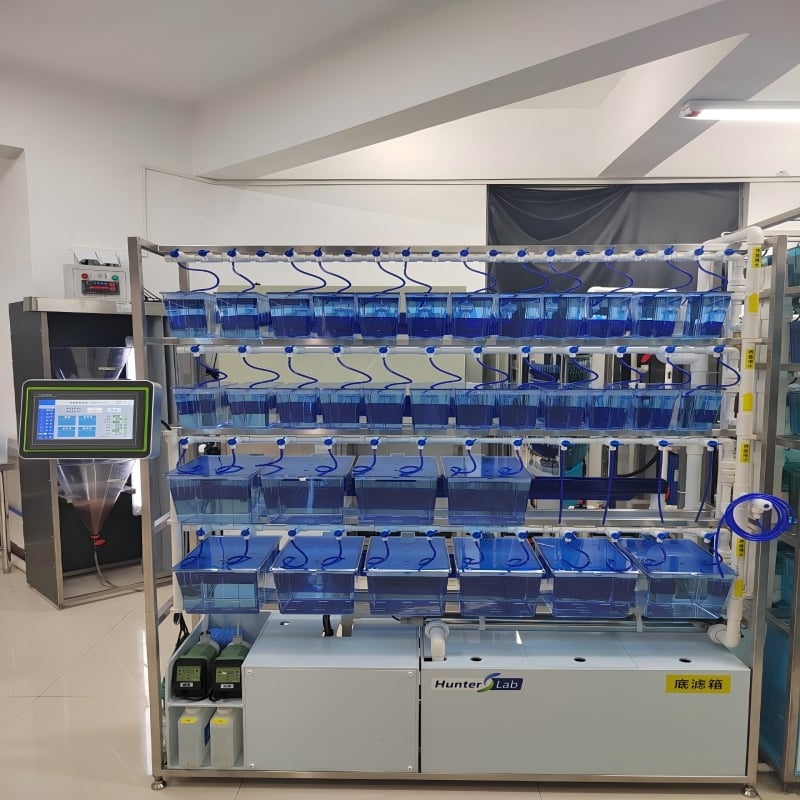
Why Is a Zebrafish Flow-Through Exposure System Preferred for Volatile Compounds?
When a study involves volatile compounds, the central question is not simply how much test material was added at the start. It is whether zebrafish encountered a known, reasonably stable aqueous concentration throughout the relevant dosing window. A Zebrafish Flow-Through Exposure System is often selected because it continuously replaces exposure water with freshly prepared test solution, giving researchers a practical way to manage loss, renewal, and verification.
For teams developing an assay, that distinction matters. An observed developmental or behavioral response is difficult to interpret when the actual concentration drifts from the nominal dose. Flow-through operation does not remove every source of variation, but it can make the exposure pathway easier to characterize than a static vessel for materials that partition into air, adsorb to surfaces, or decline between water changes.
Why volatile compounds challenge static dosing designs
Volatile compounds can leave test water through the headspace, especially when vessels are opened, mixed, sampled, or held for extended periods. Loss can also occur during solution preparation and transfer. In a static design, a larva may therefore encounter a concentration that changes from the first measurement to the next renewal. The nominal concentration on a dosing sheet is useful, but it is not by itself evidence of delivered exposure.
Renewal-static methods can reduce this problem by replacing solutions on a schedule. They may be appropriate for short studies when the concentration profile is measured and remains fit for the study objective. Yet each replacement introduces handling steps and concentration transitions. For a longer study or a material with rapid loss, a Zebrafish Flow-Through Exposure System can provide a steadier operating framework because fresh solution is delivered while used water exits at a controlled rate.
What continuous delivery changes
In a properly designed Zebrafish Flow-Through Exposure System, stock preparation, dilution, delivery, exposure chambers, and waste collection form one controlled path. The system continuously introduces test water and maintains a defined turnover pattern. This does not mean the concentration is automatically constant: tubing material, headspace, chamber geometry, flow rate, and stock-solution handling still influence the result. The advantage is that these variables can be specified, checked, and adjusted within one exposure design.
Continuous delivery is particularly useful when the study team wants to separate two questions: whether the compound has an effect at the measured concentration, and whether concentration instability may be contributing to apparent differences. Early-life fish test guidance, including OECD Test Guideline 210, is concerned with lethal and sublethal effects over defined developmental stages. That makes exposure characterization part of sound endpoint interpretation rather than an administrative afterthought.
Static, renewal-static, and flow-through: a practical comparison
| Approach | Useful when | Main consideration for volatile compounds |
|---|---|---|
| Static | A short exposure can be sampled and concentration change is acceptable for the objective. | Headspace loss and depletion can make the delivered dose diverge from the starting dose. |
| Renewal-static | Scheduled replacement is feasible and each interval can be analytically verified. | Fresh solutions can limit decline, but handling and between-renewal variation remain relevant. |
| Flow-through | The study needs repeated or extended exposure with a defined renewal path. | Continuous replacement can support concentration stability when flows and concentrations are verified. |
The comparison depends on the study rather than serving as a blanket rule. If throughput is the binding constraint, renewal-static work may make sense for a narrowly scoped screen. If concentration stability and a defensible exposure history matter more, a Zebrafish Flow-Through Exposure System is often the more suitable starting point, even though the setup requires additional planning.
How flow-through supports stability and accuracy
1. It supports a defined exposure history
A flow-through design lets the team relate each chamber to a delivery rate, solution preparation method, and sampling plan. For volatile compounds, that creates a clearer record of what water entered the chamber and when. The study should still collect analytical samples at meaningful points, such as the source solution and representative test chambers. Without those measurements, “continuous” does not establish accuracy on its own.
2. It can reduce long intervals without renewal
In a static chamber, time since dosing is a major part of the exposure story. A Zebrafish Flow-Through Exposure System replaces water continuously, so the experimental design is not dependent on leaving one batch of solution unchanged for the entire interval. That can be valuable where concentration loss is expected, provided the flow is balanced to avoid unnecessary physical stress on embryos or larvae.
3. It makes troubleshooting more systematic
When results vary, a defined flow path gives the team concrete checkpoints: stock concentration, dilution, pump output, chamber inflow, overflow, temperature, and sample handling. One often-overlooked setup step is equilibration. Starting biological observations before delivery conditions have settled can blur the distinction between a compound effect and a transient concentration shift. Documenting an equilibration period and confirming flows before introducing test organisms is a sensible control.
Design choices that matter for volatile-compound exposure
- Manage headspace deliberately. Use chamber and transfer arrangements that limit unnecessary air contact while still meeting animal-care and sampling requirements.
- Choose compatible materials. Confirm that tubing, seals, and vessels are appropriate for the test material; adsorption or permeation can alter the delivered concentration.
- Verify flow rather than assuming it. Pump settings are not a substitute for measured inflow and chamber turnover.
- Sample the exposure water. Compare the intended concentration with measured concentrations at points that reflect what zebrafish experience.
- Record environmental conditions. Temperature, dissolved oxygen, and water quality can affect organism response and should be interpreted alongside exposure data.
A validation workflow before biological endpoints are read
The delivery system should be qualified before a full zebrafish study begins. First, run the complete fluid path with matrix water and confirm that each chamber receives the intended flow. Next, use a fit-for-purpose analytical method to compare source and chamber samples after the system has reached operating conditions. Repeat the check at planned intervals so that a single early measurement is not treated as representative of the entire study.
Then document organism-relevant conditions alongside chemistry: temperature, dissolved oxygen, pH where applicable, stocking density, developmental stage, and observation timing. These records do not replace concentration analysis, but they make it easier to identify whether a difference between chambers reflects delivery, husbandry, or biology. If the measured profile is not aligned with the protocol objective, adjust the apparatus or timing before relying on endpoint data.
This sequence also helps teams decide how much engineering is appropriate. A short pilot may justify a simpler arrangement if sampling shows an acceptable profile. A longer assay involving volatile compounds may justify continuous flow, enclosed transfers, and more frequent verification. The choice should follow the material’s behavior and the study question, rather than a preference for a particular apparatus.
When a Zebrafish Flow-Through Exposure System is the stronger choice
A Zebrafish Flow-Through Exposure System is particularly compelling when volatile compounds, extended exposure periods, or concentration-sensitive endpoints make a changing dose profile a material uncertainty. It is also useful when a research group needs a transparent chain from stock preparation through chamber delivery and analytical verification. It is not a shortcut around method development; rather, it gives that development a repeatable framework.
Before selecting the format, ask a direct question: can the planned method show what concentration embryos or larvae actually encountered throughout the study? If the answer is uncertain because the compound may leave the water between renewals, a Zebrafish Flow-Through Exposure System provides a practical route to improve exposure control. For volatile-compound studies, that clearer relationship between dose delivery, stability, and measured outcome is why researchers often favor continuous flow.








