
 EN
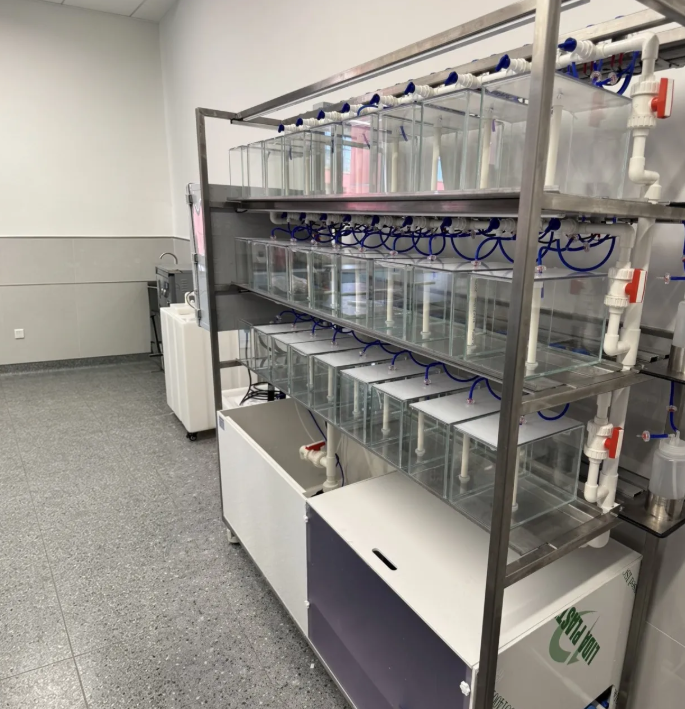
Why choose a recirculating zebrafish breeding system over static tanks?
Choosing between a recirculating setup and static tanks is less about declaring one method universally better and more about matching infrastructure to the work your facility repeats every week. A Zebrafish Breeding System built around recirculation can make routine husbandry more predictable, while static tanks remain useful for short, closely supervised crosses. The practical question is whether your breeding program needs a repeatable operating environment or a simple, stand-alone setup for occasional use.
From a facility-planning perspective, the comparison starts with water. In a static arrangement, each tank is effectively its own small environment. In a recirculating Zebrafish Breeding System, tanks are connected to shared treatment and monitoring processes. That architecture does not remove the need for observation or maintenance, but it changes how a team manages consistency across a growing colony.
Static tanks: simple and useful in the right situation
Static tanks are familiar because they are direct: prepare water, place selected fish, run the cross, collect embryos, then clean and reset. For a small number of planned pairings, this can be a sensible workflow. It gives technicians close control over a single breeding event and can be helpful when a cross must be physically separated from the main system.
The trade-off is that every vessel needs its own preparation, labeling, water-change discipline, and cleanup. A single missed step may not affect every tank, but it can affect the reliability of that one cross. As the number of tanks rises, these small tasks accumulate. Differences in refill timing, source water, temperature exposure, or sanitation practice can make day-to-day conditions less uniform than the protocol suggests on paper.
What recirculation changes in a breeding workflow
A recirculating Zebrafish Breeding System moves water through shared filtration, treatment, and return loops. The value is operational rather than magical: the team has defined points for observing system performance and can apply the same water-management routine across many tanks. Reviews of zebrafish housing consistently identify water-quality management as a central facility responsibility, which is why this shared approach appeals to programs with ongoing breeding demand.
For breeding, greater stability can support more repeatable routines. When fish are transferred into compatible breeding configurations from a managed colony environment, staff can focus on pairing, timing, egg collection, and records instead of rebuilding water conditions for every event. That does not guarantee a particular spawning outcome—fish condition, genetics, stocking, feeding, light cycle, and handling all still matter—but it can reduce one avoidable source of variation.
Water conservation is an operational benefit, not a shortcut
Water conservation is another reason facilities consider recirculation. Static workflows often require frequent replacement of full tank volumes, whereas a managed loop treats and reuses water as part of normal operation. The benefit depends on the facility’s maintenance standards and local water requirements; a recirculating system still needs scheduled exchanges, validation, and cleaning. It should not be treated as a reason to postpone necessary husbandry.
Still, reducing repeated preparation and disposal can matter when a colony grows. Less handling of individual buckets or tanks may also make staffing more predictable. The better measure is not simply liters saved; it is whether the facility can document a consistent process for make-up water, filtration checks, sanitation, and corrective actions.
A practical comparison for research teams
| Decision factor | Recirculating approach | Static approach |
|---|---|---|
| Routine colony scale | Designed to support coordinated operations across multiple tanks. | Often suitable for limited or episodic setups. |
| Water management | Centralized treatment and observation points. | Tank-by-tank preparation and replacement. |
| Workflow flexibility | Works well for repeatable husbandry with clear procedures. | Useful for isolated, short-duration crosses. |
| Labor pattern | Shifts effort toward system checks and planned maintenance. | Shifts effort toward repeated filling, cleaning, and resetting. |
| Isolation needs | Requires thoughtful facility protocols for exceptions. | Provides physical separation by default. |
When static tanks may still be the better choice
A recirculating Zebrafish Breeding System is not automatically the right answer. Static tanks may be preferable for a pilot project, a rare cross, quarantine-adjacent work conducted under approved procedures, or a small team that cannot yet support centralized equipment maintenance. They can also provide a useful backup method when the main system is undergoing planned service.
The key is to avoid comparing only the purchase decision. Ask who prepares water, who checks it, who cleans breeding equipment, how records are maintained, and what happens when a problem is found on a weekend. A simple method can be the better method if the team can execute it consistently.
How to decide for your facility
- Map breeding frequency. Count routine crosses, not only peak weeks. A recurring schedule favors an organized Zebrafish Breeding System.
- Review labor realistically. Include water preparation, cleaning, documentation, and troubleshooting time.
- Define your water-quality process. Identify what is checked, where it is recorded, and who responds to drift.
- Plan for growth. If more lines or more embryo collections are likely, assess whether static tanks will multiply manual tasks faster than staffing can absorb them.
- Keep exceptions in the design. Even a recirculating facility benefits from a documented plan for isolated or temporary breeding work.
Bottom line
Choose a recirculating Zebrafish Breeding System when your facility needs repeatable breeding operations, shared water-management discipline, and a pathway to scale. Choose static tanks when simplicity, short-term separation, or occasional crossing is the priority. In either case, the strongest outcome comes from documented routines, trained staff, and realistic expectations about what stability and equipment can—and cannot—solve.








