
 EN
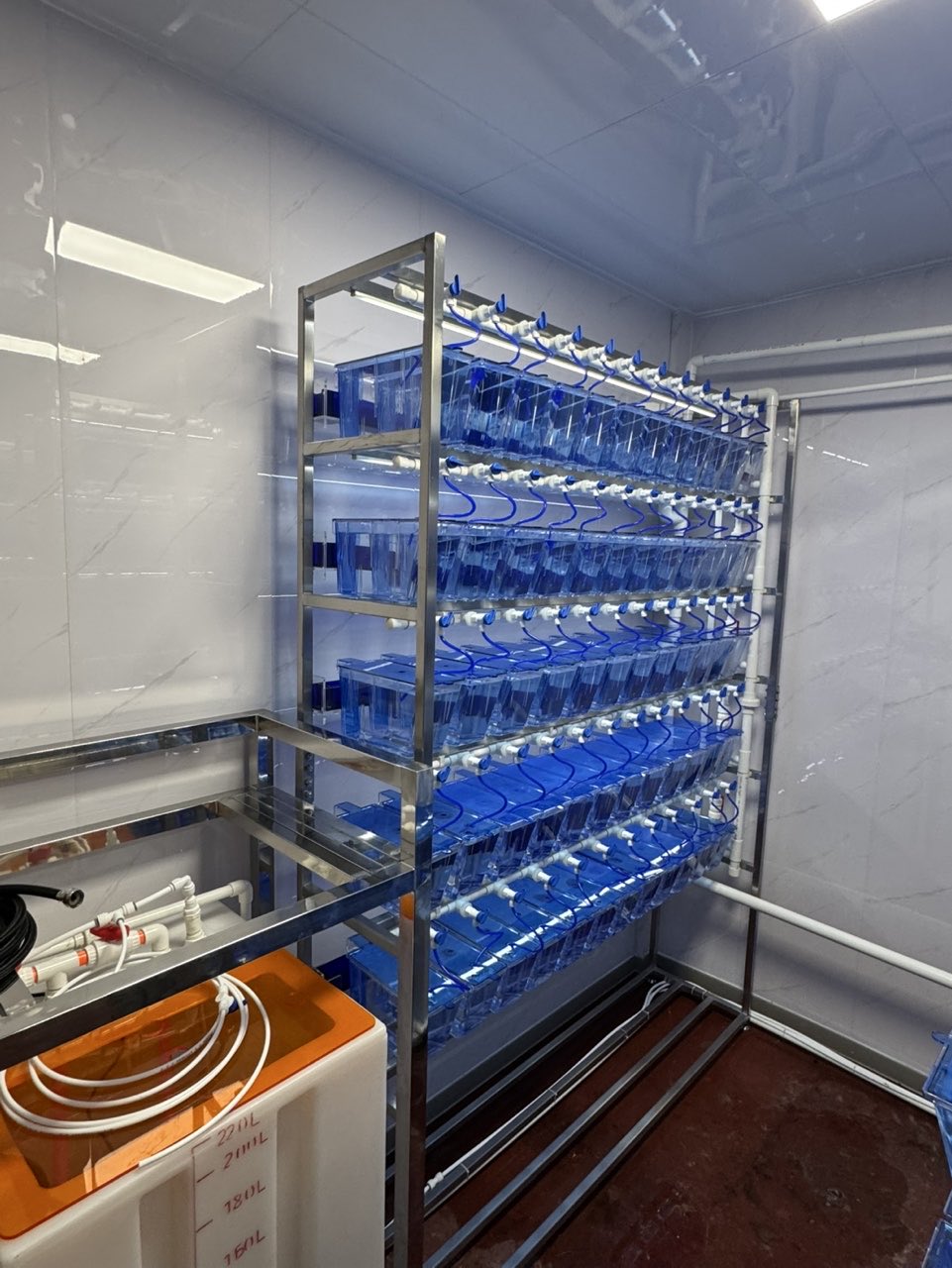
What Should Facility Managers Look for When Buying a Zebrafish Rack?
Buying a Zebrafish Rack is not simply a matter of counting tanks and comparing a quoted price. For facility managers, the better question is whether the system can maintain stable housing conditions, fit the building, support the colony plan, and remain serviceable when the facility is busy. A rack that looks efficient on a specification sheet can become difficult to operate if its water treatment, access clearances, alarm responsibilities, and maintenance routine were not evaluated together.
That is why procurement should start with an operating brief rather than a product shortlist. Define the species and life stages to be housed, expected colony growth, staffing coverage, available utilities, and the institutional requirements that shape approval. The right choice depends on those conditions; there is no single configuration that suits every zebrafish program.
Start with usable capacity, not the largest tank count
Load capacity is one of the most misunderstood purchase criteria. A supplier may state a maximum number of tanks, but the practical operating capacity depends on tank volume, stocking policy, quarantine needs, breeding workflow, water demand, and the room left for future studies. Ask the vendor to show how the advertised tank count relates to the proposed tank sizes and the intended daily operating load.
Build a capacity model before comparing racks. Separate production, breeding, holding, quarantine, and contingency space. Then add a reasonable growth allowance. This prevents a common facility problem: a rack is nominally full before the colony has enough space to support a new protocol, an incoming line, or a temporary isolation need.
- List the tank volumes and row layout proposed for the Zebrafish Rack.
- Identify which positions are usable during routine cleaning and which are reserved for special workflows.
- Confirm the expected occupancy assumptions behind the stated load capacity.
- Ask whether an expansion can preserve the same water-management and monitoring approach.
Evaluate water management as part of the rack
A housing rack is part furniture, part life-support system. Filtration, circulation, temperature control, make-up water, drainage, and water-quality monitoring should be reviewed as one operational chain. Published reviews of zebrafish housing describe standalone arrangements in which water-system components sit within the rack footprint; that can save room, but it also makes service access and heat management more important.
During procurement, ask who owns each responsibility: facility staff, engineering, animal-care personnel, or the vendor. Clarify where filter changes occur, how spills are contained, what happens during a pump or sensor alarm, and whether routine service can be performed without disturbing nearby tanks. A workable design makes the normal tasks easy, not just the emergency tasks possible.
Check the room before approving the system
Measure more than the available floor rectangle. A Zebrafish Rack needs approach space for operators, doors and carts, access to plumbing and electrical connections, and clearance to remove service components. Confirm floor loading, drain location, humidity control, heat rejection, water supply quality, and the path from delivery point to the final room. If the rack is planned near other sensitive equipment, consider how noise, splash risk, and maintenance traffic will affect the wider facility.
It is also sensible to request a utilities drawing and a service-side layout. A rear-access rack may be efficient in a large room but awkward against a wall; a front-service layout may simplify daily work but still require a route for replacing pumps, UV components, or filters. Small layout details often determine whether staff can follow the intended maintenance schedule.
Make maintainability a scored requirement
Facility managers should score maintainability alongside price and nominal load capacity. Review the physical reach to tanks, labels, valves, drain points, filter housings, and monitoring components. Observe a demonstration if possible, or ask for a task-by-task service description that shows the tools, time, and shutdown conditions required for common work.
| Evaluation area | Questions for the buying team | Evidence to request |
|---|---|---|
| Daily access | Can staff inspect tanks, feed, and identify issues without moving equipment? | Layout drawing and operating walkthrough |
| Water quality | What monitoring, filtration, and alarm interfaces are included or external? | System diagram and maintenance schedule |
| Serviceability | Can consumables and components be changed safely during normal operations? | Preventive-maintenance task list |
| Expansion | What changes are needed if colony demand increases? | Capacity assumptions and expansion plan |
| Documentation | What records support installation, training, warranty, and ongoing service? | Scope of supply and support terms |
Compare total ownership conditions, not only the initial quote
The purchase price is only one line in the decision. A 2020 open-design study cited a historical commercial stand-alone rack range of roughly USD 10,000 to 20,000 for one 15-by-10 L configuration, but it should not be treated as a current quote. Tank format, controls, installation, regional service, and the facility’s requirements can change costs substantially. Use current supplier proposals for budgeting.
Instead, compare total ownership conditions: consumables, planned maintenance, water and energy demand, installation work, training, warranty coverage, response times, and the cost of downtime. For facility managers, the critical comparison is often the amount of predictable work a system creates over its useful life, not the lowest entry figure.
Ask for documentation that supports institutional procurement
Research facilities commonly need a record that can be understood by investigators, animal-care staff, finance, and safety or engineering reviewers. Request a clear scope of supply, utility requirements, commissioning plan, operator training outline, preventive-maintenance schedule, spare-parts approach, warranty terms, and escalation contacts. These documents turn a technical comparison into a defensible procurement decision.
Where several stakeholders will approve the purchase, use a weighted matrix. Give each reviewer a defined role: the scientific lead assesses colony and study fit; facility staff assess workflow and cleaning; engineering reviews utilities; and purchasing evaluates commercial and support terms. This approach makes trade-offs visible before installation, when they are easier to resolve.
A practical acceptance checklist for a Zebrafish Rack
- Confirm the proposed tank layout supports current operations plus realistic growth.
- Verify load capacity assumptions against tank volume, housing policy, and contingency space.
- Review the complete water-management pathway, including alarms and ownership of routine checks.
- Validate floor, drain, electrical, water, ventilation, and delivery-route requirements on site.
- Test access for daily husbandry, cleaning, inspections, and planned component replacement.
- Compare maintenance, consumables, training, service response, and downtime exposure across proposals.
- Collect the drawings and documents needed for institutional approval and future handover.
Choose the rack that fits the facility’s operating reality
A well-chosen Zebrafish Rack should support stable daily husbandry without turning routine work into a workaround. The most useful buying process translates research demand into usable capacity, water-management responsibilities, room constraints, service access, and documentation. If a proposal cannot explain those connections clearly, ask for clarification before approving it.
For facility managers, that discipline is the practical safeguard. It helps the team select a system that can be installed, maintained, and expanded with fewer surprises—and that is a more durable outcome than choosing on tank count alone.








