
 EN
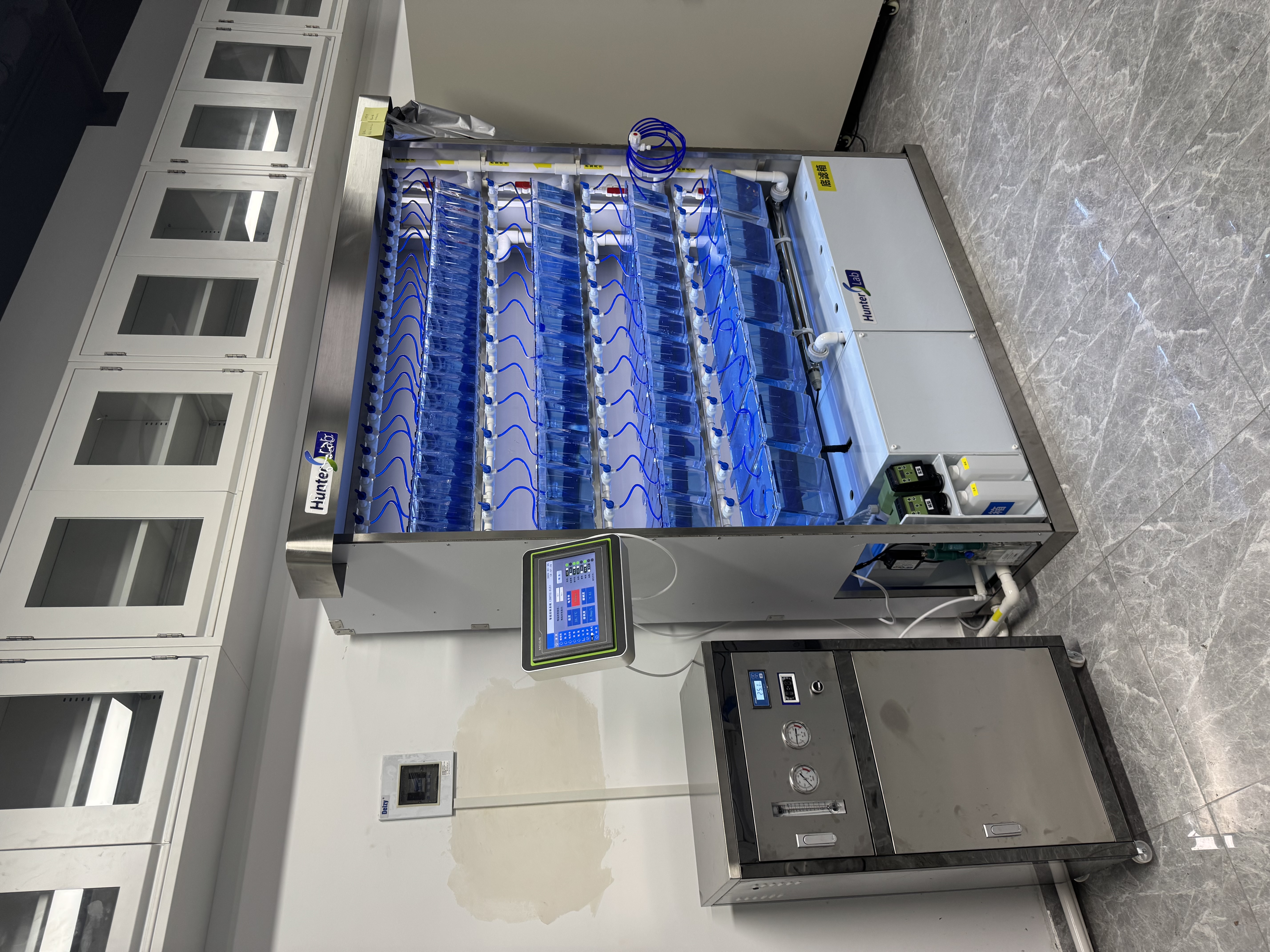
Why ROI is more than a simple payback calculation
A zebrafish water monitor is often pitched as a labor-saving device. That framing is not wrong, but it sells the technology short. The return on investment comes from several places, and labor is only one of them. A facility that only counts the hours saved on manual testing may miss the larger financial picture. The bigger gains often come from avoiding losses that are hard to predict but expensive when they happen.
ROI in this context is not a single number. It is a combination of direct savings, avoided costs, and improvements in data quality that affect how much usable research a facility produces. Each of those components behaves differently. Labor savings are steady and predictable. Avoided losses are irregular but potentially large. Data quality improvements are subtle but compound over time.
The direct labor savings from continuous monitoring
Manual water testing is a routine that scales with tank count and testing frequency. A facility with multiple racks may spend several hours each week walking between tanks, taking readings, and logging results. A zebrafish water monitor replaces much of that routine with continuous measurement and automatic logging. The time saved is not just the testing itself. It also includes the transcription, the follow-up checks, and the re-testing when a reading looks off.
The savings are easiest to estimate with a simple time study. Count the hours spent on water testing before the monitor is installed. Then count them again a few months after. The difference is the direct labor saving. That figure is usually solid enough to support a basic payback estimate. It rarely tells the whole story, but it is a good starting point.
| Cost or saving category | Manual monitoring | With water monitor |
|---|---|---|
| Routine testing labor | High, daily or weekly | Low, periodic checks |
| Data logging and transcription | Manual, time consuming | Automatic |
| Re-testing outliers | Frequent | Rare |
| Emergency response to water issues | Reactive | Earlier detection |
| Colony loss from undetected problems | Possible | Reduced but not eliminated |
Avoiding colony losses and experiment repeats
The most expensive water quality event is the one that kills fish or ruins an experiment. A temperature spike, an oxygen crash, or an ammonia rise can wipe out a tank, a rack, or an entire study. The cost of those events includes the fish themselves, the labor to replace them, and the weeks or months of research time lost. For a long-term study, that loss can be substantial.
A water monitor reduces the chance that a problem goes undetected for hours. An alarm that fires when oxygen drops below a threshold gives staff time to act before fish are stressed. That early warning is where the largest financial returns often sit. It is also the hardest to quantify because it depends on how often those events would have occurred without the monitor.
Data quality and its effect on research output
Water quality data is not just an operational record. It is part of the experimental context. When a study produces an unexpected result, the water quality log can help explain why. A gradual shift in conductivity or a brief temperature excursion may be the hidden variable that accounts for an outlier. Without that record, the result is unexplained, and the experiment may need to be repeated.
A zebrafish water monitor makes that record automatic and consistent. It reduces the risk that a study is invalidated by missing or unreliable environmental data. For facilities that run regulated studies or publish in journals that expect detailed methods, that consistency has value beyond the lab. It supports reproducibility, which is increasingly emphasized in research funding and publication.
A field example of ROI in practice
A university facility in southern China installed a water monitor across a set of larval and adult racks. The initial justification was labor savings, and the time study supported a modest payback period. The larger return came later. During a holiday weekend, a slow failure in a return pump caused water flow to drop in one section of the rack. The monitor detected the flow change and sent an alert. Staff who were on call responded and corrected the issue before oxygen levels became dangerous.
Without the monitor, the failure would likely have gone unnoticed until the next scheduled check. The affected tanks held a line that had taken months to establish. Losing that line would have delayed several ongoing projects. The avoided cost was not a routine expense. It was a one-time event that would have had ripple effects across the lab. That single incident changed how the facility viewed the monitor. It was no longer just a labor-saving tool. It was risk management.
What ROI cannot capture and where the limits are
Not every benefit shows up in a financial calculation. A water monitor can reduce stress on staff by removing the need for constant manual checks. It can improve job satisfaction and reduce turnover in animal care roles. Those effects are real but hard to put a number on. They may still matter to a facility manager who is trying to build a stable team.
There are also limits. A monitor does not fix poor husbandry, overcrowding, or a failing filtration system. It detects problems, but someone still has to respond. If the facility lacks a clear alarm response plan, the monitor may generate alerts that nobody acts on. The ROI depends partly on the human system around the technology. A monitor without a response protocol is an expense, not an investment.
It is also worth being conservative about savings estimates. Sensor drift, false alarms, and maintenance costs all reduce the net return. A facility that builds a business case on optimistic assumptions may be disappointed. A more realistic approach uses a range of estimates and revisits the calculation after the monitor has been running for a year.
Hunter Lab (Hunter) builds zebrafish laboratory equipment with attention to the reliability that continuous monitoring depends on. The manufacturing and quality control side supports the sensor stability and system consistency that long-term colony management requires. For facilities evaluating the financial case for a water monitor, that kind of build discipline is part of the foundation.








