
 EN
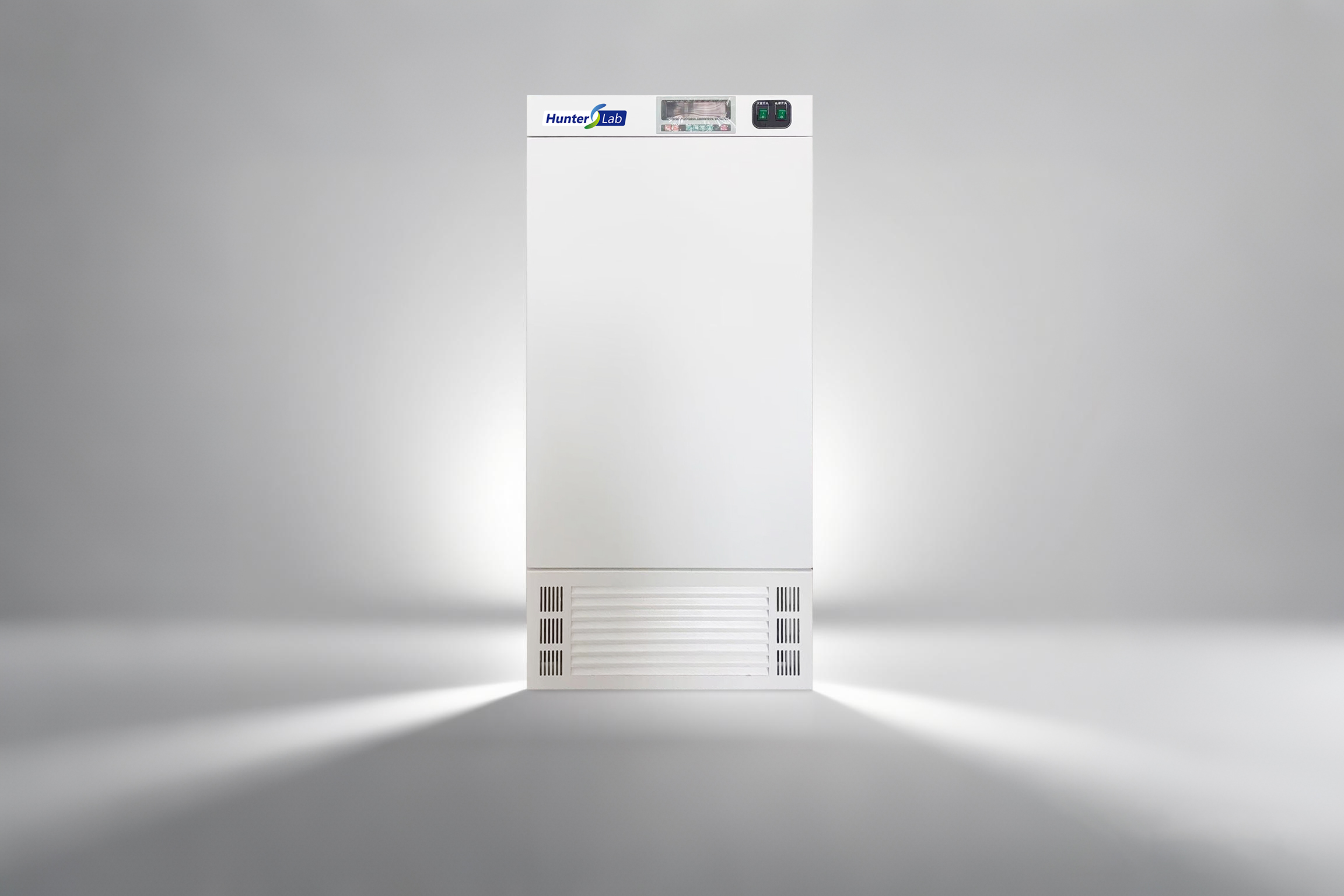
Why Usable Space Matters More Than Chamber Volume
Choosing a zebrafish incubator is less about finding the largest chamber and more about matching usable space to how the lab runs embryos, larvae, plates, and daily checks. Capacity can be expressed as chamber volume, shelf count, or the number of petri dishes that fit on a shelf. Those measurements are related but not interchangeable. A chamber with generous liters may still be inefficient if its shelf spacing, rack footprint, or airflow pattern does not suit the containers in use.
For a shared zebrafish facility, the most useful question is how many experimental units must be held at the same controlled condition during the busiest cycle. Start there, then work backward to shelf count and chamber size. This avoids a common procurement mistake: buying for the average week and discovering that peak spawning, treatment, or imaging preparation days overwhelm the incubator.
Three Practical Capacity Formats
A zebrafish incubator may be described by internal volume, shelf configuration, or an approximate plate count. Each format serves a different planning task.
Compact benchtop capacity suits a small pilot workflow, a dedicated temperature condition, or a team that needs to segregate experiments. These units often have limited shelf area, so the important calculation is how many labeled dishes or racks fit without blocking access.
Mid-size cabinet capacity is a practical option when several experiments run in parallel. It can support multiple shelf levels and allows one shelf to be reserved for a time point, treatment group, or user.
Large cabinet or walk-in capacity fits core facilities, high throughput screening support, or programs with frequent simultaneous batches. The advantage is not simply more volume. It is the ability to organize many batches without stacking containers so tightly that retrieval and inspection become unreliable.
When comparing these categories, ask suppliers for usable shelf dimensions rather than relying on a headline volume. Door clearance, shelf supports, fan housings, and minimum safe space around containers all reduce the area available in a real workflow.
| Capacity Format | Typical Use | Planning Focus |
|---|---|---|
| Compact benchtop | Pilot work, dedicated condition | Dishes per shelf with safe access |
| Mid-size cabinet | Parallel experiments, shared users | Shelf assignment by group or time point |
| Large cabinet or walk-in | Core facility, high throughput | Batch organization without crowding |
| Flexible multi-shelf | Changing protocols | Adjustable levels for dishes or trays |
Planning Around Containers Instead of Liters
Most zebrafish embryo workflows are organized around dishes, multiwell plates, or trays. That makes a dish based estimate more actionable than an internal volume estimate. Begin by listing the container format used at each stage. Petri dishes for embryo handling, multiwell plates for a treatment assay, and larger trays for short term holding.
Then measure the outside footprint of the container or its rack, including labels and lid overhang. For petri dishes, capacity depends on diameter, whether dishes are stored in racks, and whether the protocol permits stacking. A shelf that holds many 60 mm dishes may hold substantially fewer 90 mm or 100 mm dishes. Rack geometry matters too. A stated dish count is a product specific figure, not a universal incubator rule. Treat every count as a starting point to verify against the exact shelf and rack intended for use.
Do not assume that the maximum physical count is the most workable operating count. Labels must remain readable, dishes need to be removed without disturbing adjacent samples, and staff need a simple way to identify day, clutch, treatment, and replicate. Leaving deliberate handling space often protects throughput better than filling every square centimeter.
Why a Multi-Shelf Layout Changes Usable Capacity
A multi-shelf incubator can increase capacity without making individual shelves difficult to manage. It also creates an organizational advantage. A shelf can represent a condition, a developmental window, a project, or a user group. That separation reduces the chance of mixing samples during a busy handoff.
Still, more shelves are useful only when they preserve appropriate circulation and access. Shelf spacing should accommodate the tallest routine container, and a fully loaded shelf should not obstruct the airflow pattern specified for the unit. If the lab commonly uses racks, put a loaded rack on the shelf during evaluation rather than measuring an empty dish. The thickness of the rack base and lid can remove enough vertical clearance to make an apparently suitable layout impractical.
For high use rooms, a flexible shelf system is often preferable to a fixed configuration. Removable or adjustable shelves allow a lab to dedicate two narrow levels to dishes during screening weeks, then create a taller level for trays when the protocol changes. Capacity is therefore not a static number. It is the number of samples the team can place, inspect, and retrieve consistently under its current operating plan.
Using a Peak Load Calculation Before Selection
Build a simple peak load worksheet. Count the maximum number of containers expected on the busiest day, add a buffer for repeat runs and unexpected clutches, and divide the total by the verified containers per shelf. The result is the minimum shelf capacity, not the nominal capacity.
-
List each container type and its footprint.
-
Estimate the highest concurrent number of containers, not the monthly average.
-
Reserve space for controls, transfers, and temporary staging.
-
Check how many containers fit on one shelf with safe access.
-
Add a growth buffer if the workflow or user base is expanding.
For example, if one experiment uses eight dishes and four experiments can overlap, the baseline is 32 dishes. Add controls, repeats, and a reasonable operational buffer before deciding that one shelf is enough. This calculation may point to a compact unit for a dedicated assay, or it may show that a mid size zebrafish incubator with several organized shelves will save more staff time than a larger but poorly arranged chamber.
Temperature Stability Must Be Evaluated With Capacity
Zebrafish developmental timing is temperature sensitive. Standard developmental references commonly use conditions around 26 to 28.5 °C, with 28.5 °C frequently cited as an optimum reference point. The precise setpoint should follow the approved protocol, but the capacity lesson is broader. Validate performance at a realistic load. An incubator that is stable when nearly empty may behave differently when shelves are populated with dishes, racks, and warm items introduced during routine work.
Ask how recovery is assessed after door openings, where sensors are positioned, and whether the specified stability range applies to a loaded chamber. If a lab needs multiple temperatures, separate smaller units may offer better experimental control than one large chamber that forces incompatible schedules together.
The right zebrafish incubator capacity supports clear sample organization and repeatable conditions at peak load. Hunter Lab supports zebrafish laboratories with incubators and environmental control equipment built for controlled aquatic research. The company's experience covers chamber design, shelf configuration, and the operational realities of maintaining zebrafish colonies. For facilities comparing capacity options, Hunter Lab offers a partner that understands how shelf geometry, container format, and daily workflow affect usable incubator space.








