
 EN
Why redundancy matters more than any single piece of equipment
A zebrafish breeding system is a life support platform before it is anything else. Every facility plans for normal operation. Fewer plan for the moment a pump stops, a heater sticks, or a power line goes down. The animals cannot wait. Ammonia rises, oxygen falls, and temperature drifts. A backup system is not a luxury. It is part of the breeding platform.
The Guide for the Care and Use of Laboratory Animals stresses contingency planning for aquatic species. The Zebrafish Book also treats environmental stability as a core requirement. Neither document names a specific product, because the right backup depends on the facility. What matters is that redundancy covers the failure modes that actually threaten the colony.
Power backup keeps pumps and heaters running through outages
Electricity is the first dependency. Pumps move water through filters, heaters hold temperature, and air blowers oxygenate tanks. A short outage can be tolerated if the water volume is large. A longer outage becomes dangerous.
-
Uninterruptible power supplies protect controllers, sensors, and small pumps for short interruptions.
-
Battery banks extend runtime for critical loops.
-
Standby generators carry the full load during extended outages.
-
Manual transfer switches allow a person to move critical circuits to generator power.
The choice depends on how long the facility can safely coast. A recirculating zebrafish breeding system with a large sump may hold temperature and oxygen for a while. A rack with small tanks and high density has much less margin. The backup plan should match the risk, not the budget alone.
Water quality monitoring and emergency water supply
Water quality is the second dependency. Even with power, a failed filter or a contaminated source can harm the colony. Monitoring should cover ammonia, nitrite, pH, conductivity, and dissolved oxygen. Alarms should trigger before values reach dangerous levels, not after.
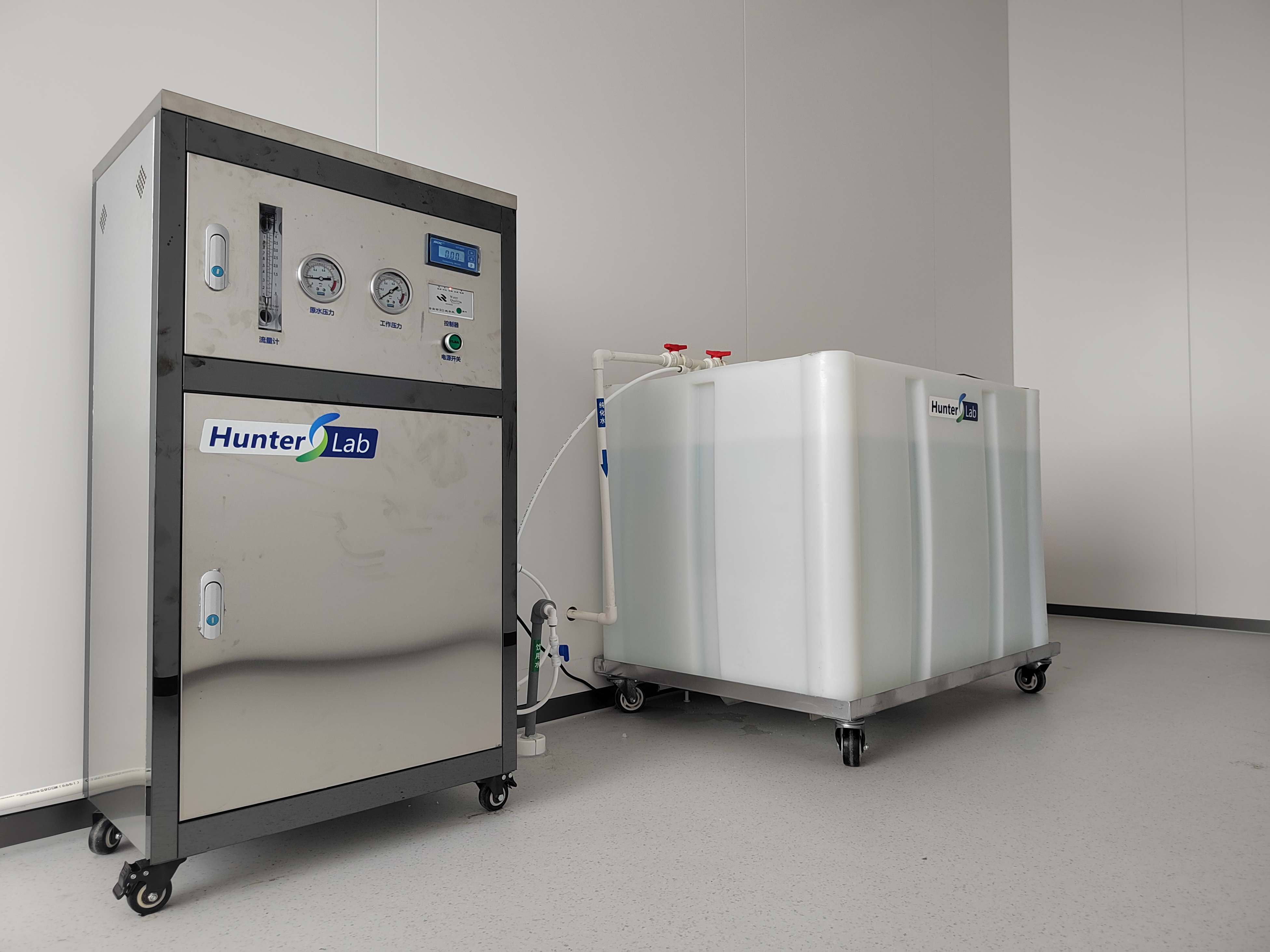
An emergency water supply is also worth planning. Stored, conditioned water can be used for partial changes if the main supply fails. A simple tank of pre-treated water, kept at the right temperature, buys time. The storage vessel needs its own circulation and cover to prevent stagnation.
Temperature and oxygen safeguards during system downtime
Temperature and oxygen are linked to water flow. When a pump stops, water in the tanks stops moving. Stratification can develop, and oxygen near the bottom can drop. A backup pump or a battery-powered air stone can maintain circulation in critical tanks.
Heating is more difficult to back up than pumping. A small heater on a UPS may hold temperature for a short period. For longer outages, insulation and reduced water volume in the room can slow heat loss. Cooling is the opposite problem. In a warm room, water can overheat even without a heater, so ventilation and chillers need backup too.
| Backup layer | Protects against | Runtime | Maintenance need |
|---|---|---|---|
| UPS for controllers | Short power blips | Minutes | Battery checks |
| Battery bank for pumps | Short to medium outages | Hours | Load testing |
| Generator | Extended outages | Days | Fuel and exercise |
| Stored water | Supply interruption | Hours to days | Circulation and testing |
| Alarm system | Silent failures | Continuous | Sensor calibration |
Alarm and remote notification systems that reach someone at night
An alarm that only sounds inside the room is not a real backup. Failures often happen at night or on weekends. A remote notification system can send a message to a phone or an on-call list. That step converts a silent failure into a response.
Alarm design should avoid two traps. Too many false alarms train staff to ignore them. Too few alarms leave gaps. A practical setup uses a small number of high-value sensors, such as temperature, water level, and power status. Each alarm should have a clear threshold and a documented response.
Testing, documentation, and the limits of backup planning
Backup equipment that is never tested is only a theory. Pumps seize, batteries lose capacity, and generators fail to start. A routine test schedule is as important as the hardware.
A facility in southern China learned this after a storm knocked out power for an extended period. The uninterruptible power supply kept the controllers alive, but one of the backup pumps had not been exercised in months. It failed to start. Staff moved a working pump from a less critical rack and saved most of the colony, but the incident led to a monthly pump test and a generator exercise schedule.
Documentation matters too. A written plan tells staff what to do when an alarm fires at 2 a.m. The plan should list who to call, which valves to turn, and where spare parts are stored. Even the best backup system cannot cover every scenario. A facility that accepts that limit and plans for the most likely failures is in a stronger position than one that assumes nothing will go wrong.
Hunter Lab (Hunter) builds zebrafish laboratory equipment with attention to the reliability that breeding colonies require. The manufacturing and quality control side supports the consistency that long-term research demands. For facilities designing a backup strategy, that kind of build discipline is part of the foundation.








