
 EN
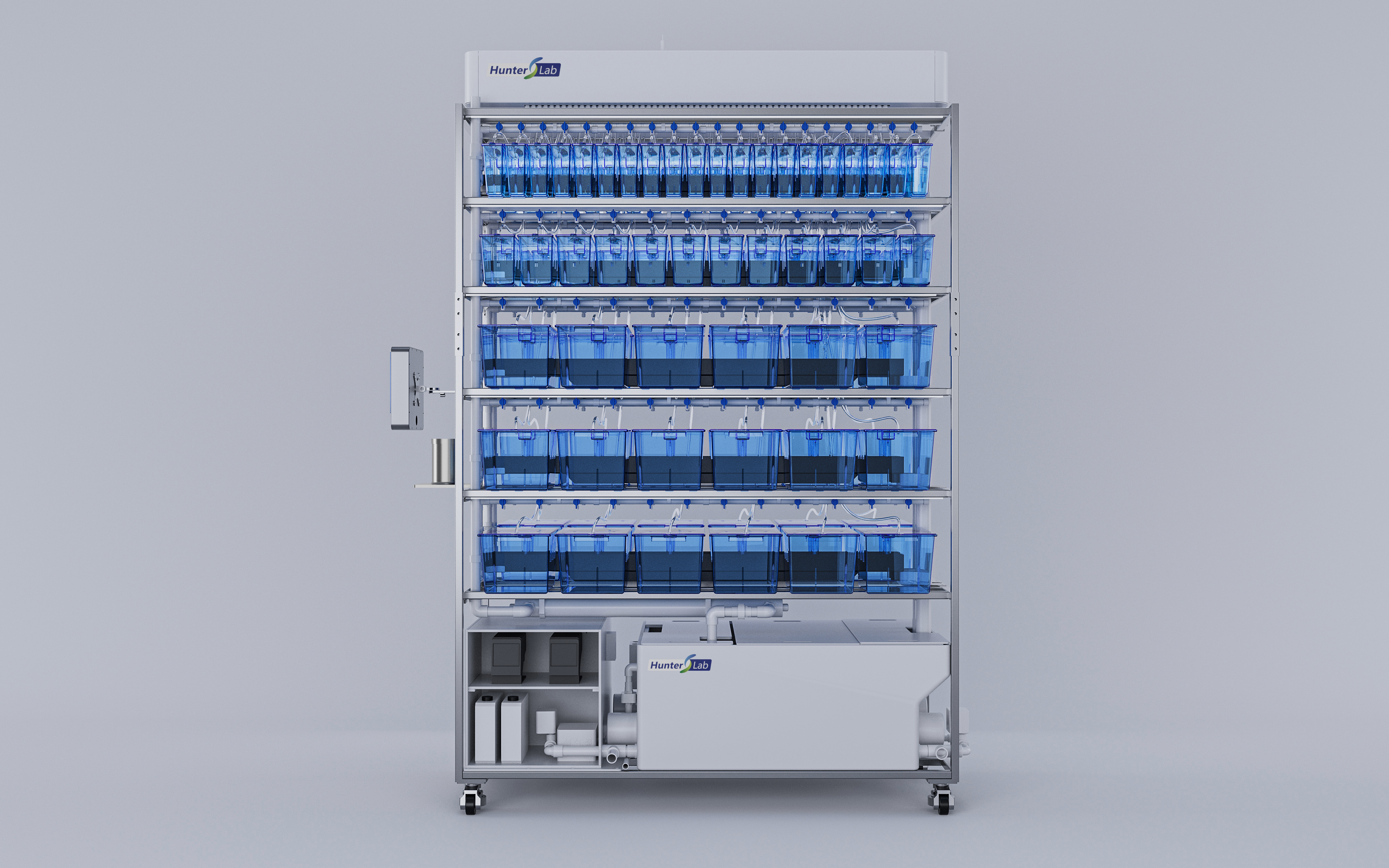
What are the common challenges in operating a zebrafish reproduction system?
A zebrafish reproduction system can look stable for weeks and then suddenly produce sparse clutches, uneven fertilization, or fragile embryos. The usual temptation is to blame one breeder pair. In practice, recurring problems more often come from small shifts across the whole workflow: water conditions, light timing, conditioning, handling, collection timing, and incomplete records. A reliable system is less about finding one ideal setting and more about keeping the variables that matter visible and controlled.
For facilities supporting university, pharmaceutical, cosmetic, or nutraceutical studies, that distinction matters. A lower embryo yield is inconvenient; an unexplained shift in embryo quality can also compromise scheduling, comparison between experimental runs, and confidence in downstream results. This guide focuses on practical challenges, troubleshooting priorities, and management habits that make a zebrafish reproduction system easier to operate consistently.
1. Water stability is harder to maintain than a single acceptable reading
The most common hidden cause of inconsistent spawning is not necessarily an obviously failed water test. It is variation: a temperature drift overnight, conductivity that changes after top-up water, or a nitrogen-compound trend that is still below an emergency threshold but is moving in the wrong direction. For breeding work, stable conditions are usually more valuable than chasing a nominal target on the day of spawning.
Published husbandry guidance commonly places adult zebrafish maintenance within roughly 24–29°C and identifies conditions around 28°C as typical for reproduction. It also gives useful starting ranges for routine monitoring, including ammonia below 0.1 mg/L, nitrite below 0.3 mg/L, nitrate below 25 mg/L, pH 6.5–8, and conductivity between 150 and 1700 µS/cm. These are reference ranges rather than permission to ignore local SOPs. The right approach depends heavily on your strain, facility water source, stocking density, and approved protocol.
Troubleshooting pattern: good water report, poor embryo output
When daily readings appear normal but output falls, compare trends rather than isolated numbers. Review the previous seven to fourteen days for temperature alarms, water changes, filter service, conductivity adjustments, and tank moves. Then compare affected tanks with unaffected breeding groups. If the same dip appears across multiple crosses after a system event, treat the issue as an operation-wide signal before changing individual pairings.
- Log pH and conductivity at a consistent time each day.
- Review ammonia, nitrite, and nitrate on the cadence required by your facility, and increase checks after system maintenance or unexplained losses.
- Record the source and volume of make-up water, not only the final tank reading.
- Verify that probes, dosing equipment, heaters, and alarm limits are calibrated and documented.
2. Light cycles and collection timing can make a healthy colony look unproductive
Zebrafish spawning is strongly synchronized with the light cycle. A reproduction system may therefore generate disappointing results when the photoperiod is technically programmed but the real room environment is not controlled. Door openings, bench lighting, timer drift, or a changed cleaning schedule can all interfere with a predictable morning workflow. Collection timing is equally important: leaving embryos too long before assessment can mix viable embryos with deteriorating or unfertilized eggs and obscure the original problem.
Start by making the reproductive timetable explicit. Record when breeders are paired, when lights transition, when dividers are removed, when spawning begins, and when eggs are collected. If output becomes erratic, check timing records before changing diet or replacing fish. This is a simple management control, but it separates a biological problem from an operation problem.
3. Breeder condition and pairing design are frequent sources of avoidable variation
A zebrafish reproduction system cannot compensate for breeders that are too young, too old, stressed by repeated use, poorly conditioned, or mismatched in sex ratio. Yield is also a misleading standalone metric. A female may release a large clutch, yet fertilization rate or early embryo survival may be poor. Conversely, a smaller but highly viable clutch can be more useful for a tightly scheduled assay.
For this reason, management records should connect parent identity with outcomes: pair or group composition, approximate age band, previous spawning date, observed condition, clutch size, fertilization estimate, and embryo losses at a defined early checkpoint. A female can spawn hundreds of eggs in one mating, but that biological capacity is not a daily production guarantee. Conditioning, recovery time, and consistent feeding routines all affect whether a cross is suitable on that day.
In my experience, teams often start by tracking clutch count alone. Once they compare clutch count with fertilization and early survival, the picture changes: the apparent “low-output” problem may actually be a timing or embryo-handling problem. Use the same scoring criteria across operators so that a change in notation does not masquerade as a change in reproduction.
4. Handling and equipment setup can add stress before the cross even begins
Physical handling is easy to underestimate because it is routine. Netting, transfer duration, abrupt water changes, tank design, divider placement, crowding in a breeding chamber, and excessive disturbance during setup can all reduce spawning success or create inconsistent outcomes between staff members. The published protocol may specify a setup sequence, but local results can still differ if the equipment geometry or operator technique changes.
That does not mean every procedure needs to be made rigid beyond reason. It means the sensitive steps need a shared standard. Create a short setup checklist that names the tank type, water level, divider status, fish count, pairing time, and operator. If one team member consistently gets lower fertilization or more damaged embryos, review the workflow together rather than assuming a biological difference. A non-punitive comparison of technique is often more useful than a one-off retraining session.
5. Embryo quality problems need a staged diagnosis
White, opaque, fragmented, or developmentally delayed embryos can originate before spawning, at fertilization, or after collection. Treating every loss as a parent-fish issue leads to unnecessary culling and misses correctable system faults. A staged diagnosis is more effective:
- Check the cross: Were the breeders correctly identified, conditioned, and paired at the planned time?
- Check the system: Were temperature, water chemistry, photoperiod, and recent maintenance stable?
- Check collection: Was the clutch collected and transferred consistently, with clean labeled vessels and an appropriate assessment window?
- Check the pattern: Is the problem limited to one pair, one rack, one operator, or every cross that day?
This sequence prevents a common troubleshooting error: changing several factors at once. If you alter pair composition, diet, water adjustment, and collection timing in the same week, you may improve the outcome without learning why. In a research facility, that makes the next failure harder to diagnose.
6. Incomplete records turn small deviations into recurring challenges
The most persistent management issue is often not an animal or hardware fault; it is the absence of a record that links a deviation to its outcome. A practical reproduction log does not have to be elaborate. It should make it possible to answer: What changed? When did it change? Which crosses were exposed? What happened to fertilization and early embryo quality afterward?
| Record area | Useful entries | Why it matters |
|---|---|---|
| System conditions | Temperature, pH, conductivity, nitrogen readings, alarms, maintenance | Reveals gradual drift and shared events |
| Breeder history | Line, age band, prior use, observed condition, pairing composition | Separates colony patterns from individual crosses |
| Spawning workflow | Setup time, light transition, divider removal, collection time, operator | Exposes timing and handling variation |
| Outcome measures | Clutch estimate, fertilization estimate, early mortality, notable morphology | Supports repeatable troubleshooting decisions |
A practical management routine for a more reliable system
When a zebrafish reproduction system is underperforming, begin with one controlled review rather than a broad reset. First, verify water and photoperiod stability. Second, compare breeder histories and pairing patterns. Third, observe setup and collection without changing the process. Finally, make one documented correction and compare the next planned crosses against a baseline. Conditional qualification matters here: a change that improves one line or room may not transfer unchanged to another, so validate it with your own records.
Hunter Lab works with zebrafish-focused research equipment and applications, but the core operating principle is broader than any single system: reproducibility comes from connecting facility conditions, husbandry decisions, and embryo outcomes in one traceable workflow. With disciplined troubleshooting and consistent documentation, most recurring reproduction challenges become narrower, more testable, and easier to correct.
Quick operating reminder: treat the Zebrafish Reproduction System as a controlled workflow, not a set of independent tanks. List challenges by date and rack; assign each troubleshooting action to one owner; verify operation changes against baseline readings; and review management records after every planned breeding session. This Zebrafish Reproduction System routine makes challenges easier to isolate, keeps troubleshooting proportional to the evidence, and helps operation and management teams avoid changing multiple variables at once. A consistent Zebrafish Reproduction System log turns recurring challenges into testable management decisions.








