
 EN
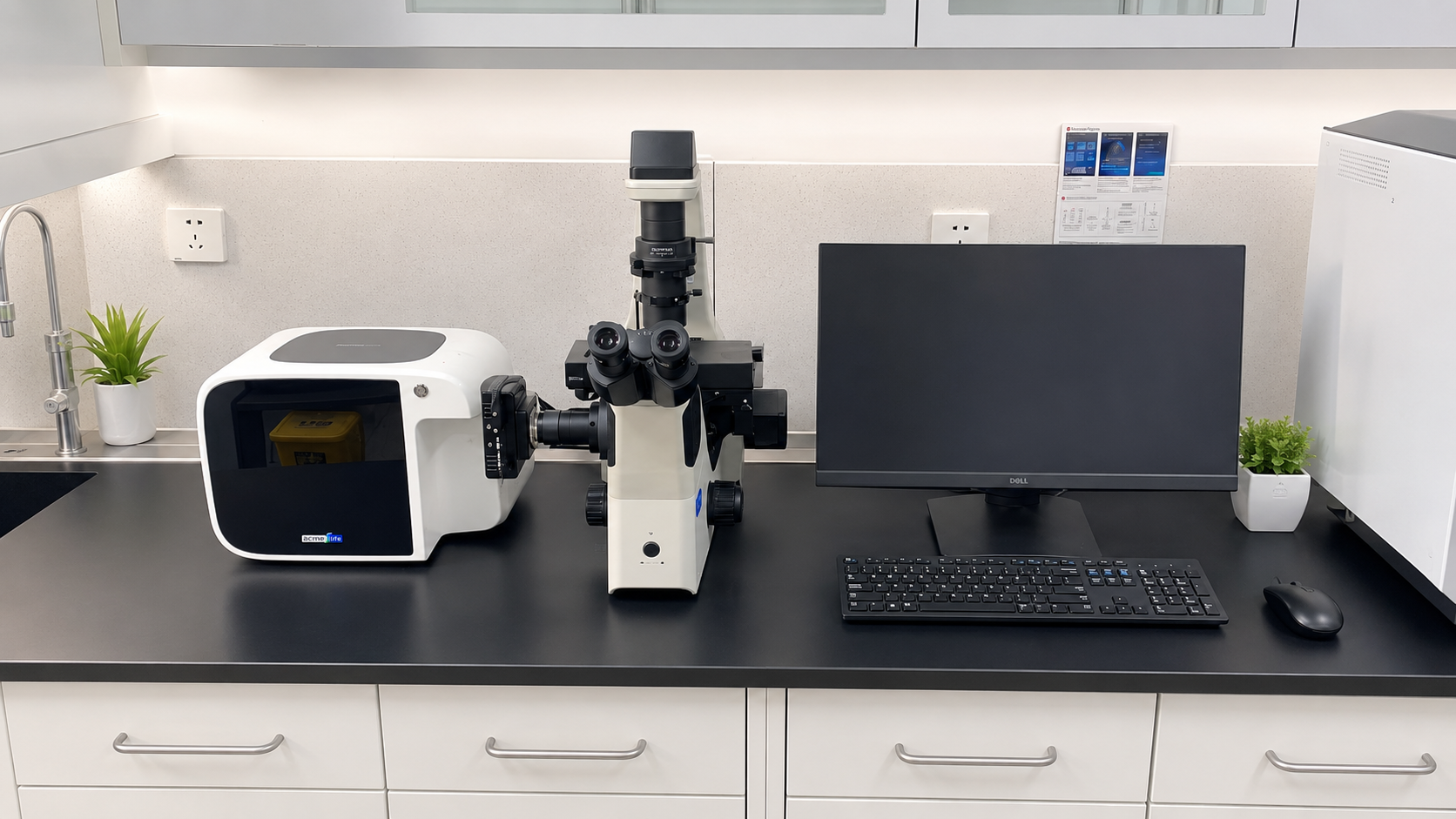
What Are the Common Applications of a Zebrafish Microinjection System?
A Zebrafish Microinjection System is used when a study needs a defined material delivered into an embryo at a known developmental stage. In day-to-day lab work, the system combines a micromanipulator, injection control, needles, and embryo positioning so a lab can introduce nucleic acids, proteins, cells, dyes, or test materials with more control than bath exposure alone. For researchers planning a new assay, the useful question is not simply whether to inject. It is what biological question becomes measurable once the payload, timing, and injection site are controlled.
In zebrafish work, small changes in dose, needle geometry, and developmental timing can change survival, mosaicism, distribution, or phenotype. That is why a Zebrafish Microinjection System is often treated as part of the experimental design rather than as a stand-alone delivery device. The common applications below show where that control matters most.
1. Gene editing with CRISPR reagents
One of the most common uses of a Zebrafish Microinjection System is gene editing. Researchers inject CRISPR components, commonly guide RNA with Cas9 mRNA or protein, into newly fertilized embryos to create targeted mutations. The early embryo is especially useful because edits can be introduced before many cell divisions have occurred, allowing investigators to screen founder animals and characterize early phenotypes.
CRISPR injection is not a single fixed recipe. An efficient workflow usually tests injection volume, reagent concentration, embryo health, and the interval after fertilization. Too little delivered material may produce weak or variable editing; too much can increase toxicity or developmental artifacts. A controlled Zebrafish Microinjection System helps a laboratory compare conditions fairly because delivery settings can be documented alongside the biological readout.
This application supports knockout studies, rapid functional screening of candidate genes, and validation of variants associated with developmental or disease mechanisms. It can also support knock-in-oriented experiments, although those typically require more careful donor design and validation than straightforward disruption experiments.
2. Transgenesis and reporter-line development
Transgenesis is another core application. DNA constructs, transposon-based vectors, or related components can be introduced into one-cell embryos to establish reporter lines or drive tissue-specific expression. A fluorescent reporter, for example, can make it easier to follow a cell population, visualize a developing organ, or measure whether a promoter responds to a treatment.
Here, the Zebrafish Microinjection System matters because stable-line work is sensitive to both delivery consistency and embryo handling. A lab may need to distinguish temporary expression in injected embryos from germline transmission in later generations. The injection step cannot guarantee integration, but reproducible dosing gives downstream screening a cleaner starting point. It also makes troubleshooting more informative: if embryos survive but expression is absent, investigators can examine construct design or detection strategy instead of assuming every variable changed at once.
3. mRNA, morpholino, and rescue experiments
Microinjection is widely used for transient manipulation of gene function. Investigators can introduce mRNA to test overexpression, morpholino oligonucleotides for carefully controlled knockdown experiments, or a rescue construct after a genetic perturbation. These approaches are particularly useful when the experimental readout occurs during embryonic development and a stable line would take longer to establish.
A Zebrafish Microinjection System supports this work by making paired comparisons practical. For instance, a study may inject a gene-targeting reagent in one group and co-inject an RNA designed to restore function in another. The interpretation still depends on appropriate controls, independent validation, and thoughtful dose selection. Injection precision helps reduce a basic confound: differences caused by inconsistent delivery rather than by the intended biological manipulation.
4. Cell lineage tracing and developmental biology
Developmental biologists also use injection to place fluorescent tracers, photoconvertible materials, or labeled cells into embryos. Those materials can help track lineage, migration, tissue contribution, or the timing of morphogenetic events. Depending on the question, the target may be the yolk, a blastomere, or a more localized embryonic region.
For this application, a Zebrafish Microinjection System is valuable less because it makes biology simple and more because it makes the initial perturbation visible and repeatable. A tracer placed in the wrong compartment can answer a different question from the one intended. Teams should record the target location, stage, needle behavior, and any immediate leakage or embryo damage. These observations are often as useful for improving the next run as the final images are for interpreting the current one.
5. Drug delivery, biodistribution, and toxicology studies
Direct drug delivery is a useful option when researchers need to study a defined exposure route, a small sample volume, or early distribution of a candidate material. Nanoparticles, dyes, biologics, small molecules, and formulation components may be injected into embryos or larvae when the study needs more control than waterborne exposure provides. Zebrafish models are used in functional and toxicological screening of drug-delivery systems, but injection should be chosen because it matches the exposure question—not just because it is available.
A Zebrafish Microinjection System can support pilot work on distribution, acute tolerability, and phenotype timing. It can also help separate a formulation effect from uncertainty about uptake through the surrounding medium. Still, direct injection does not automatically model oral, dermal, inhaled, or chronic human exposure. A sound experimental plan states what the injection route represents, includes vehicle controls, and treats observed toxicity as a signal for further investigation rather than a final safety conclusion.
6. Infection, immunity, and disease-model experiments
Microinjection can introduce labeled microbes, immune stimuli, cells, or disease-relevant materials into zebrafish embryos and larvae. This helps researchers observe host-pathogen interactions, inflammatory recruitment, vascular responses, or tumor-cell behavior in a living vertebrate model. Optical accessibility is often part of the appeal, especially when a study combines injection with fluorescence imaging.
In these experiments, the Zebrafish Microinjection System should be evaluated as part of a broader workflow that includes containment, staging, imaging timing, and blinded phenotyping when possible. The most useful setup is not necessarily the one with the most complicated controls; it is the one that delivers the intended inoculum reproducibly enough for biological variation to be interpreted.
Choosing the right application and workflow
Before selecting a Zebrafish Microinjection System workflow, define four items: the payload, the intended anatomical destination, the developmental stage, and the measurement that will determine success. A CRISPR experiment may prioritize early one-cell delivery and genotyping. A transgenesis project may prioritize embryo survival and later germline screening. A drug delivery study may prioritize distribution imaging and vehicle-matched controls. These are related uses, but they do not share the same acceptance criteria.
- Start with healthy, synchronized embryos and document the injection window.
- Use a visible tracer in pilot runs when it can help confirm dose or placement.
- Include uninjected and vehicle controls appropriate to the payload.
- Track survival and developmental morphology separately from the intended assay endpoint.
- Validate the biological result with an orthogonal method, such as genotyping, imaging, or molecular analysis.
In short, the common applications of a Zebrafish Microinjection System extend from CRISPR-based gene editing and transgenesis to transient gene-function studies, developmental tracing, drug delivery, toxicology, and disease modeling. The shared advantage is controlled introduction of a defined material at a defined time. Careful experimental controls—and not injection hardware alone—turn that control into interpretable research data.








