
 EN
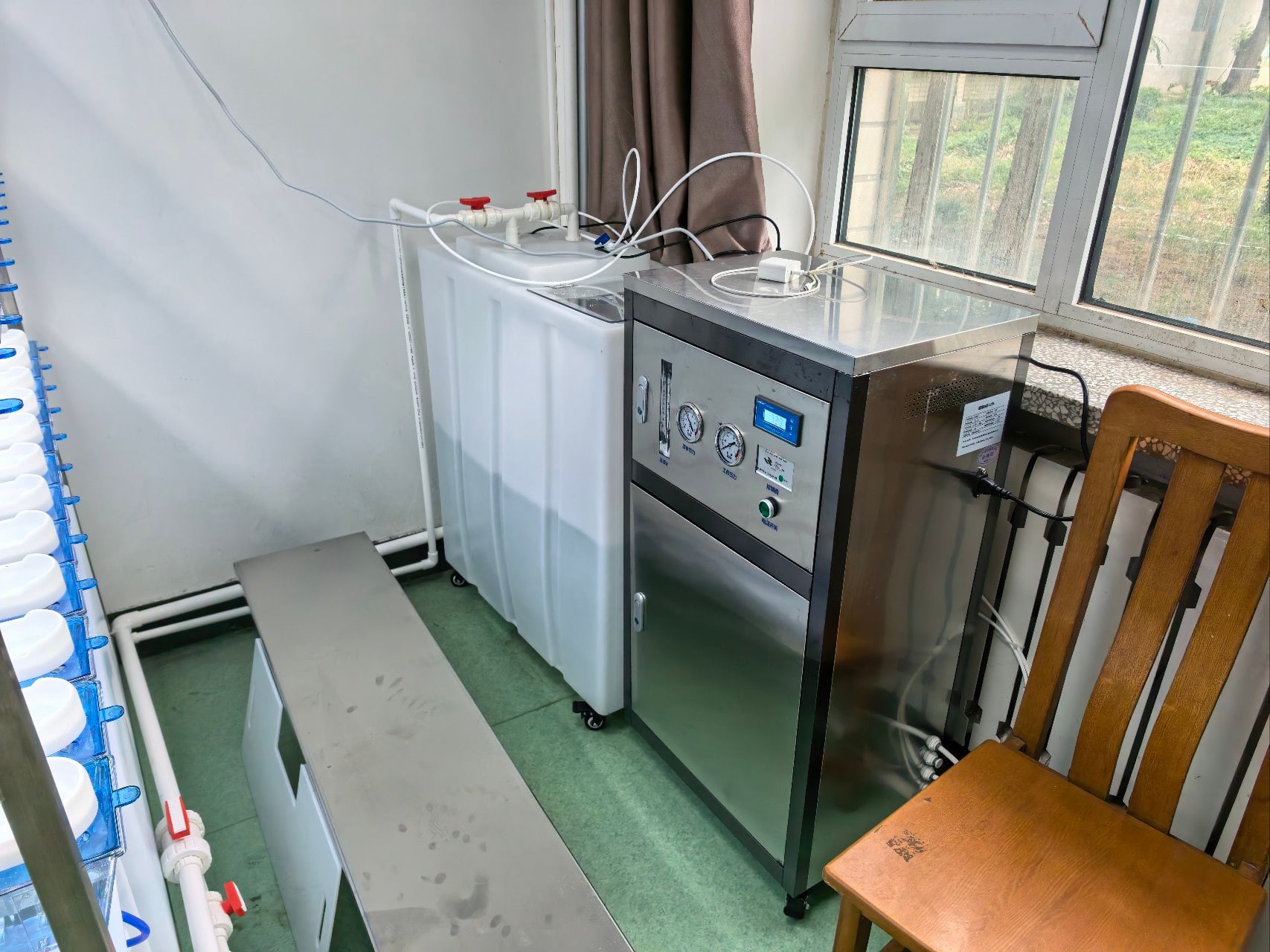
In pharmacology, a behavioral endpoint is most useful when it answers a defined question rather than simply producing more movement data. A Zebrafish Endurance Testing Device provides a controlled way to challenge swimming capacity and record how fish respond as water flow or swim demand increases. That makes it useful when a study needs a functional readout alongside morphology, survival, or molecular markers.
For researchers working with disease models or candidate compounds, endurance is not a direct measure of clinical benefit. It is a whole-organism performance signal. Used with an appropriate control group and a documented protocol, it can help distinguish a compound-associated change in locomotor function from a result that may be driven by handling, developmental stage, or test conditions.
Why endurance readouts matter in pharmacology
A Zebrafish Endurance Testing Device typically exposes fish to a defined swimming challenge while the study records an endpoint such as time to fatigue, maintained swim speed, distance, or a pre-specified loss-of-position criterion. The value is that the result combines several biological systems: neuromuscular function, energy handling, cardiorespiratory capacity, sensory response, and motivation can all influence performance.
This integrated view is useful because drug efficacy is often not captured by a single biochemical signal. A compound may shift a pathway marker without producing a meaningful functional change, while another may improve a functional phenotype but also alter arousal or sedation. Endurance data do not settle that question alone; they give the pharmacology team another layer to interpret with exposure measurements and complementary assays.
Applications in drug efficacy studies
Functional phenotyping in disease models
One application is testing whether a candidate changes impaired performance in a zebrafish model with a locomotor, muscle, metabolic, neurological, or cardiovascular phenotype. A Zebrafish Endurance Testing Device can turn an observed swimming deficit into a repeatable challenge-response measurement. Investigators can compare vehicle-treated and compound-treated groups using the same acclimation period, flow progression, endpoint rule, and observer or tracking method.
The comparison is most informative when baseline ability is collected before dosing or when groups are balanced by age, size, and developmental stage. If a treated group maintains performance longer, the next question is not automatically “did the compound work?” It is whether the result is consistent with exposure, viability, normal spontaneous behavior, and the model’s intended biology. That cautious sequence protects a drug efficacy conclusion from being built on one behavioral metric.
Prioritizing compounds during screening
For early screening, a Zebrafish Endurance Testing Device can help rank compounds after a broader phenotypic screen has identified candidates worth follow-up. Rather than relying only on swimming distance in an open field, a progressive endurance challenge can reveal whether a response persists under demand. This is especially relevant when a compound changes resting activity but may not improve sustained performance.
It also supports a practical triage workflow: retain candidates with an interpretable exposure window, a reproducible endurance shift, and no obvious confounding change in gross morphology or baseline behavior. The device is not a replacement for target-engagement work, pharmacokinetics, or mammalian studies. It can, however, help teams decide which candidates merit those more resource-intensive experiments.
Applications in dose-response and formulation work
A Zebrafish Endurance Testing Device can contribute to dose-ranging studies when the same functional endpoint is measured across several planned concentrations. The resulting pattern may show no change, a dose-associated improvement, or declining performance at higher exposure. Interpretation must consider internal exposure where possible: a nominal water concentration does not necessarily equal tissue concentration.
For formulation comparisons, the same principle applies. If two delivery approaches produce different endurance outcomes, the finding should be evaluated with solubility, stability, uptake, and vehicle controls. In this setting, an endurance assay is a decision-support readout rather than a stand-alone proof of formulation superiority.
Applications in safety pharmacology and liability detection
Functional changes can also signal a potential liability. Reduced endurance after compound exposure may reflect a desired pathway effect, reduced alertness, altered muscle function, impaired balance, or systemic stress. A Zebrafish Endurance Testing Device helps make that observation more structured by applying a consistent swim demand rather than relying on a brief visual impression.
Safety-oriented use requires careful separation of specific and nonspecific effects. Pair the endurance result with survival, gross morphology, spontaneous activity, and, when relevant, cardiac or respiratory observations. A decline in performance should trigger follow-up questions about exposure level and mechanism; it should not be framed as a diagnosis or a definitive safety conclusion.
What makes the data interpretable?
The quality of an endurance endpoint depends on protocol control. Researchers should predefine the following elements before a Zebrafish Endurance Testing Device study:
- Test population: strain, age or developmental stage, sex when relevant, health status, and prior handling.
- Exposure design: concentration, duration, vehicle, feeding schedule, and washout or recovery period.
- Challenge design: acclimation time, starting demand, increment schedule, water temperature, and test duration.
- Endpoint definition: what counts as fatigue or failure, who scores it, and whether tracking is automated or reviewed.
- Controls and replication: vehicle controls, positive controls when justified, biological replicates, and a prespecified analysis plan.
Temperature deserves particular attention because it affects zebrafish physiology and swimming behavior. Likewise, a threshold that works in one laboratory may not transfer unchanged to another. A short pilot run can establish a stable operating window before a larger pharmacology screening campaign begins.
Choosing the right role for the assay
A Zebrafish Endurance Testing Device is most valuable when its endpoint is matched to a decision. It can support functional phenotyping, rank candidate compounds, inform dose selection, compare formulation approaches, and flag changes that deserve safety follow-up. Its contribution is strongest when teams report the protocol transparently and interpret endurance with other biological and exposure data.
In short, pharmacology programs can use controlled endurance testing to move from “the fish moved differently” to a more precise question: under a defined challenge, did the compound change sustained function in a reproducible and biologically consistent way?








