
 EN
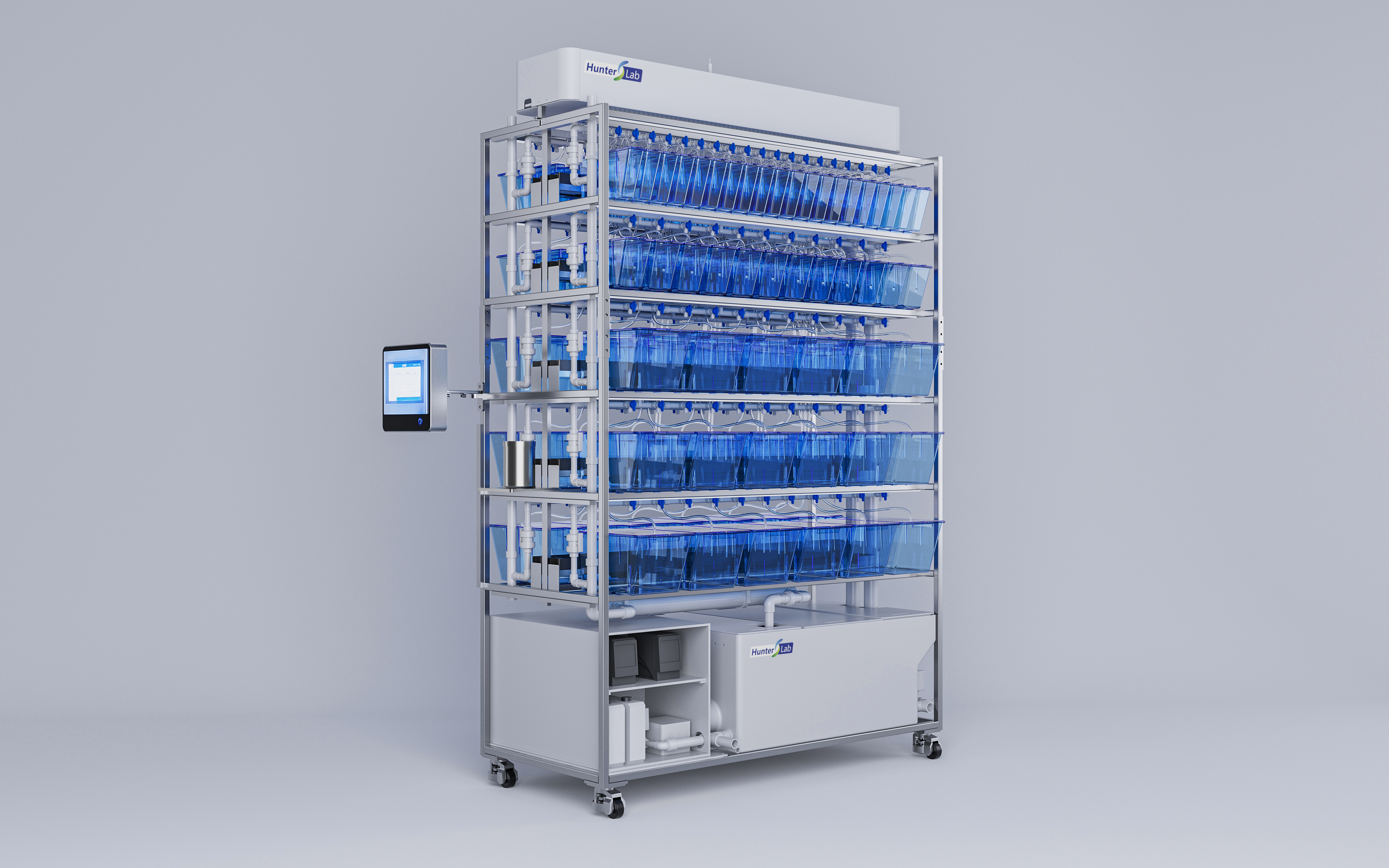
The zebrafish breeding system's modular design allows easy expansion as your facility grows.
A growing zebrafish program rarely expands in one dramatic step. More often, a lab adds lines, increases crossing work, brings a new assay online, or needs more reliable embryo output. In each case, the Zebrafish Breeding System has to grow without disrupting the routines that already work. That is where modular design becomes a practical planning tool rather than a brochure term.
As a researcher planning aquatic workflows, I would start with the daily path of people, fish, water, and records—not with the maximum number of tanks a room can hold. A modular design lets a facility add capacity in defined blocks while protecting access, husbandry consistency, and the ability to troubleshoot a single area. The right answer depends on the building services, staffing model, and breeding goals; there is no single layout that fits every lab.
Why scalability matters in a Zebrafish Breeding System
Breeding capacity affects more than the number of adult fish a facility can house. It shapes how teams set up crosses, collect embryos, isolate new lines, clean equipment, and document work. In-tank breeding can be more labor-efficient than pairwise setups in suitable programs, but either approach still depends on a workflow that stays manageable as demand rises.
A scalable Zebrafish Breeding System separates the question of today’s capacity from the question of tomorrow’s options. Instead of replacing an entire room when a project expands, the team can add a rack section, breeding module, quarantine area, or support station according to a documented plan. That flexibility is especially valuable when grant timing, procurement cycles, or research priorities make a one-time buildout unrealistic.
What modular design should mean in practice
Modular design is not simply a collection of tanks placed side by side. It is a coordinated approach in which physical bays, water-management connections, electrical access, drainage, and working clearances can be extended in a controlled sequence. Before choosing a configuration, map which elements are intended to repeat and which must remain shared infrastructure.
- Repeatable housing zones: tank or rack sections that can be added with the same access and labeling conventions.
- Planned utility capacity: documented allowance for water, drainage, electrical supply, and monitoring connections before the room becomes crowded.
- Clear workflow boundaries: distinct areas for breeding setup, embryo collection, cleaning, and line management.
- Service access: enough clearance to inspect components and perform maintenance without moving unrelated housing.
These choices support scalability, but they also preserve flexibility. A room may need to shift from routine line maintenance toward coordinated crossings, or from small pilot work toward a larger screening schedule. A system that can accept another module is useful only if the additional module can be operated safely within the revised workflow.
Plan expansion around workflow, not just floor area
Floor plans often look generous before equipment, carts, consumables, and staff circulation are included. A stronger approach is to test an expansion layout against real tasks. Can a technician prepare breeding groups while another person collects embryos? Is there a route that keeps cleaning activity from crossing the collection area? Can a new module be accessed during a maintenance event without interrupting the rest of the room?
For a Zebrafish Breeding System, these questions matter because a crowded layout can turn a nominal capacity increase into an operational bottleneck. It is helpful to document the peak-day sequence: setup, spawning window, embryo handling, observation, return of adults, and cleaning. If the sequence becomes harder after expansion, the design has added tanks but not useful capacity.
A phased approach to modular expansion
1. Establish a reliable baseline
Begin with the current program: active lines, typical breeding frequency, anticipated embryo demand, staff coverage, and known service limitations. Record where delays occur. For example, the limiting factor may be staging space or collection timing rather than housing count. This baseline gives the next module a clear purpose.
2. Reserve the connections that are difficult to retrofit
Some changes are easy to make later, while others require disruption. Discuss utility routing, drainage capacity, power distribution, ventilation considerations, and data connections with facility and engineering teams before committing to a layout. Conditional qualification is important here: a planned connection does not guarantee that a building can support unlimited additions, so each phase should be reviewed against the site’s actual constraints.
3. Add capacity in operationally complete blocks
A useful module should arrive with its labeling logic, access plan, cleaning procedure, and ownership for daily checks. Adding an isolated row without these details may create inconsistency between old and new areas. Where expansion is linked to higher throughput, define how records, breeding schedules, and contingency actions will scale alongside the physical module.
4. Validate before the next phase
After an expansion, allow the team to observe whether access, scheduling, and maintenance remain predictable. Review whether embryo collection is still timely, whether staff can identify stock clearly, and whether service tasks create new interference. That feedback is more informative than a capacity number alone and can guide the next phase of the Zebrafish Breeding System.
Protect consistency as the facility grows
Expansion can introduce variation when new zones are run differently from established ones. Consistent labeling, standard operating procedures, training, and logs help reduce that risk. The aim is not to make every task rigid; it is to make deviations visible. If a breeding result changes after a new module comes online, the team should be able to review conditions and workflow changes rather than rely on memory.
Water quality oversight, cleaning schedules, and stock-management records should also be considered part of the modular plan. A scalable facility is one where the added area can be observed and maintained with the same level of attention as the original footprint. That may require adjusting staffing and support routines as much as adding equipment.
Questions to ask before committing to the next module
- What specific breeding or line-management constraint will this addition solve?
- Which utilities and access routes must be available at the new location?
- How will breeding schedules and records stay consistent across modules?
- What maintenance tasks will become more frequent or more difficult?
- What evidence will tell us the added capacity is improving the program?
Those questions turn modular design from a general preference into a measurable facilities decision. They also make it easier to explain the purchase and expansion logic to research leadership, purchasing teams, and facility managers.
Build for the next decision, not an imagined final size
A modular Zebrafish Breeding System gives a research facility room to respond to new lines, changing study volume, and evolving workflows. The most durable plan combines physical expansion options with operational discipline: reserve what is hard to change, add complete working blocks, and verify that each phase improves day-to-day breeding work. With that approach, expansion supports reliable husbandry instead of simply making the room denser.








