
 EN
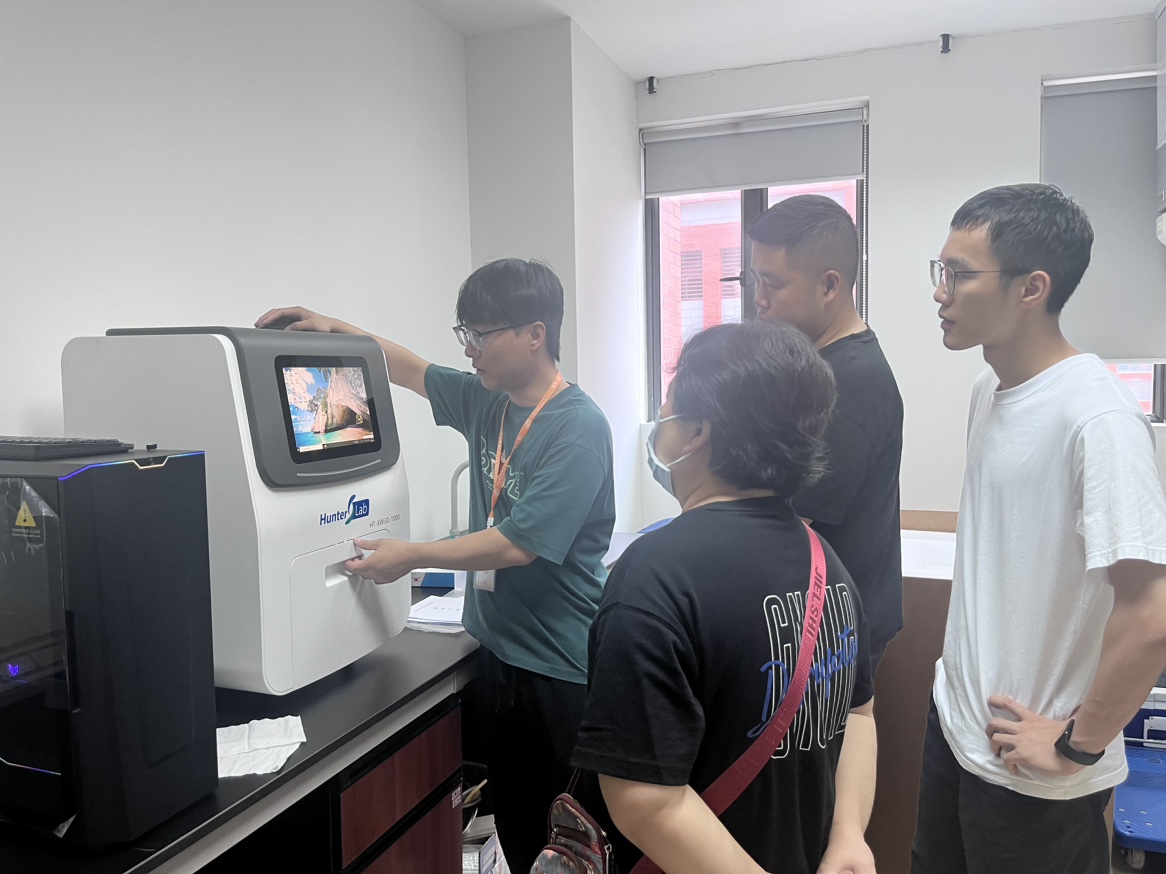
Modern zebrafish toxicological exposure systems integrate real-time monitoring for accurate results.
In zebrafish toxicology, a clean-looking endpoint can still be hard to interpret if the exposure conditions are uncertain. A Zebrafish Toxicological Exposure System is most useful when it helps a laboratory connect what fish experienced with what the study measured. That is where real-time monitoring changes the conversation: it turns exposure conditions from assumptions recorded before a run into observations that can be reviewed throughout it.
For teams screening compounds, environmental samples, or formulation components, the objective is not simply to collect more signals. It is to create an evidence trail that lets operators distinguish a biological response from an avoidable shift in the test environment. This matters when results must be compared across doses, repeat runs, operators, or life stages.
Why exposure context belongs beside toxicology endpoints
Zebrafish studies can capture developmental, behavioral, morphological, and survival endpoints. Yet those observations gain meaning only when the delivery conditions are sufficiently controlled and documented. Published discussions of interlaboratory zebrafish toxicology note that exposure scenarios, captured endpoints, and data analysis can vary between laboratories. That variation makes context a practical part of data interpretation, not an administrative extra.
A well-designed Zebrafish Toxicological Exposure System therefore brings the exposure chamber, solution preparation, delivery path, and observation plan into one workflow. Instead of relying on a single start-of-run measurement, the team can review trends during the assay and flag events that deserve attention before they become unexplained variance.
What real-time monitoring should help a team see
Real-time monitoring does not mean every laboratory needs every sensor. The useful question is whether the monitored conditions match the study’s risk points. For aqueous exposure work, teams commonly consider variables that can influence the exposure environment, such as temperature, dissolved oxygen, pH, flow behavior, or other study-relevant indicators. The exact set should be selected and qualified for the protocol rather than copied from another assay.
- Condition stability: A time-stamped record helps reveal whether an environmental shift coincides with an unusual observation.
- Delivery continuity: Where a protocol relies on controlled renewal or flow, operators can check for interruptions or deviations that affect the exposure window.
- Run comparability: Monitoring records make it easier to compare repeat studies using the same decision criteria.
- Review readiness: When a result is unexpected, the team can revisit the exposure history instead of relying only on recollection.
A targeted literature result on simultaneous zebrafish exposure and water-status determination illustrates the principle: monitoring the water environment can be considered alongside the biological response. It should not be interpreted as proof that any one sensor configuration fits every compound or protocol.
Integrating data without confusing correlation for cause
The word integration is often used loosely. In a practical toxicology workflow, it means aligning several records around the same run: the exposure schedule, environmental trend data, observations, images or assay outputs where applicable, and operator notes. A useful system makes these records reviewable together while preserving which source produced each record.
That distinction matters. If a response appears after a change in an environmental trace, the finding is a prompt to investigate—not automatic proof of causation. A disciplined review checks controls, dosing history, specimen stage, handling events, and protocol deviations before deciding how much weight to give the association. This evidence-aware approach protects both accuracy and the credibility of the final interpretation.
A monitoring-centered workflow for better results
1. Define the exposure question first
Start with the biological question, the planned endpoints, the zebrafish life stage, and the time window. Those choices determine which conditions are meaningful to observe. A short acute assay and a longer repeated-exposure study may need different alert logic and review points.
2. Establish a baseline before dosing
Record the starting condition of the system and verify that controls are behaving as expected. This baseline gives the team a reference for recognizing drift later in the run. If a parameter is outside the protocol’s acceptable range before exposure begins, correct the setup rather than treating the reading as background noise.
3. Keep timestamps aligned
Synchronize monitoring events, exposure actions, and observation records. When timebases do not align, even high-quality measurements become difficult to compare. A simple shared clock and clear event labels can be more valuable than a large volume of disconnected data.
4. Use exceptions to guide review
Monitoring is most valuable when it supports action. Define who reviews a deviation, what gets documented, and whether the run needs an annotation, follow-up check, or protocol decision. Avoid treating alerts as verdicts; they are signals to examine the full context.
Common implementation mistakes
One frequent mistake is assuming that automation removes experimental judgment. Automated collection can reduce manual transcription and improve consistency, but it can also create a false sense of certainty if sensors are not maintained, thresholds are poorly chosen, or missing data are overlooked. Another is collecting streams of data without deciding how they will be used during review.
Teams also benefit from separating operational monitoring from biological outcome analysis. The first answers, “Did the exposure environment remain within the study plan?” The second asks, “What happened to the zebrafish?” Keeping both questions visible helps reduce the chance that an environmental anomaly is mistaken for a compound-specific result.
How to assess a Zebrafish Toxicological Exposure System
When evaluating a Zebrafish Toxicological Exposure System, ask whether it can fit the laboratory’s protocol rather than whether it offers the longest generic feature list. Consider the sample capacity, delivery approach, data export needs, maintenance requirements, and how records will connect to observations. For longer or more sensitive studies, also assess how the workflow handles interruptions, calibration checks, and traceable operator actions.
Good implementation is iterative. Begin with a defined assay, a small set of decision-relevant monitored conditions, and a clear review process. Then use early runs to refine alert thresholds and documentation practices. That approach makes real-time monitoring a source of usable context instead of another dashboard to manage.
Conclusion
Accurate toxicology data depend on more than a final endpoint. By pairing exposure control with real-time monitoring, a Zebrafish Toxicological Exposure System can give research teams a clearer record of what occurred during each run. The practical gain is stronger traceability: observations can be reviewed against the environment in which they emerged, supporting more careful decisions about repeatability, follow-up work, and the meaning of the results.








