
 EN
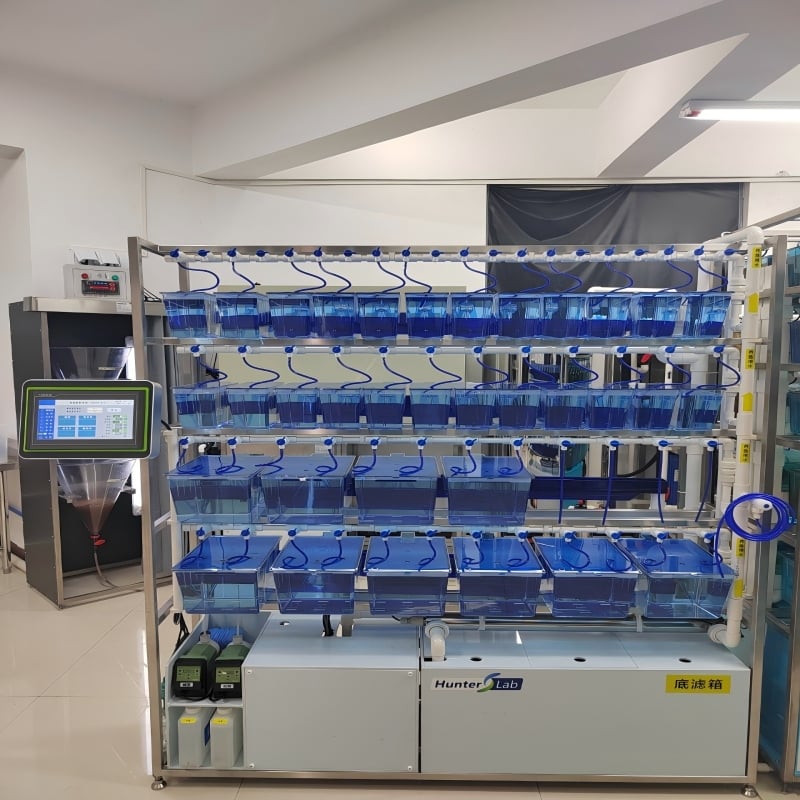
Modern zebrafish breeding systems feature real-time water quality monitoring for optimal conditions.
For a busy aquatic facility, a Zebrafish Breeding System is more than a place to hold adults overnight. It is a controlled environment that has to keep breeders stable, make mating conditions repeatable, and give staff enough warning to act before a small water problem becomes a lost cross. Modern systems increasingly pair recirculation hardware with real-time monitoring, turning water quality from a once-a-day check into a documented operating signal.
That distinction matters. Breeding outcomes respond to the combined effect of temperature, pH, nitrogen compounds, conductivity, dissolved oxygen, flow, light cycle, stocking and handling. No single sensor can promise a successful spawn. What it can do is show whether the conditions supporting a carefully validated protocol are holding steady. For core facilities managing multiple lines, that record is often as useful as the alarm itself.
Why continuous visibility matters in a Zebrafish Breeding System
Traditional manual testing still has a role, especially for confirmatory measurements. The limitation is timing: a spot check describes one moment, while biological filtration, feed load, water changes and room temperature can shift conditions between checks. A connected Zebrafish Breeding System can trend selected parameters continuously and flag the direction of change before a threshold is crossed.
Published husbandry guidance commonly places routine housing within about 24–29°C and pH 6.5–8, with many reproductive protocols operating near 28°C and pH 7.4–7.5. Those values are useful starting context, not universal instructions. Strain, source water, facility protocol and experimental design should define the actual setpoints. The operational goal is consistency around approved targets, rather than chasing a generic number.
The monitoring stack: sensors, controls and verification
A practical Zebrafish Breeding System starts with a short list of variables that staff can interpret and act on. Temperature and pH are common candidates for continuous tracking. Conductivity can reveal dilution or dosing changes. Water level, flow or pump state can expose mechanical problems early. Where an IoT controller is used, the dashboard should also record alarms, acknowledgements and corrective actions so the facility can review the event rather than rely on memory.
Not every measurement belongs to the same instrument. Nitrogen compounds often require validated bench methods or automated analyzers, and dissolved oxygen may need a dedicated probe. A sensor only supports good decisions when it is calibrated, cleaned, checked against an independent method and located where its reading represents the water that reaches the breeders. This is the setup step people sometimes miss: a pristine return-line reading can look reassuring while a poorly mixed tank or blocked circuit tells a different story.
- Measure: select variables tied to the breeding protocol and known system risks.
- Trend: view both the current value and the rate of change.
- Alert: use staged notifications for drift, threshold excursions and equipment faults.
- Verify: confirm unusual readings with a calibrated independent test before making major adjustments.
- Document: connect the event, response and breeding outcome in one log.
From data stream to breeding-room action
The strongest real-time monitoring workflow is deliberately simple. First, establish a baseline during normal production, including the morning and evening patterns around feeding, cleaning and water exchange. Next, define alert bands with a facility veterinarian, aquatic manager or protocol owner. A gradual pH drift may call for inspection and a manual sample; a high-high temperature alarm may call for immediate escalation. The response should be defined before the alert occurs.
For example, zebrafish housing recommendations often cite total ammonia below 0.1 mg/L, nitrite below 0.3 mg/L and nitrate below 25 mg/L. Treat these as examples for review rather than plug-and-play alarm values. Ammonia toxicity depends on conditions including pH and temperature, so a response plan should consider the whole system. If the Zebrafish Breeding System shows a changing pattern after a feed increase or biofilter intervention, confirm the chemistry, review flow and loading, then document whether breeding groups need to be held or moved.
Designing alerts for optimal conditions without alarm fatigue
More alerts do not automatically produce optimal conditions. In fact, a noisy dashboard can train staff to ignore the one alert that needs attention. A better design uses priorities: informational trend notices, action-required warnings and urgent equipment or welfare alarms. Each alert should identify the tank loop, parameter, current value, recent trend and the next person or role responsible for checking it.
Conditional qualification is important here. A stable reading outside a facility’s preferred band is not necessarily an emergency, especially if the protocol intentionally uses a specific condition. A sudden movement within that band may be more meaningful. Have you reviewed which deviations actually precede poor fertilization, egg yield or embryo quality in your own room? That comparison helps the team tune alerts to outcomes rather than adopt arbitrary limits.
How monitoring supports reproducible breeding operations
A Zebrafish Breeding System with usable records creates a feedback loop. Staff can compare water-quality trends with crossing schedules, parent age, line history, feeding, tank density and embryo yield. Over time, that makes it easier to separate a biological issue from an infrastructure issue. It also makes handovers clearer: instead of saying that the rack “looked fine,” the team can see whether temperature, pH, flow and real-time monitoring alerts were stable during the relevant window.
Recirculating systems are commonly designed around filtration, water chemistry monitoring or regulation, UV treatment, light control and temperature control. The monitoring layer does not replace these components; it makes their performance visible. When a controller is integrated with an IoT interface, access control and data retention deserve attention too. Keep critical controls safe, preserve an offline operating procedure, and avoid treating a network dashboard as a substitute for trained husbandry staff.
A practical commissioning checklist
- Write the approved water-quality targets and response owners for each breeding loop.
- Map every sensor to its physical location, calibration record and verification method.
- Run the system through normal feeding, cleaning and water-exchange cycles to establish baseline trends.
- Test alerts, including escalation and acknowledgement, before relying on them for overnight coverage.
- Review the first months of data alongside fertilization and embryo-quality records, then refine alert bands.
The result is not a fully automated breeding room. It is a more observable one. With sensible instrumentation, validated manual checks and clear response routines, a modern Zebrafish Breeding System can maintain more stable conditions and give teams stronger evidence for improving their breeding protocols.








