
 EN
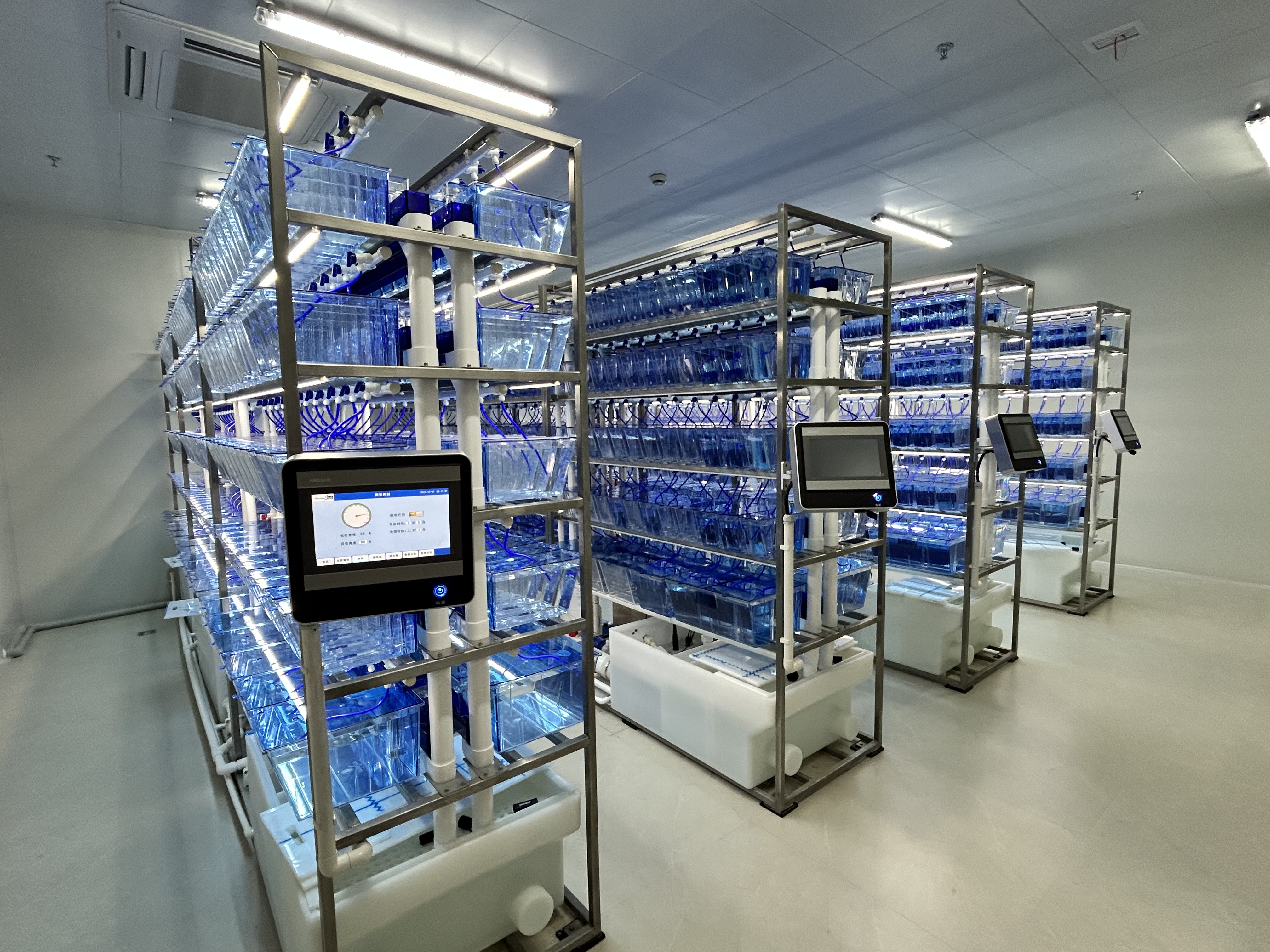
Remote access changes how feeding is managed day to day
A zebrafish automated feeding system used to be a timer with a hopper. The modern version is closer to a networked appliance. It can report feed levels, delivery events, and fault conditions to a phone or a web dashboard. Staff can check whether a feeding ran without walking the rack. They can adjust a schedule without physically touching the controller. For facilities with multiple rooms and limited weekend coverage, that shift changes the daily routine.
The value is not just convenience. Remote monitoring creates a record. When a batch of larvae grows unevenly or a tank shows a water quality swing, the feeding log can be reviewed alongside other data. That kind of traceability is difficult to achieve with a paper schedule.
What remote monitoring actually tracks in a feeding system
Remote monitoring covers several layers of the feeding process. The most basic is the hopper or reservoir level. A sensor reports when feed is running low, which prevents a missed feeding. The next layer is delivery confirmation. A flow sensor, a drop counter, or a motor current monitor can confirm that feed actually left the dispenser.
-
Hopper or reservoir level.
-
Delivery time and duration.
-
Delivery confirmation or fault status.
-
Line pressure or flow for liquid feed paths.
-
System temperature and power status.
Not every system tracks all of these. A basic unit may only report on and off times. A more advanced unit may log delivery volume and send alerts when a line clogs. The choice depends on the facility's risk tolerance and the value of the lines being fed. For a small colony with flexible staffing, a simple timer may be enough. For a large facility with many racks and expensive genetic lines, richer monitoring is worth the cost.
Control features that go beyond simple scheduling
Remote control is more than changing a time. It includes adjusting portion size, skipping a feeding, triggering a manual feed, and switching between dry and liquid feed paths. Some systems allow different schedules for different racks, which matters when larvae and adults are housed in the same room.
Permissions and audit trails are also part of control. A facility may want only senior staff to change schedules, while any technician can trigger a manual feed. An audit trail records who made which change and when. That record is useful for troubleshooting and for regulated studies.
Alerts and data logs that keep staff informed
Alerts are the feature that turns remote monitoring into a practical tool. A notification when a hopper is low gives staff time to refill before a feeding is missed. An alert when a delivery fails allows a remote check and a decision about whether to send someone in. Without alerts, the data is passive. With alerts, the system becomes active.
Data logs support a different kind of work. They allow trends to be reviewed over time. A gradual increase in feed consumption may indicate growth. A sudden drop may indicate a health problem or a clog. The Zebrafish Book recommends a 14-hour light and 10-hour dark cycle, and feeding is normally scheduled during the light phase. A remote log that shows feeding times can be compared against the light cycle to confirm that the schedule is being followed.
| Feature | Manual local feeding | Automated feeding with remote monitoring |
|---|---|---|
| Timing consistency | Depends on staff | Programmed and logged |
| Weekend coverage | Requires on site presence | Can be checked remotely |
| Alert response | Found during next walk | Notification sent immediately |
| Data record | Paper notes, often incomplete | Digital log, exportable |
| Schedule changes | Physical access needed | Can be adjusted remotely |
| Staff travel | Every feeding requires a walk | Only when a problem is reported |
Where remote control has limits and where local checks still matter
Remote monitoring cannot see the fish. It cannot tell whether larvae are eating, whether a tank has debris, or whether a fish looks sick. Those observations still require a person walking the rack. Remote control also depends on the network. If the connection drops, the system may continue on its local schedule, but remote visibility is lost. A facility should have a fallback plan for network outages.
Cybersecurity is another consideration. A feeding system connected to the internet is a potential entry point. Passwords, firmware updates, and network segmentation are basic protections. A system that is convenient but insecure is not a good trade.
A field example from a facility that adopted remote feeding control
A university facility in southern China ran several racks with a mix of adult and larval tanks. Weekend staffing was thin, and feeding rounds were sometimes delayed. The facility installed a zebrafish automated feeding system with remote monitoring and control. Staff could check feed levels and delivery logs from home. Alerts were sent when a hopper ran low or a delivery failed.
On one holiday weekend, a low-hopper alert arrived for a larval rack. The on-call technician reviewed the log remotely, confirmed that the next feeding was at risk, and arranged for a colleague to refill the hopper. The feeding ran on schedule. The larvae were not affected. The same system also produced a delivery log that helped explain a growth difference between two larval batches. One batch had received a delayed feeding due to a clog that was later cleared. The log made the cause visible.
The transition required some changes. The facility added a weekly check of sensors and a monthly review of the alert history. Those routines kept the remote system trustworthy.
Hunter Lab (Hunter) builds zebrafish laboratory equipment with attention to the integration details that remote feeding depends on. The manufacturing and quality control side supports the consistency that long-term colony management requires. For facilities considering remote monitoring and control, that kind of build discipline is part of the foundation.








