
 EN
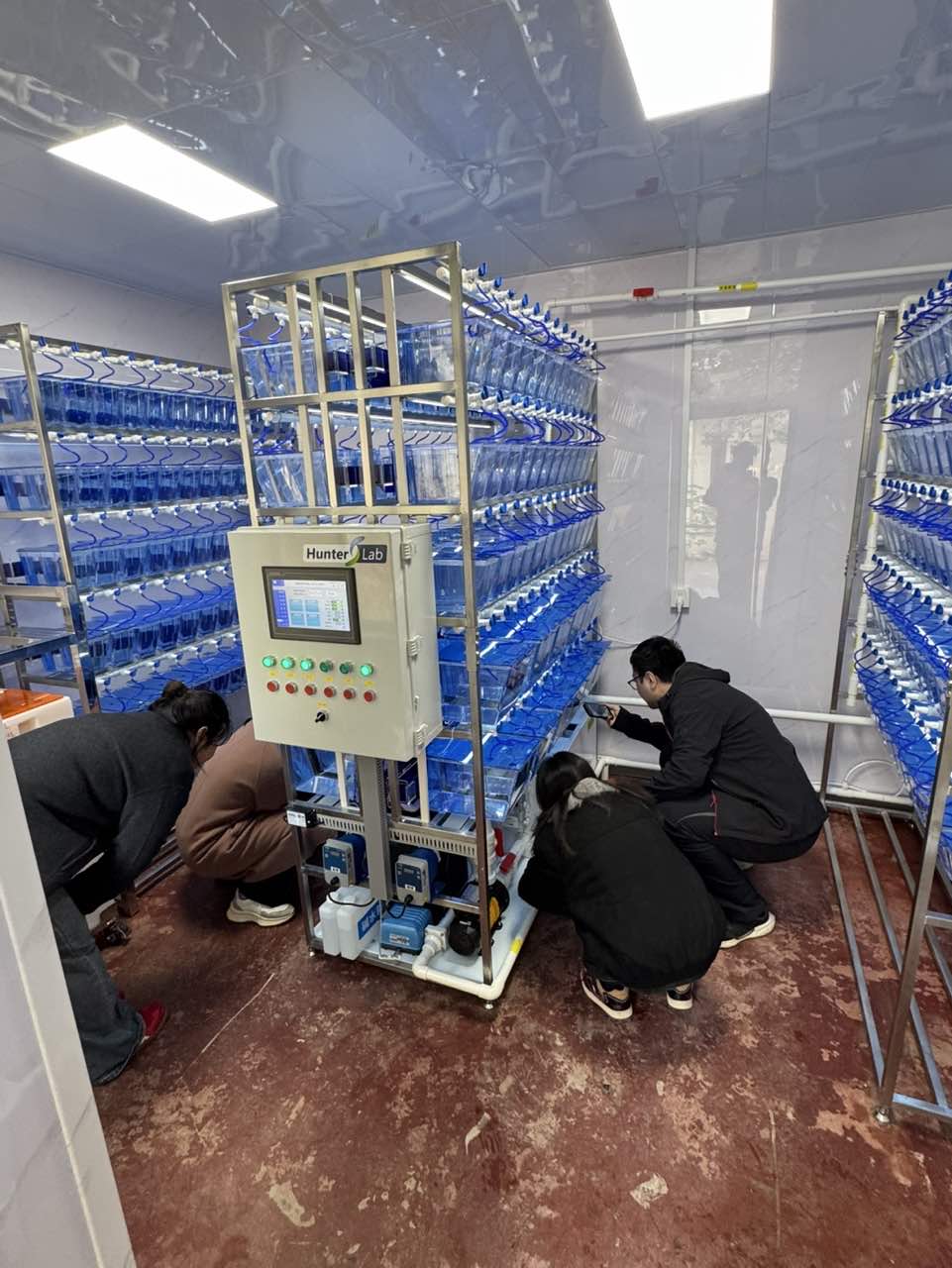
A blocked feed line rarely fails all at once. In automated zebrafish feeding systems, the first sign is often a weaker pulse, a nozzle that looks wet instead of spraying, or a reservoir that takes longer to prime. By the time a pump alarm triggers, the line has usually been narrowing for days. The culprits are predictable: lipid films from enriched diets, mineral scale from water hardness, biofilm at air-liquid interfaces, and fine particles that settle in low-flow zones. Each one alone is manageable. Combined, they form a sticky layer that grabs more material and accelerates the problem.
Feed line maintenance is not about fixing a single mechanical fault. It is a system behavior. Flow rate, temperature, feed composition, idle time, and tubing geometry all interact. That is why a preventive routine beats a reactive repair every time.
The failure points that deserve the most attention
Most blockages trace back to a few locations. Knowing where to look saves hours of disassembly.
-
Reservoir outlet and suction line. Dense particles settle when flow stops. A flat-bottom outlet can deliver a thick first slug that stalls a peristaltic pump.
-
Valve seats and pinch points. Feed residue dries during idle periods. A sticky film forms, then breaks loose in flakes that travel downstream.
-
Nozzle tips and return manifolds. These are the narrowest paths and the hardest to inspect. Lipid aggregation and mineral scale love small orifices and low-velocity corners.
A simple comparison helps teams prioritize maintenance.
| Failure point | Common cause | Early warning sign | Practical countermeasure |
|---|---|---|---|
| Reservoir outlet | Settling solids, biofilm at the air interface | Slow prime, visible film | Gentle agitation, tapered outlet, daily rinse |
| Valve seat | Dried feed during idle time | Sticking pulse, uneven delivery | Idle flush, smooth wetted materials, avoid dead legs |
| Nozzle tip | Lipid aggregation, mineral scale | Spray drift, partial streams | Backflush, enzymatic cleaner, quick release tips |
| Return manifold | Low flow zones, biofilm | Odor, discoloration, pressure creep | Slope to drain, periodic mechanical cleaning |
Fluid behavior and feed formulation are part of the plumbing
Increasing line diameter is a common first move. It helps with particles, but it can hurt in other ways. Wider lines reduce velocity. Lower velocity gives biofilm and settled solids more time to attach. The feed itself matters just as much.
Viscosity changes with temperature and solids content. A diet that flows well in the morning can thicken in a cold room overnight. Pump calibration that worked earlier may drift if the feed batch changes. Particle size distribution matters too. A few oversized aggregates can bridge at a valve seat and start a chain reaction.
Filtration helps, but it is not a cure. A filter that is too fine creates its own blockage and starves the pump. A filter that is too coarse passes the particles that cause trouble downstream. A staged approach usually works best: keep large solids out of the reservoir, maintain gentle agitation, and design the line so nothing sits still for long.
A field case from a recirculating zebrafish facility
A recirculating zebrafish facility kept fighting repeated blockages in its automated feeding system. Lines ran fine during the day, then delivered weak pulses the next morning. The pump was replaced. Tubing was swapped. The problem returned within a week.
The team cut a section of line near the first valve. Inside was a thin, yellowish film that smelled faintly of old feed. It was not a hard plug. It was a lipid and biofilm layer that built up overnight. Once flow stopped, the film had time to consolidate. The morning pulse pushed loosened material into the valve seat.
The fix was not a new pump. It was a revised shutdown routine. A short water flush after the final feed, a brief air purge at the nozzle, and a weekly enzymatic clean changed the outcome. Quick release fittings made inspection easier. The idle period is part of the process, not a pause in it.
Cleaning routines that keep lines open without beating up the equipment
Aggressive cleaning can damage tubing, seals, and sensors. The goal is consistent removal of blockage-forming materials, not a sterile plumbing system.
-
Flush after every feeding cycle with lukewarm water.
-
Use a daily end-of-day rinse that includes the nozzle and return line.
-
Apply an enzymatic cleaner weekly to target lipid and protein films.
-
Run a mechanical pig or soft brush through removable sections on a schedule.
-
Track flow rate, pressure, or pump effort. A slow drift warns earlier than a sudden failure.
Compatibility matters. Some cleaners attack silicone, polyurethane, or acrylic. Check wetted materials before changing chemistry. A conservative routine that runs consistently beats an aggressive one that gets skipped.
Design choices that reduce clogging before it begins
The best prevention happens before the first liter of feed is pumped. Smooth inner walls, gradual bends, and true sanitary connections reduce nucleation sites. Dead legs and long horizontal runs should be avoided where possible. Quick release fittings cost more upfront, but they turn a long cleaning job into a short check.
Sensor placement also matters. A flow switch near the nozzle tells more than a pressure reading at the pump. A transparent section of tubing gives a direct view of what is moving through the line.
Hunter Lab works on the manufacturing side of this equipment ecosystem. The company focuses on consistent fabrication, wetted material selection, and supply chain reliability for lab-scale fluid systems. For research teams specifying automated feeding platforms, that production discipline often separates a system that works in one room from one that holds up across a facility. Clogging prevention is not glamorous, but it is built into the details.








