
 EN
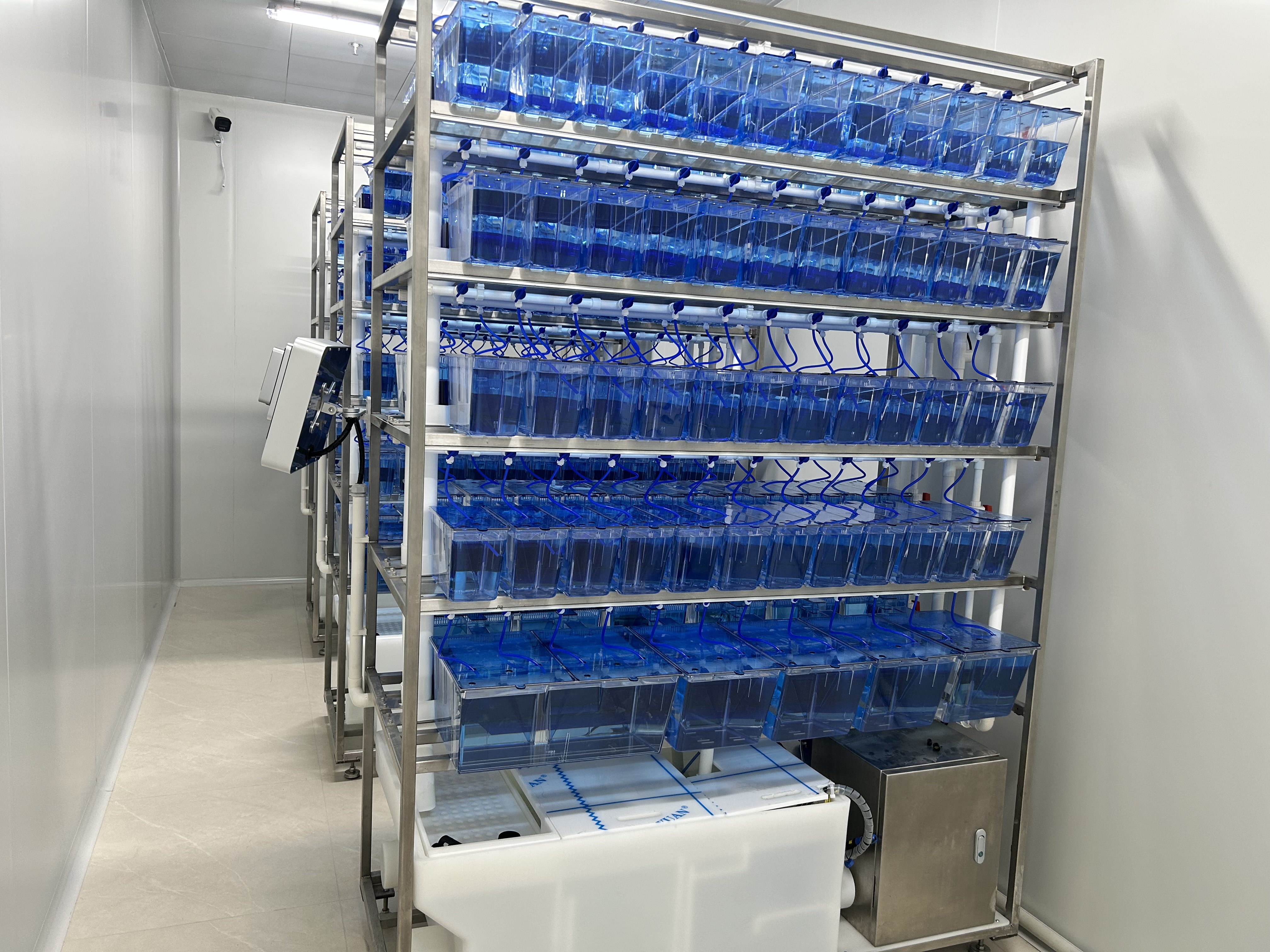
How to Maintain Optimal Water Flow Rate in a Zebrafish Reproduction System
A well-run Zebrafish Reproduction System does more than move water. It keeps oxygenated, treated water reaching every breeding tank while carrying suspended waste toward filtration without creating a current that makes adult fish work too hard. That balance is easy to describe and surprisingly easy to lose after a pump change, a clogged screen, a new rack, or a higher breeding load.
In daily facility work, the useful question is not “What number should every tank use?” It is whether the flow rate supports stable water quality, predictable fish behavior, and repeatable breeding conditions in your specific tank, plumbing, density, and filtration design. The right approach depends on those conditions; there is no single setting that works for every lab.
Start with the job water flow must do
In a recirculating Zebrafish Reproduction System, flow has several jobs at once. It delivers conditioned water, helps prevent stagnant zones, moves fine debris toward mechanical filtration, and supports the turnover needed for biological filtration to manage the system load. But a high flow rate is not automatically better. Excessive turbulence can make fish continually station-hold, disrupt normal courtship behavior, and turn a breeding tank into a stressful environment rather than a stable one.
Think of the target as even, gentle circulation rather than visible force. Watch more than the outlet: check the far corners, the area near the divider or spawning insert, and the drain. If feed, debris, or fine bubbles collect repeatedly in one area, the flow pattern may be uneven even when the pump display looks normal. Conversely, fish consistently crowding the calmest corner or being pushed against a screen are practical signs that the flow rate deserves review.
Set a facility baseline before adjusting individual tanks
Begin by documenting the settings and observations that define normal operation for your facility. Record pump or manifold setting, tank water level, inlet and drain condition, filter maintenance state, temperature, conductivity or salinity management where applicable, and the key water quality readings your SOP requires. Pair those records with a short behavioral check: Are breeders swimming normally, feeding readily, and using the breeding area without persistent avoidance?
This baseline matters because a change in apparent flow can have several causes. A partially blocked intake can reduce delivered water. A clean filter can alter system resistance. A new batch of adults can change waste loading even when the flow rate is unchanged. For long-term adult housing, published husbandry guidance often discusses density in the range of 4–10 adults per liter; your approved density and breeding design should determine how you interpret that context. Higher biological load can make an unchanged setting inadequate for preserving water quality.
Use a simple observation log
- Check inlet pattern and drain draw at the same time each day during a breeding run.
- Note water level, unusual surface film, uneaten feed, and visible debris before cleaning.
- Log routine water quality results beside any flow adjustment.
- Record fish behavior, egg yield trends, and any handling or maintenance event that changed the system.
A log turns a vague concern into something the team can compare. It also helps distinguish a genuine flow problem from a temperature, density, feeding, or water-quality shift.
Adjust flow rate gradually and verify the response
When a tank needs adjustment, make one controlled change at a time. Small increments are easier to interpret than a large correction followed by several unrelated interventions. After an adjustment, give the system enough time to stabilize according to your facility protocol, then reassess distribution, fish behavior, drain performance, and routine water quality data.
A practical sequence is to confirm that the inlet, screen, tubing, and drain are clean; verify that the tank sits correctly on its rack connection; compare the tank with a known-good neighboring tank; and only then change the valve or manifold setting. This order prevents a blockage from being “corrected” by raising pump pressure, which can make conditions worse elsewhere in the system.
Do not rely on a flow number alone. Two tanks can receive a similar measured flow rate yet behave differently because of water depth, insert geometry, outlet direction, or the way a divider redirects circulation. The appropriate setting is the one that produces consistent exchange and a calm, usable breeding zone under validated facility conditions.
Connect flow control to water quality and breeding conditions
Flow management is inseparable from water quality. If circulation is weak, solids may remain in the tank longer and local conditions can become less uniform. If flow is too forceful, stressed breeders may show poorer feeding or altered behavior even when chemical measurements remain within facility targets. Review ammonia, nitrite, nitrate, pH, temperature, and other program-specific metrics as a group rather than treating flow rate as an isolated dial.
Keep breeding conditions stable while evaluating water movement. Lighting schedule, pairing strategy, feeding, age and condition of breeders, and temperature all influence reproductive output. Guidance frequently uses 28.5°C as a breeding reference point, but each colony should use its own approved range and documented baseline. If temperature fluctuates significantly, the flow assessment needs adjustment too, because fish activity, oxygen demand, and biofilter performance can shift together.
For a recurring poor-spawn pattern, avoid assuming that more flow is the cure. First compare the affected tank against the facility baseline. Then inspect physical restrictions, review recent water-quality history, confirm stocking and conditioning practices, and look for differences in the breeding insert or drain. That method is slower than turning a valve immediately, but it produces a defensible answer.
Troubleshoot common flow problems
| Observation | Likely question | Practical next check |
|---|---|---|
| Debris remains in one corner | Is there a dead zone or a partially blocked drain? | Inspect outlet orientation, screen condition, water level, and drain draw. |
| Fish avoid the inlet area | Is the local current too strong? | Compare behavior before and after a small adjustment; check whether outlet direction is concentrating force. |
| Water quality trends worsen without a pump alarm | Has delivered flow or filtration performance changed? | Inspect mechanical and biological filtration, intake restrictions, density, and recent maintenance. |
| Egg production drops in one group | Are flow, fish condition, and breeding conditions changing together? | Review the observation log and compare with a stable control tank before altering multiple variables. |
Build repeatability into the Zebrafish Reproduction System
The strongest flow-control practice is a documented routine, not a one-time setting. Define who checks tank behavior, who cleans and inspects screens, when valves may be adjusted, and what measurements trigger escalation. Train staff to compare tanks against the same baseline so an operator can describe a change clearly instead of reporting that the water “looks different.”
A Zebrafish Reproduction System is most reliable when flow rate, filtration maintenance, density, and breeding conditions are managed as one operating system. Use calm, even circulation as the aim; validate it with behavior and water-quality records; and make gradual, traceable adjustments. That approach protects both day-to-day husbandry and the consistency of the embryos your program depends on.








