
 EN
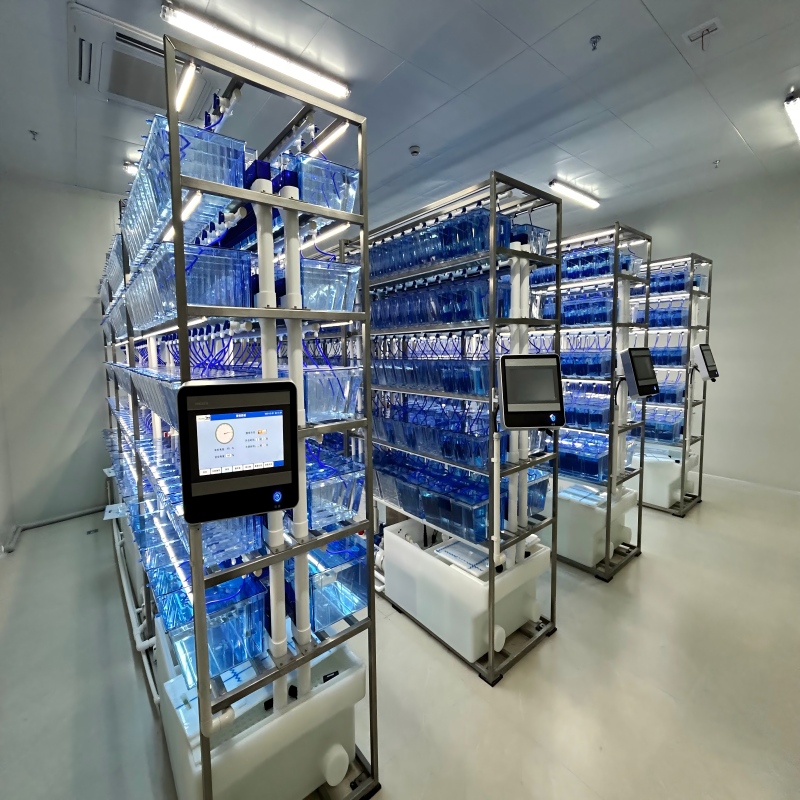
How to export and analyze data from zebrafish larva behavior analysis systems
A Zebrafish Larva Behavior Analysis System can generate far more than a single activity score. It can preserve time-resolved movement, position, zone occupancy, stimulus timing, and quality flags that make a result interpretable months later. The practical challenge is turning those outputs into a dataset a colleague can audit and a statistician can analyze without guessing what happened during acquisition.
This workflow treats a Zebrafish Larva Behavior Analysis System as part of a traceable measurement chain: assay design, acquisition, data export, quality control, endpoint calculation, and reporting. The right detail depends on the platform and assay, but the discipline is portable.
Start by deciding what a defensible export must answer
Before opening the export dialog, define the unit of analysis. Is it a larva, a well, a plate, a stimulus epoch, or a repeated observation? A Zebrafish Larva Behavior Analysis System may provide all of these levels, but combining them too early can hide plate effects or duplicate observations. Create a short data dictionary with one line for every output column, its units, its sampling interval, and the transformation that will be applied.
At minimum, link every record from the Zebrafish Larva Behavior Analysis System to a stable larva or well identifier, plate identifier, acquisition date and time, developmental stage, strain, treatment, concentration, vehicle, operator, protocol version, temperature setting, illumination or stimulus program, and camera or tracking configuration. Do not rely on a filename to carry all of that context.
Export a raw layer and an analysis-ready layer
A well-structured data export has two layers. First, archive the least-processed output the Zebrafish Larva Behavior Analysis System permits: frame- or interval-level coordinates, velocity, distance, orientation, detection confidence, and event timestamps when available. Automated tracking can produce tabular coordinates and angles tied to regions of interest, but field names vary between systems. Keep the original files unchanged and record the software version that created them.
Second, produce a tidy analysis table in which each row has one explicit observational unit. For a stimulus assay, a useful convention is one larva-by-epoch row, with baseline and post-stimulus windows stored separately. Keep derived variables such as mean velocity, mobile time, turn count, latency, or zone occupancy in new columns rather than overwriting raw measurements. This makes the workflow reversible.
Use a simple folder and file convention
- 01_raw/: immutable native exports and original videos or their retained identifiers.
- 02_metadata/: plate map, treatment map, protocol, and data dictionary.
- 03_qc/: exclusions, tracking failures, and reasons for each decision.
- 04_derived/: reproducible tables created from the raw layer.
- 05_reports/: figures, model output, and the final methods summary.
A Zebrafish Larva Behavior Analysis System becomes much easier to audit when the exported filenames include an experiment ID rather than descriptive prose. Put descriptive details in metadata, where they can be filtered and validated.
Run quality control before calculating biology
Quality control is not a cosmetic final step for a Zebrafish Larva Behavior Analysis System. Review sample counts by treatment and plate, missing-frame rate, detection confidence, trajectories that leave the expected well boundary, and abrupt changes aligned with light transitions or camera glare. A low activity value can reflect sedation, a true phenotype, a larva outside the region of interest, or a failed track; the raw trace helps distinguish them.
Make exclusions prospective where possible. For example, flag a larva when tracking is missing for a pre-specified portion of an epoch, then record the exact rule and count excluded samples by treatment. Do not tune a cutoff after looking at group differences. If a borderline case requires judgment, keep both the source record and a human-review flag in the data export.
One common pivot is to stop treating total distance as the only answer. A Zebrafish Larva Behavior Analysis System may show identical total distance for two groups while the time series reveals different onset latency, bout structure, or response to stimulation. Those measures should be chosen because they answer the biological question, not because they are the first columns in an export.
Build endpoints from time series with the design in mind
For each endpoint, write a short rule: input columns, time window, aggregation method, missing-data handling, and direction of interpretation. In a Zebrafish Larva Behavior Analysis System, separate acclimation, baseline, stimulation, and recovery windows rather than averaging across the full recording. If detailed tracking is available, locomotor time series can also be segmented into bouts, but bout definitions should be fixed before comparing groups.
Preserve the experimental hierarchy in the analysis. Larvae in the same plate or imaging session may share technical conditions, so treat plate, batch, and run as design variables rather than invisible noise. Plot individual larvae alongside group summaries, check distributions before selecting a model, and report the number of biological and technical replicates separately.
Make the workflow reproducible
The most useful workflow is one another person can rerun from the archived data export. Store the transformation script or documented sequence of spreadsheet operations, lock the input version, and generate an exclusion log automatically where possible. A Zebrafish Larva Behavior Analysis System is only as reproducible as the connection between its acquisition settings and the table used for statistics.
Before finalizing results, perform a small hand audit: select a few rows, trace them back to the plate map and raw output, then confirm that the derived endpoint and treatment label agree. Repeat the check across plates and treatment groups. This catches shifted columns, wrong joins, and mixed-up epochs that polished charts can conceal.
A practical release checklist
- Export the raw table and retain its software version and settings.
- Save metadata and plate maps using stable IDs.
- Document tracking QC and exclusions before group comparison.
- Create derived endpoints with versioned, reviewable logic.
- Analyze plate, batch, and larva-level structure explicitly.
- Archive the scripts, final tables, and a concise methods record together.
Used this way, a Zebrafish Larva Behavior Analysis System does not merely produce a report. It supports a transparent chain from video and metadata to behavioral inference that can be checked, updated, and reused when the next assay asks a more detailed question.








