
 EN
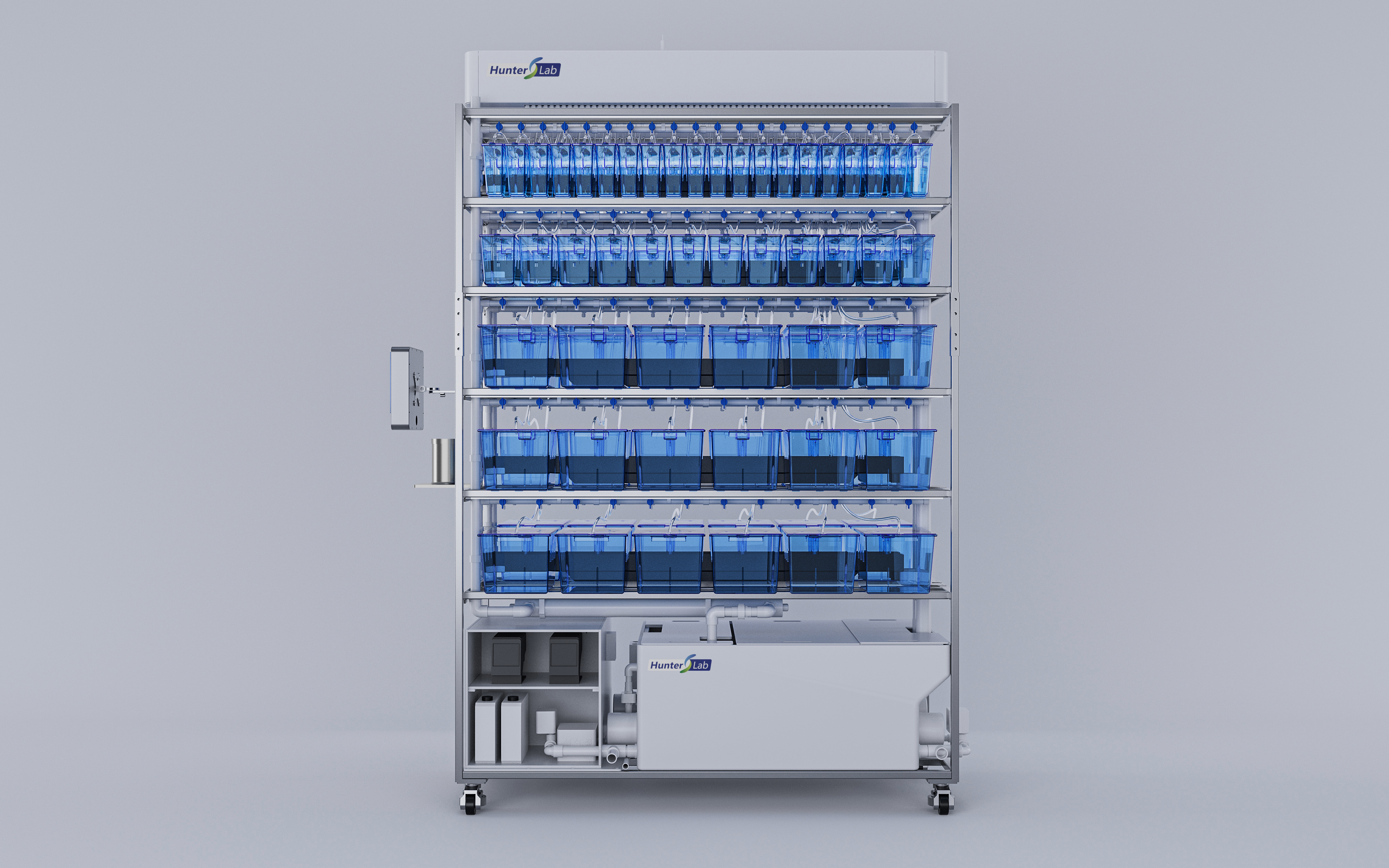
How to Calibrate Feed Dispensing Accuracy in a Zebrafish Automated Feeding System
A Zebrafish Automated Feeding System can make daily husbandry more consistent, but only if the programmed delivery event corresponds to the amount of feed that actually reaches each tank. Calibration is the short, repeatable process that connects a controller setting—time, rotation, pulses, or dose count—to measured feed mass. It is not a one-time factory setting. Feed size, humidity, hopper level, vibration, and the route from outlet to tank can all change the result.
For a facility manager or daily user, the useful target is not a single “correct” number. It is a documented relationship between the chosen feed, a defined dispensing setting, and the mass delivered under normal operating conditions. Once that relationship is known, a Zebrafish Automated Feeding System becomes easier to verify, troubleshoot, and hand over between operators.
Start with the feeding plan, not the dispenser setting
Before touching the calibration controls, define the intended ration for each tank group. That plan should reflect the life stage, stocking density, feed type, feeding frequency, water-management capacity, and the facility’s approved husbandry protocol. A published automated-feeder example calibrated output to a planned ration expressed as a percentage of fish body weight per feeding. That is a helpful way to think about the task, but it is not a universal target: the appropriate ration must come from your own approved protocol and feed guidance.
Write down the unit you are trying to deliver: milligrams per tank, grams per rack, or a defined portion per feeding event. Then state exactly what one calibration result represents. If one schedule runs three doses per day, for example, decide whether the test is checking one dose or the full daily total. This simple distinction prevents a surprisingly common error—accurately measuring the wrong event.
Build a calibration setup that measures the real delivery path
Use the same feed, hopper, feeder head, chute, and collection geometry that will be used in routine operation. A bench test performed with a wide cup directly under an outlet may be useful for diagnosis, but it does not prove what reaches a small tank opening. For dispensing accuracy, collect feed at the end of the normal path whenever practical.
- Use a balance with resolution appropriate to the smallest expected dose.
- Use a clean, dry collection vessel and tare it before every measurement.
- Record feed lot, particle-size range, date, hopper fill level, and the controller setting.
- Keep airflow, vibration, and handling consistent during the run.
- Confirm that the feeder is mounted in the same orientation used above the tanks.
This setup step is easy to understate. In practice, a feeder can appear mechanically consistent while the outlet accumulates fines or the chute retains a fraction of a dose. The relevant question is not “Did the mechanism move?” but “How much feed was delivered to the intended destination?”
Use repeated trials to establish dispensing accuracy
Set the controller to a conservative starting dose and run a series of repeated dispensing events into the tared vessel. Ten trials are often a practical starting point for a routine check; use more trials when doses are very small, results are variable, or you are qualifying a new feed. Weigh each result separately rather than pooling the whole series. A pooled mass can show the average, but it hides poor precision.
For each trial, calculate the delivered mass and compare it with the target mass:
Percent error = ((measured mass − target mass) ÷ target mass) × 100
Then examine the spread of the individual results. If the mean is close to target but some doses are high and others low, the system may be accurate on average without being repeatable enough for the intended husbandry workflow. If every dose is consistently low or high, adjust the controller setting and repeat the series. A Zebrafish Automated Feeding System should be tuned from measured output, not from an assumed relationship between run time and feed mass.
Separate accuracy from precision before you change the hardware
Accuracy asks whether the average delivered amount is near the target. Precision asks whether repeated doses agree with one another. The distinction directs troubleshooting. A stable but underweight dose usually points to a calibration-setting change. A scattered series points first to feed flow, hopper bridging, vibration, static charge, wear, or an inconsistent drop path.
| Observed pattern | Likely interpretation | First response |
|---|---|---|
| All doses are similarly below target | Repeatable output with offset | Increase the programmed setting in small, documented increments. |
| All doses are similarly above target | Repeatable output with offset | Reduce the programmed setting and rerun the full trial series. |
| Some doses are near target, others are far away | Weak repeatability | Inspect feed flow, hopper condition, outlet cleanliness, and mounting before recalibrating. |
| Results drift through the run | Changing material or mechanical condition | Check hopper level, segregation, moisture exposure, and any heat or vibration source. |
Automation introduces its own errors, particularly when a powder or micro-pellet behaves differently as the hopper empties. If the feed bridges, separates by particle size, or clings due to static, changing software values alone will not restore dispensing accuracy. Correct the physical cause first, then rerun the same measurement sequence.
Verify every feed change and meaningful operating change
A calibration curve is specific to the material and operating conditions tested. Recheck a Zebrafish Automated Feeding System when you change feed formulation, particle size, feed lot, hopper, feeder head, dose range, mounting position, or delivery chute. Repeat the check after cleaning, repair, relocation, or any unexplained change in tank observations. If the system runs different recipes for larvae, juveniles, and adults, validate each recipe rather than assuming one setting scales linearly.
Routine verification can be shorter than initial qualification. For example, a facility may retain the original multi-trial record, then perform a smaller pre-use or periodic check against an acceptance range defined by its own protocol. Conditional limits are more useful than generic promises: a tight range may be necessary for a sensitive study, while a different range may be acceptable for ordinary colony maintenance.
Create a record that another operator can reproduce
The most durable calibration tool is a simple log. Record the date, operator, feeder identity, feed details, target mass, controller setting, individual trial masses, mean, range or other variability measure, acceptance decision, and next review date. Include corrective actions, not just successful runs. This turns a Zebrafish Automated Feeding System calibration into an auditable routine instead of a memory-dependent adjustment.
When an operator sees drift, the log helps distinguish a new mechanical problem from a known feed-related effect. It also makes calibration faster after a staff change because the next person can repeat a defined method rather than start from a guessed run time.
A practical calibration checklist
- Confirm the approved feeding plan and target mass per event.
- Load the actual feed to be used and document its relevant characteristics.
- Inspect and clean the hopper, outlet, chute, and collection path.
- Tare a suitable collection vessel at the normal delivery position.
- Run and weigh repeated doses at the selected setting.
- Calculate average output, percent error, and variability across trials.
- Adjust only after identifying whether the issue is offset or inconsistent flow.
- Repeat the full series, approve the result against your facility limit, and log it.
Make calibration part of dependable husbandry
Good calibration is less about finding a magic setting than about proving that a setting delivers the intended dose today. Measure the complete delivery path, use repeated trials, distinguish accuracy from precision, and revisit the result whenever feed or equipment conditions change. With that discipline, a Zebrafish Automated Feeding System can support more consistent feeding decisions while keeping the evidence for each adjustment clear.








