
 EN
Why floor space is the scarcest resource in any fish facility
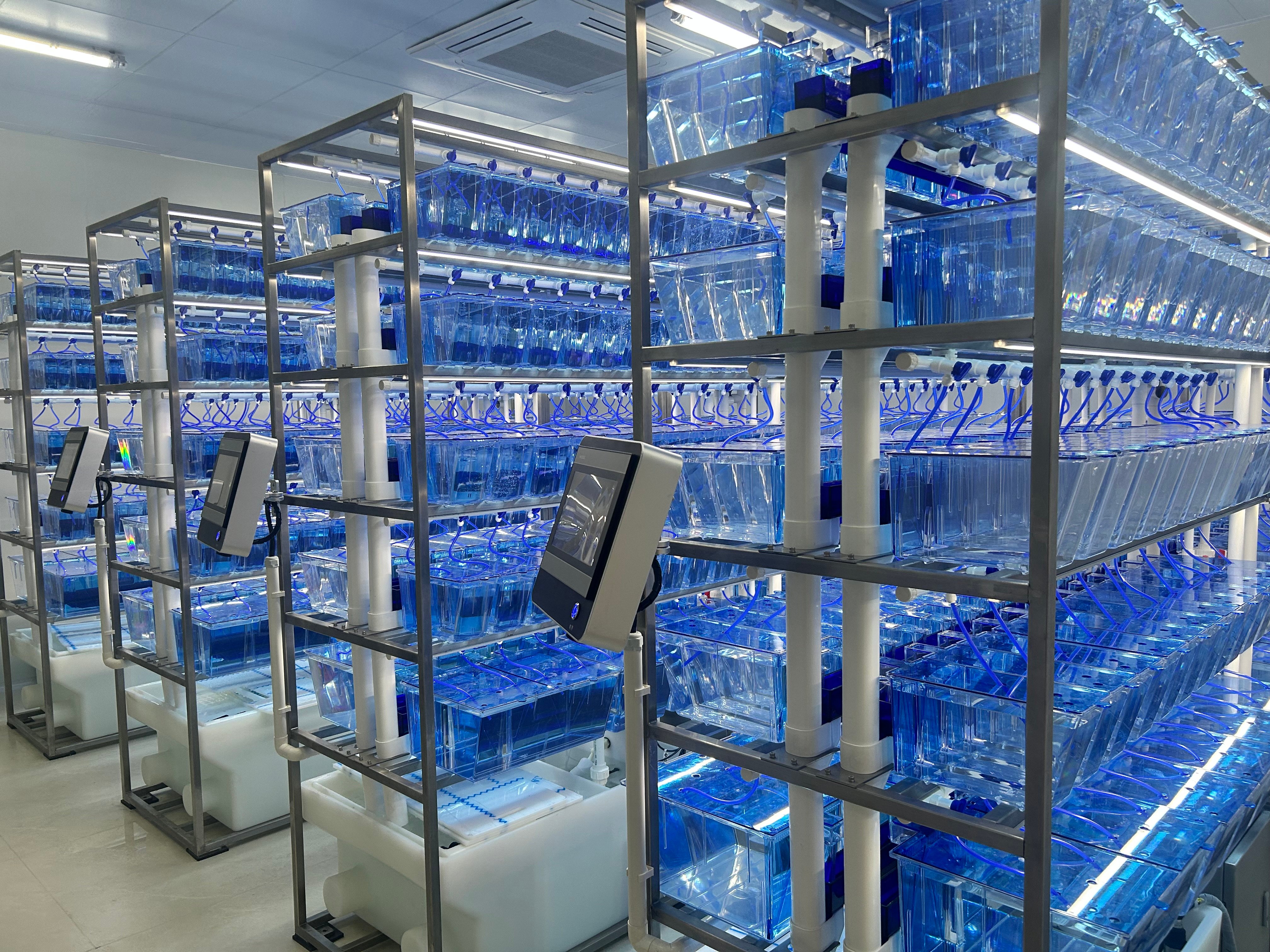
Walk into a typical research building and the premium is obvious. Bench space, freezer space, and animal holding space all compete for the same square meters. A zebrafish facility adds another layer of demand because the animals need water, filtration, and environmental control, all of which take up room. Traditional tank setups spread across benches and shelves consume a surprising amount of floor area for the number of fish they hold. A zebrafish rack changes that equation by turning vertical space into usable holding capacity.
The problem is not just about fitting more tanks. It is about fitting them without creating a maze of tubing, blocking walkways, or making maintenance impossible. A well-designed rack addresses all three constraints at once.
Vertical stacking turns one square meter into several
The most direct way a rack improves space utilization is by stacking. Instead of one row of tanks at bench height, a rack holds multiple tiers. Each tier has its own water supply, drainage, and lighting. The footprint on the floor stays roughly the same, but the number of tanks increases with each level added.
There are practical limits. The top tier has to be reachable without a ladder, and the bottom tier has to be accessible for cleaning. Lighting has to reach every level evenly, and water flow has to be balanced across tiers. A rack that ignores those details may hold more tanks on paper but become unusable in practice.
| Setup type | Approximate tanks per square meter | Access | Maintenance |
|---|---|---|---|
| Bench-top tanks | Low | Easy | Simple |
| Single-tier shelving | Moderate | Easy | Moderate |
| Multi-tier rack | High | Requires planning | Routine but structured |
| Walk-in system | Very high | Dedicated room | Complex |
The table is a general comparison, not a precise specification. The actual numbers depend on tank size, rack design, and room layout.
Modular design lets the rack grow with the research
Space utilization is not a one-time calculation. Research programs change. A lab that starts with a few tanks may add new lines, new experiments, and new personnel. A modular rack system allows the facility to add tiers or sections without rebuilding the entire room.
Modularity also helps when a project ends. Tanks can be removed, and the space can be reassigned. That flexibility is hard to achieve with custom-built, fixed plumbing. A rack that uses standardized connections and interchangeable components makes those changes faster and less disruptive.
-
Add a tier when colony size increases.
-
Remove a section when a project finishes.
-
Reconfigure tank sizes for different life stages.
-
Move a rack to a new room if the facility relocates.
Integrated water handling reduces the footprint of support equipment
A zebrafish rack is not just a frame with tanks. It includes the water distribution, drainage, and often the filtration and UV disinfection. Integrating those functions into the rack reduces the need for separate sumps, pumps, and treatment units scattered around the room.
That integration has a direct effect on space. A traditional setup might need a dedicated filtration corner, a separate water storage area, and a maze of tubing running along the floor or ceiling. A rack with integrated water handling consolidates those components into a smaller footprint. It also reduces the risk of leaks and makes maintenance easier because the critical parts are in one place.
Maintenance access and ergonomics: space utilization is not just about density
A rack that packs tanks tightly but leaves no room to work is not efficient. It is a hazard. Staff need space to open lids, check fish, clean tanks, and respond to alarms. Walkways have to be wide enough for a cart or a person carrying equipment. Lighting has to be accessible for replacement. Drains have to be reachable for clearing.
Ergonomics matter too. Reaching into a top tier for hours can cause strain. A rack that positions the most frequently accessed tanks at a comfortable height improves both safety and efficiency. The goal is not maximum density. It is maximum usable density.
A field example from a facility that reorganized its layout
A university lab in eastern China had been running a zebrafish colony on a mix of benches and open shelving. The room was crowded, and the tubing ran along the floor, creating trip hazards. When the lab expanded to a second research group, the space problem became urgent.
The team replaced the mixed setup with a multi-tier rack system that integrated water supply, drainage, and UV disinfection. The floor area used for fish holding dropped noticeably, even though the number of tanks increased. The tubing was routed within the rack, and the walkways became clear. The change did not add a new room or expand the building. It used the existing space better.
The transition was not instant. The team had to plan the water connections, test the flow balance across tiers, and train staff on the new maintenance routine. But the end result was a facility that could support more research in the same footprint.
Where racks have limits and what to consider before installing one
A rack is not the right answer for every facility. A small lab with a handful of tanks may not need the complexity. A room with low ceilings may not have the vertical clearance for multiple tiers. A building with limited floor loading capacity may need structural review before a heavy rack is installed.
There is also the question of cost. A rack system with integrated water handling is a larger upfront investment than a few benches and tanks. For facilities that plan to grow, the long-term space savings can justify it. For facilities that expect to stay small, the calculation may look different.
It is also worth checking the serviceability of the design. A rack that is easy to clean and maintain will stay in good condition. A rack that is hard to access will be neglected, and neglected equipment eventually fails.
Hunter Lab (Hunter) builds zebrafish laboratory equipment with attention to the practical details of space planning and daily work. The manufacturing and quality control side supports the consistency that long-term colony management requires. For labs looking to get more research out of the same room, that kind of build discipline is part of the foundation.








