
 EN
Why Manual Morphological Scoring Drifts Across Plates
Manual phenotype review can be careful, but making it equally careful across every plate, day, and analyst is difficult. A zebrafish phenotype analysis system addresses that gap by turning images of embryos or larvae into repeatable measurements, classifications, and reviewable morphological scores. The aim is not to replace scientific judgment. It is to make the path from image to decision visible, consistent, and easier to audit.
Traditional review often uses a checklist: body axis, somite pattern, eye and yolk sac appearance, edema, fin development, pigmentation, and study specific endpoints. The checklist is useful, yet execution can drift. Two reviewers may apply the same label differently when an embryo is rotated, partly occluded, out of focus, or close to a threshold. A score that cannot be traced to an image, a measurement, and a rule is hard to compare across runs.
What the Automation Pipeline Actually Does
Automation is better understood as a chain of decisions than as a single button. Each stage narrows uncertainty while preserving the original image for later inspection.
-
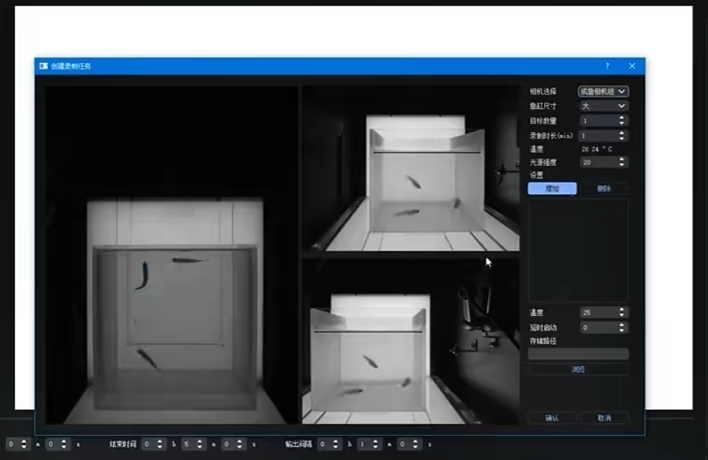
Acquire consistent images. The system captures images under defined magnification, lighting, orientation, and developmental stage settings. Quality checks can flag blurred, poorly exposed, or empty frames.
-
Locate and segment the fish. Image analysis separates the embryo or larva from the background and identifies regions such as head, eye, trunk, tail, yolk sac, or cardiac area.
-
Extract morphological features. Software measures length, curvature, area, symmetry, contour, regional intensity, or shape relationships instead of relying on an overall impression.
-
Apply scoring logic. Measurements map to study defined categories, thresholds, or model outputs. A body axis deviation may be classified only after angle or curvature exceeds a validated boundary.
-
Route exceptions for review. Low confidence images, conflicting signals, or failed quality checks go to a reviewer. The correction becomes part of the audit trail.
From Image Analysis to Reviewable Scores
Image analysis supplies evidence. Morphological scoring supplies interpretation. A useful system keeps those layers separate. It stores the image and derived measurements, records the rule or model version that produced a score, and logs whether a person accepted, corrected, or excluded the result.
That separation supports defensible comparisons. If an apparent phenotype rate changes, the team can check whether underlying measurements moved, image quality shifted, or a scoring configuration changed. A protocol can use graded categories for severity, region specific observations, or a composite score, provided categories are defined before the main analysis begins. Published zebrafish workflows have shown that automated image based analysis can classify morphological phenotypes while retaining interactive review and manual correction. Automation should make routine decisions consistent and ambiguous decisions easier to find, not hide uncertainty behind one output.
How Standardization Works Across Plates and People
A zebrafish phenotype analysis system standardizes scoring through configuration and traceability. It can attach the same acquisition profile, feature definitions, decision thresholds, and model version to every well in a run. When the workflow repeats, the same rules are available to every operator.
| Workflow Element | What Is Standardized | Why It Matters |
|---|---|---|
| Image capture | Magnification, exposure, focus checks, plate map | Reduces avoidable variation before analysis |
| Feature extraction | Regions of interest and shape metrics | Makes evidence behind a score inspectable |
| Decision logic | Thresholds, categories, classifier version | Prevents reviewers from using different rules |
| Review queue | Low confidence and failed quality images | Directs expert time where it adds value |
| Export | Image ID, score, measurements, reviewer action, timestamp | Supports analysis and troubleshooting |
Controlled vocabulary also helps. The Zebrafish Phenotype Ontology formally defines zebrafish phenotypes, so teams can align export labels or annotation dictionaries with recognized terminology. The system does not need to impose an ontology to be useful. A label simply needs to mean the same thing from one dataset to the next.
Where Human Review Still Matters
Reliable image analysis needs well defined boundaries. Occlusion, unusual orientation, debris, overlapping embryos, and developmental delay can produce signals that resemble a phenotype. A confidence score or exception queue gives the reviewer a place to intervene before questionable observations affect downstream statistics.
It is also wise to establish a reference set of normal, mild, and severe examples before scaling up. Review a sample of automatically scored images at intervals, especially after changing optics, strain, stage, assay media, or exposure conditions. A published protocol may specify one setup, but local baseline can shift with equipment and husbandry. Local verification remains necessary.
Choosing the Right Level of Automation and Partner
The right level depends on the question. For early exploratory work, rule based triage and a reviewer queue may be enough. For a larger repeatable screen, a more complete zebrafish phenotype analysis system can provide standardized acquisition, feature extraction, scoring, and batch reporting. Evaluate whether the workflow preserves original images, exposes scoring logic, handles exceptions, and produces exports that a statistician or study lead can audit.
When those conditions are in place, automated morphological scoring becomes more than a throughput tool. It becomes a reproducible measurement process. Image evidence becomes a defined phenotype label, uncertain cases are reviewed, and every result remains connected to the conditions that produced it. Hunter Lab supports zebrafish laboratories with phenotype analysis and imaging equipment built for core facility workflows. The company's experience covers system integration, image data handling, and the operational realities of maintaining zebrafish research programs. For facilities comparing automation options, Hunter Lab offers a partner that understands how scoring rules, image quality, and daily husbandry affect reproducible phenotype data.








