
 EN
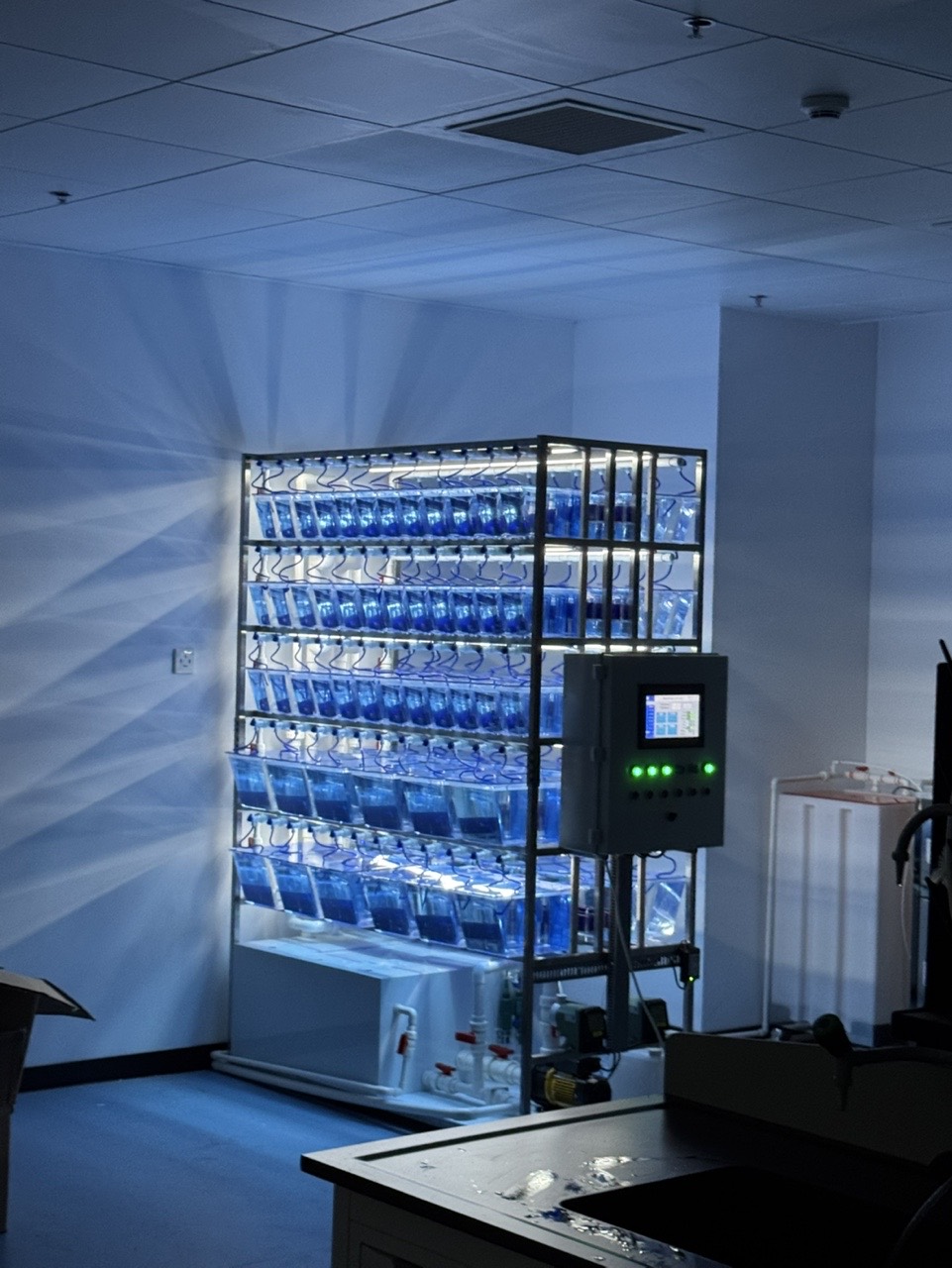
Most labs running zebrafish colonies eventually hit the same wall. Fish look healthy, water tests are normal, feeding is consistent, yet spawning output slides. The cause often traces to something basic: the light cycle inside the incubator is not doing what the controller claims. Zebrafish are photoperiodic spawners, and their reproductive rhythms depend on light cues. Standard husbandry uses a 14-hour light and 10-hour dark cycle at roughly 28°C. A reliable light cycle in a zebrafish incubator requires hardware, control logic, and monitoring that agree with each other.
Why a Stable Photoperiod Matters Beyond On and Off
The circadian clock in zebrafish regulates gene expression across tissues, and peripheral clocks can be entrained by light. Light-responsive genes such as Cryptochrome1a and Period2 help transfer photic information to the internal timekeeping system. When the photoperiod drifts, those pathways can be disrupted before visible behavior changes. Spawning is usually the first sign. Zebrafish typically spawn in the morning shortly after lights come on, and the rhythm is synchronized mainly by light rather than feeding. A stable photoperiod produces embryo clutches on a more predictable timeline.
What a Functional Light Cycle System Includes
A working light cycle system is not one component. It is a coordinated set of parts. At minimum, the setup needs programmable LED modules that deliver consistent intensity and spectrum across the culture surface, a controller that manages daily timing and transitions, and feedback to catch failures. Key tasks include:
-
Matching spectral output to zebrafish photobiology. White LED output is generally the safest baseline for embryos and larvae, while blue and red wavelengths can have stage-specific effects.
-
Keeping intensity uniform across the rack. Hot spots and dim zones create behavioral variability that contaminates data.
-
Controlling transitions. Abrupt switching can trigger stress in adult fish, while gradual dawn and dusk ramps better mimic natural conditions.
-
Holding timing precision. Small drift over weeks can desynchronize breeding rhythms across tanks.
A high-intensity LED panel that generates heat can warm tanks below it and create temperature gradients that undermine climate control.
Control Architecture and Transition Quality
The control layer is where integration succeeds or fails. Many modern systems use PLC-based controllers with programmable timers, while simpler setups rely on digital timer relays. A recent patent filing describes a thermostat-style incubator where an LED panel connects through a timer to a PLC controller that governs on and off cycles independently of water temperature regulation. Programmable LED panels can automate photoperiod cycles to synchronize spawning. Transition quality matters more than expected. Hard on and off switching is cheap, but it creates a sudden light step that can trigger cortisol release in adult fish. Dawn and dusk simulation, where intensity ramps over 20 to 40 minutes, has become common in better integrated systems. Some controllers dim to low levels without flicker, allowing smoother transitions.
| Integration Approach | Timing Precision | Transition Quality | Failure Mode | Complexity |
|---|---|---|---|---|
| Mechanical timer plus LED strip | Moderate | Abrupt on/off | Timer drift, no monitoring | Low |
| Digital timer plus fixed LED panel | Moderate to high | Limited dimming | Silent timer failure | Low to moderate |
| PLC controller plus dimmable LED and dawn/dusk | High | Smooth ramp | Detectable with monitoring | Moderate |
| Networked controller with zoning and feedback | Very high | Fully programmable | Fail-safe alerts | High |
The table highlights a point that is easy to miss. The more sophisticated the control architecture, the more it depends on monitoring. A silent timer failure in a simple setup might leave lights on for a full day, which is bad but recoverable. A networked controller that fails without alerting anyone can leave racks out of phase for days.
Spectral Choices and Silent Drift Risks
Wavelength selection has downstream consequences. Studies on zebrafish embryonic development suggest that white LED output produces the best overall developmental outcomes, while red and green light can increase mortality during early stages. Blue light tends to affect early parameters such as eye development and yolk absorption. That does not mean blue or red light has no place in a zebrafish facility. Some behavioral assays and optogenetics work require specific wavelengths, and the light cycle system needs to accommodate those protocols without compromising baseline husbandry.
One common field issue is undetected light cycle drift. Timer batteries die, controllers lose programs after power events, or a rack gets wired to the wrong circuit during maintenance. Fish do not die, but breeding output quietly falls and nobody knows why until a spawning assay comes back abnormal. A few years ago, a mid-sized research institute in the southeastern United States had this problem. The colony had produced consistent embryo yields for over a year. Then output dropped noticeably over several weeks. Water parameters were normal, fish looked healthy, and necropsies showed nothing unusual. The issue turned out to be a group of racks on a gradually shifting photoperiod. A firmware update on the central controller had reset the internal clock on those units. The fix was a firmware patch and a manual resync, but the lost output could not be recovered. Light cycle systems need independent verification. A simple light sensor logging actual on and off times would have caught the drift within days.
Where Integration Design Makes the Difference
The gap between adequate and well-engineered often comes down to how the light system interfaces with everything else. Temperature control, water flow, and lighting all interact. A light panel that produces significant heat forces the cooling system to work harder, which can create temperature cycling that stresses fish. Low thermal output and good thermal separation from the water column avoid that problem. Physical mounting also matters. Light strips mounted directly on top of housing tanks are common in rack-level designs, and dawn/dusk cycles can be programmed at that level. Sealed light cabinets that isolate rows from room lighting let facilities run different photoperiods on different racks without cross-contamination. For labs sourcing zebrafish incubators, the practical takeaway is to look past headline specifications. A 14/10 light cycle is easy to claim. Whether the system can hold that cycle within tight tolerances over months and handle power interruptions gracefully is where real engineering shows up.
Hunter Lab builds zebrafish experimental equipment with that integration mindset, focusing on manufacturing consistency and supply chain reliability so that the light cycle system behaves the same way in month twelve as it did on day one.








