
 EN
What the Device Actually Measures
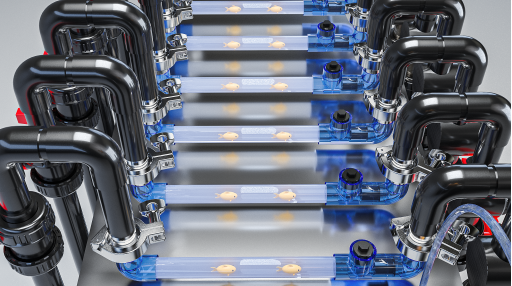
A zebrafish endurance testing device converts visual observation into a repeatable performance measure. In a controlled swim tunnel or flume, an adult zebrafish swims against a known current while the investigator records its response as the challenge rises. The outcome is not simply "swam" or "stopped." It is a documented measure of swimming stamina produced under defined flow, temperature, acclimation, and fatigue criteria. For labs comparing exercise capacity, toxicology effects, or recovery phenotypes, the device's strength is controlled exposure.
The device usually measures performance in one of two ways. An incremental test increases water velocity in steps until the fish can no longer maintain position. The resulting critical swimming speed, often called Ucrit, summarizes the highest sustainable challenge plus partial time at the next step. A constant-flow test holds the current at a preset demand and reports time to fatigue. Neither endpoint is a direct measurement of one biological pathway. Swimming stamina reflects coordinated muscle work, oxygen delivery, energy availability, motivation, buoyancy, and orientation in flow.
How a Swim-Tunnel Test Proceeds
The test begins with a stable environment. The device should deliver steady, calibrated flow through the working section. Researchers document water temperature, dissolved oxygen where relevant, tank volume, and the number of fish tested at once. Temperature deserves attention because it changes activity and metabolism. The chamber should let fish establish consistent orientation rather than forcing them into a corner.
Acclimation is part of measurement, not an afterthought. A practical protocol gives each fish time to settle at a low current before the challenge begins. Feeding schedule, age, body size, sex balance, handling, and time of day should be standardized within a study.
Then a defined flow challenge is applied. In an incremental protocol, current starts at a manageable speed and rises by fixed increments after fixed intervals. Published zebrafish methods use step durations around 5 to 10 minutes and starting speeds in body lengths per second. These are examples, not universal settings. Small steps improve resolution but lengthen the trial. Large steps shorten the test but can obscure subtle endurance differences. The device should record the programmed flow schedule and actual calibrated velocity.
Defining Fatigue Before Testing Starts
Fatigue must be an operational endpoint, not a judgment made after viewing results. A common approach defines fatigue as repeated contact with a downstream screen or failure to resume swimming after a brief, pre-specified stimulus. The exact number of contacts, observation window, and stimulus method belong in the protocol. Consistent fatigue scoring protects the study from two observers calling the same behavior differently. Video recording strengthens the workflow by providing an audit trail and allowing blinded rescoring. If manual observation is used, training observers on example clips and documenting inter-rater agreement makes the fatigue decision more defensible.
From Raw Behavior to a Stamina Result
For a constant-current test, the primary result is often time to fatigue. Longer time at the same verified velocity suggests greater swimming stamina, provided groups were tested under the same conditions. For an incremental test, Ucrit is commonly calculated from the last fully completed velocity step and the fraction of the final interval completed before fatigue. The calculation is only comparable when starting speed, increment size, and step duration are reported.
| Measure | What It Captures | Key Protocol Details |
|---|---|---|
| Time to fatigue | Endurance at one fixed current | Current, fatigue rule, maximum trial time |
| Ucrit | Incremental swimming performance | Starting velocity, increment, interval, partial-step calculation |
| Body-length-normalized speed | Performance adjusted for size | How body length was measured and when |
Normalization matters because a larger fish can produce a higher absolute speed without a different relative capacity. Presenting individual points, group size, and a distribution, not only a group average, helps reveal whether an apparent endurance effect is broad or driven by a few animals.
Controls That Keep Endurance Results Credible
Several controls are essential. Flow verification should check water speed in the occupied region of the chamber, not only the pump setting. Comparable handling means keeping transfer, acclimation, and test order consistent across groups. Predefined exclusions should be set for injury, abnormal swimming, or technical failures before reviewing group outcomes. Blinded scoring, where feasible, masks group labels during fatigue assessment or video review. Replicable reporting states fish characteristics, water conditions, flow schedule, endpoint, and analysis method.
These controls are especially important when interpreting fatigue. An early endpoint may reflect stress, poor acclimation, or chamber conditions rather than reduced physiological endurance. Conversely, a longer result should not be framed as improved health without supporting measures appropriate to the study.
Choosing the Right Readout and Partner
Use time to fatigue when the research question is simple resistance to a fixed workload, such as whether a treatment changes tolerance at a defined current. Use an incremental protocol when a compact threshold-like measure across increasing workloads is needed. In either case, pilot testing should confirm that the chosen range avoids immediate fatigue in most fish and avoids a ceiling where nearly all fish finish the trial. A good endurance assay is a measurement system, not just a piece of equipment. The device supplies controlled water flow, the protocol makes that flow comparable, and the fatigue definition converts behavior into data.
Hunter Lab supports zebrafish laboratories with endurance testing devices and environmental control equipment built for controlled aquatic research. The company's experience covers flow calibration, chamber design, and the operational realities of maintaining zebrafish colonies. For facilities comparing endurance testing options, Hunter Lab offers a partner that understands how flow, temperature, and protocol design affect reproducible swimming stamina data.








