
 EN
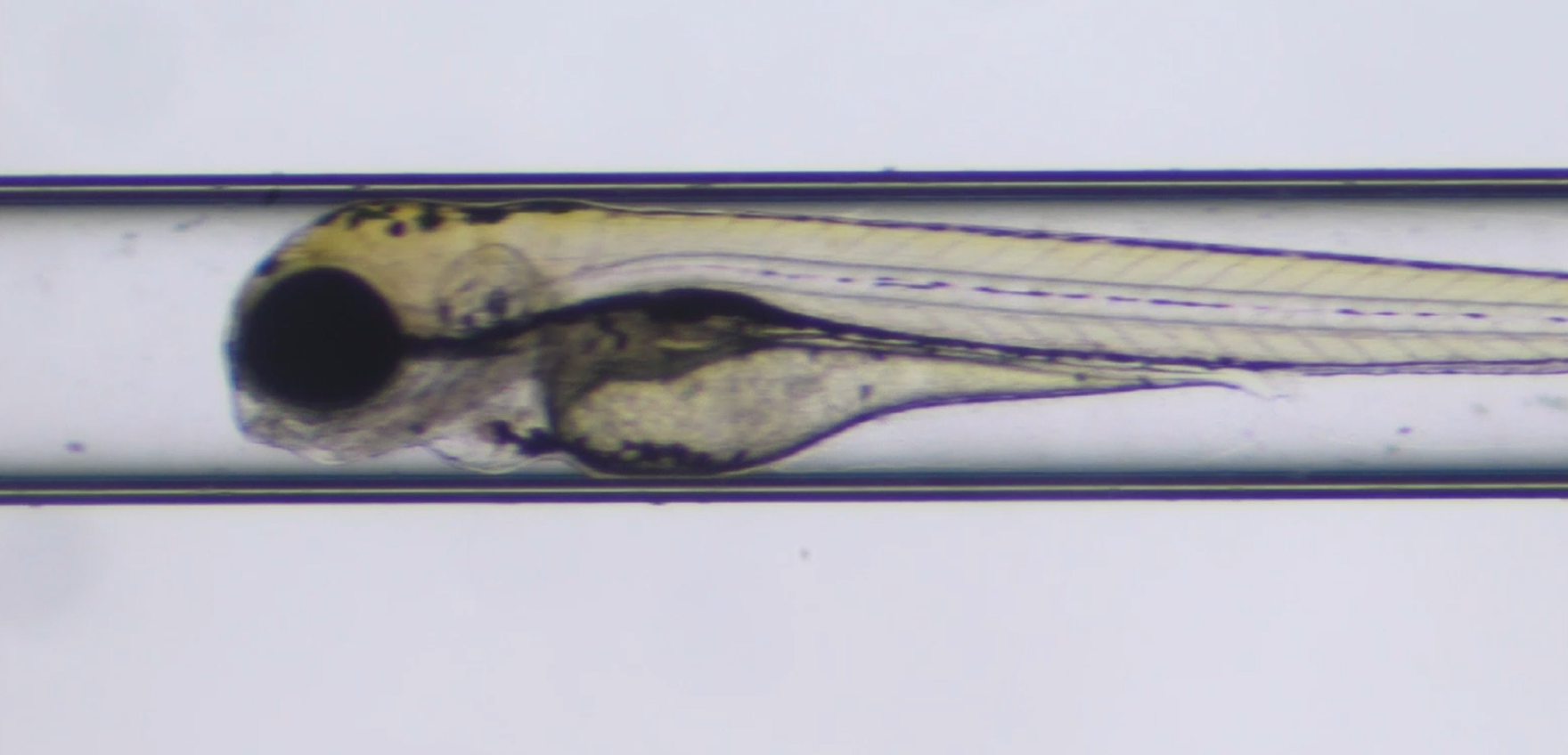
How can a zebrafish imaging system integrate with behavioral analysis?
A Zebrafish Imaging System becomes more useful when it is planned as part of a behavioral workflow rather than as a separate source of pictures. For a shared imaging facility, the goal is not simply to collect sharper images or longer videos. It is to make sure that the animal, condition, time point, behavioral readout, image-derived feature, and quality decision can be interpreted together. That connection makes the multimodal research record easier to defend.
In practice, a Zebrafish Imaging System can sit before, during, or after behavioral analysis. The right placement depends on whether imaging could disturb the behavior being measured, whether an endpoint needs repeated observation, and whether the same larva can be identified reliably across steps. A workable design starts with those questions, not with a software menu.
Start with one biological question and two compatible readouts
Define the behavioral endpoint first: locomotor activity, startle response, thigmotaxis, social preference, sleep-wake pattern, or another assay-specific measure. Then ask what imaging adds. A Zebrafish Imaging System may provide morphology, fluorescence, cardiac dynamics, tissue appearance, or another image-derived feature that helps explain a behavioral shift. The two readouts should answer complementary parts of the same question.
For example, a treatment study might compare a movement phenotype with a structural or functional imaging observation collected at a defined time point. That is more useful than treating behavioral analysis and imaging as two unrelated screens. It also makes the integration decision clearer: collect the behavioral measure first when handling or illumination could change behavior; collect imaging first when the imaging endpoint is transient; or use synchronized acquisition only when the biological question genuinely requires it.
Build the workflow around identity, timing, and conditions
The most common integration failure is not an optical problem. It is a matching problem. Every record from a Zebrafish Imaging System should be traceable to the same experimental identity used by behavioral analysis. At a minimum, retain a stable animal or well ID, plate or arena position, cohort, developmental stage, treatment, dose, acquisition date, operator, and protocol version.
Timing deserves the same attention. Record when acclimation began, when the stimulus occurred, when behavior was captured, and when the image sequence was acquired. Published zebrafish tracking work has used synchronization cues to align camera movies with time-series behavior data. Your lab does not need to copy a particular hardware setup, but it does need a visible and testable rule for aligning clocks, events, and files.
- Use a single sample ID that appears in the behavioral export and image filename or database record.
- Capture protocol version, frame rate or sampling settings, temperature, illumination, and exposure as metadata.
- Assign a quality flag before analysis so exclusions are visible rather than silently removed.
- Document whether imaging and behavior were sequential, simultaneous, or collected from matched cohorts.
Choose sequential or synchronized acquisition deliberately
Sequential acquisition
Sequential acquisition is often the simpler option for a Zebrafish Imaging System. A lab can collect an undisturbed behavioral baseline, move the sample to imaging under a documented handling procedure, and join the results by ID and time window. This approach is easier to validate when behavior depends on a controlled arena, lighting program, or stimulus delivery that differs from the imaging station.
The trade-off is that a delay can matter. If the phenotype changes quickly, define the maximum acceptable interval and pilot it. Stable temperature conditions also matter: if the room or stage fluctuates, both behavioral baselines and image-derived physiology can shift. Verify that local baseline with your own controls rather than assuming a threshold will transfer.
Synchronized acquisition
Synchronized acquisition can be appropriate when behavior and an image signal must be interpreted in the same moment. A Zebrafish Imaging System used this way needs a common timing reference, compatible illumination, a plan for file volume, and a protocol that confirms imaging does not change the measured behavior. It may offer a richer multimodal view, but it is not automatically better. If the added setup reduces throughput or introduces stress, a carefully timed sequential design may yield more reliable research data.
Make behavioral and imaging outputs analysis-ready
Raw video is not yet behavioral analysis, and raw images are not yet an integrated result. A useful handoff is a tidy table or database in which each row joins to the same sample metadata. A Zebrafish Imaging System should therefore export or support a workflow that preserves filenames, timestamps, regions of interest, quality decisions, and analysis settings alongside derived measurements.
| Data layer | Example fields | Why it matters |
|---|---|---|
| Sample identity | Animal ID, well, cohort, treatment | Prevents mismatched behavioral and image records. |
| Behavioral output | Distance, velocity, zone occupancy, response latency | Defines the observable phenotype. |
| Imaging output | Feature measurement, fluorescence value, morphology score, quality flag | Adds a mechanistic or descriptive layer. |
| Acquisition context | Timestamp, temperature, stimulus, protocol version | Supports interpretation and repeatability. |
Do not merge on a display name alone. Use a controlled identifier and keep a data dictionary that defines units, missing values, exclusions, and transformations. This modest discipline makes it possible to review outliers, rerun analysis, and explain why a behavioral result does or does not align with an imaging observation.
Validate the integrated assay before scaling it
Before running a large batch, test the full path with a small, representative set. Confirm that the Zebrafish Imaging System can generate usable files at the planned throughput, that the behavioral analysis pipeline retains IDs, and that staff can reproduce the same order of operations. Standardized behavioral conditions are important because uncontrolled external variation can blur genuine effects.
- Run controls and a small range of conditions through the complete workflow.
- Review whether handling, imaging light, immobilization, or transfer changes the behavioral endpoint.
- Check missing-file rates, failed tracking, poor image quality, and mismatched IDs.
- Lock the protocol and analysis rules before expanding the study.
What good integration looks like
A well-integrated Zebrafish Imaging System does not promise that every image explains every behavior. It gives the research team a transparent path from sample preparation to behavioral analysis, imaging, quality control, and statistical interpretation. That makes negative findings informative as well: an observed behavioral change may occur without a detectable imaging feature, or an imaging change may need a different behavioral assay to reveal its relevance.
For most teams, the practical next step is to draw the workflow on one page. Mark where the sample ID is created, where behavior is recorded, where imaging happens, what metadata is mandatory, and who approves exclusions. Once those links are explicit, a Zebrafish Imaging System can support a more coherent multimodal research workflow without forcing the lab into unnecessary complexity.








