
 EN
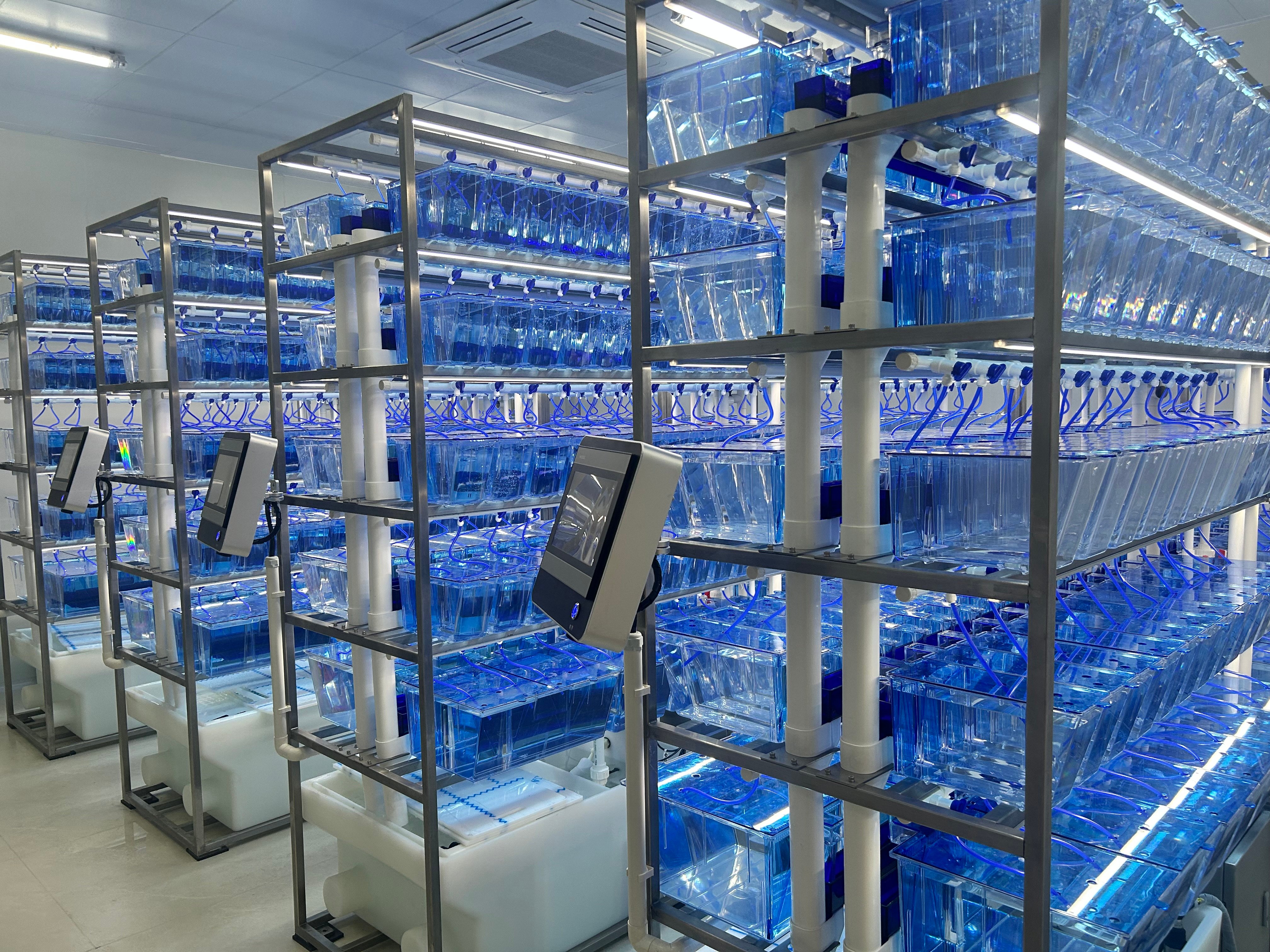
How Can a Zebrafish Flow-Through Exposure System Improve Toxicology Data Accuracy?
A Zebrafish Flow-Through Exposure System is valuable when a study needs more than a nominal dose on a worksheet. It supplies test water continuously, making a practical question measurable: what concentration reached the animals, for how long, and under what water conditions? That distinction is central to sound zebrafish toxicology interpretation.
Researchers often see an exposure result that is difficult to interpret because a compound adsorbed to tubing, degraded in a stock solution, precipitated, or changed as water quality shifted. A well-planned Zebrafish Flow-Through Exposure System does not remove those risks by itself. It gives the team a controlled way to detect, document, and manage them. The result is a more consistent basis for comparing dose groups, repeat runs, or time points.
Why measured concentration matters more than the nominal concentration
In aquatic testing, the nominal concentration is the intended amount added to the system. The biologically relevant value is the amount actually present in the chamber. Those two values may differ, particularly for unstable, volatile, poorly soluble, or surface-active substances. A Zebrafish Flow-Through Exposure System helps keep the study focused on achieved exposure rather than an assumption about preparation.
OECD fish-test guidance regards analytical verification as part of characterizing the test condition. It also links sampling frequency to chemical stability and stock-solution renewal. In practice, that means a toxicology team should establish its sampling plan before interpreting biological endpoints. A single end-of-study sample can miss a concentration drift that occurred during the window when larvae were most sensitive.
How continuous delivery improves measurement confidence
1. It reduces time-dependent concentration drift
With a Zebrafish Flow-Through Exposure System, fresh test solution moves through chambers at a defined rate while spent water exits. This arrangement can limit the effect of depletion, degradation, or metabolic transformation that may accumulate in static exposure. The appropriate turnover is not a universal setting; it should reflect water quality, chamber volume, organism load, and the stability of the test substance.
To improve measurement confidence, record the flow rate at each channel, not only the pump setting. A pump can be running while a partially obstructed line changes the actual delivery to one replicate. Flow verification at setup and at planned intervals makes such deviations visible.
2. It makes mixing and replicate conditions testable
A useful Zebrafish Flow-Through Exposure System has a defined path from stock solution to mixing point to chamber outlet. That map allows staff to sample upstream and downstream when results look inconsistent. If an exposure chamber receives a lower measured concentration than the dosing reservoir, the investigation can address dilution, adsorption, leakage, or insufficient mixing rather than attributing the difference to fish biology.
Replicates should be treated as independent test environments. Confirming similar inflow, temperature, dissolved oxygen, and measured concentrations across replicates supports consistency. It also helps separate a compound effect from a chamber effect.
3. It aligns concentration records with biological observations
Toxicology data are easier to defend when concentration sampling is time-aligned with key observations: mortality checks, developmental scoring, behavior measurements, or image capture. This arrangement supports that alignment because delivery is ongoing and documented rather than replaced at long intervals. The study record can then show whether an apparent response followed a verified exposure condition.
This is especially useful when comparing early and later windows of exposure. The exposure history may be as informative as the nominal treatment label, particularly when a chemical’s stability changes over time.
Design controls that protect reliability
Equipment alone does not establish measurement confidence. The operating controls around the system determine whether it generates an auditable record.
- Condition the system before animal loading. Run the intended solution long enough to check that the planned concentration reaches and stabilizes in each chamber.
- Use compatible wetted materials. Evaluate tubing, connectors, and chamber surfaces for adsorption or leaching risk with the chosen chemical class.
- Verify actual flow. Measure output by channel and document any correction, cleaning, or line replacement.
- Set a chemical-specific sampling schedule. More labile substances usually need more frequent analytical checks than stable dissolved compounds.
- Log environmental covariates. Temperature, dissolved oxygen, pH, conductivity, and mortality observations provide context for every exposure measurement.
- Define deviation rules ahead of time. Decide how the team will handle pump alarms, blocked outlets, off-target concentrations, or missed samples before they occur.
For this type of setup, these controls turn continuous water movement into a reproducible method. Without them, continuous delivery can still produce uncertain exposure histories.
A practical workflow for toxicology studies
Start by defining the study’s critical exposure claim. Is the goal to maintain a target concentration, characterize a fluctuating concentration, or compare concentration-response groups? That decision guides stock preparation, flow rate, sampling locations, and analytical timing.
- Conduct a short non-animal system check with the intended matrix and concentration range.
- Confirm that the apparatus reaches the target range at the chamber inlet and outlet.
- Document flow and water-quality baselines before initiating exposure.
- During the study, pair analytical samples with the biological schedule rather than sampling only for convenience.
- Review concentration, flow, and endpoint data together before assigning biological meaning.
This workflow improves consistency because it asks whether the exposure record supports the conclusion. If measured values diverge from the target, report the divergence and interpret the biological result against the measured condition. That is more useful than hiding variation behind a nominal label.
Choosing the right level of control
This system format is particularly relevant for longer studies, compounds with uncertain stability, and experiments where a modest shift in concentration could alter the conclusion. It may add operational work: pumps need verification, tubing needs inspection, and sampling requires analytical capacity. Those demands should be weighed against the consequences of ambiguous exposure data.
The right design depends on the substance, life stage, endpoint, and laboratory workflow. For example, a setup for transparent larvae and developmental scoring will have different chamber-volume and observation needs from an adult study. In both cases, the main principle is the same: build a documented link between delivered chemical, measured chamber concentration, and observed response.
Conclusion
A Zebrafish Flow-Through Exposure System can improve a toxicology study by making concentration stability, delivery conditions, and deviations measurable throughout the study. Its value is not simply continuous flow. It is the ability to verify what animals experienced, identify sources of variation, and connect exposure evidence to biological outcomes. When flow checks, chamber sampling, and environmental records are planned together, the resulting toxicology dataset is more transparent and more useful for scientific decisions.








