
 EN
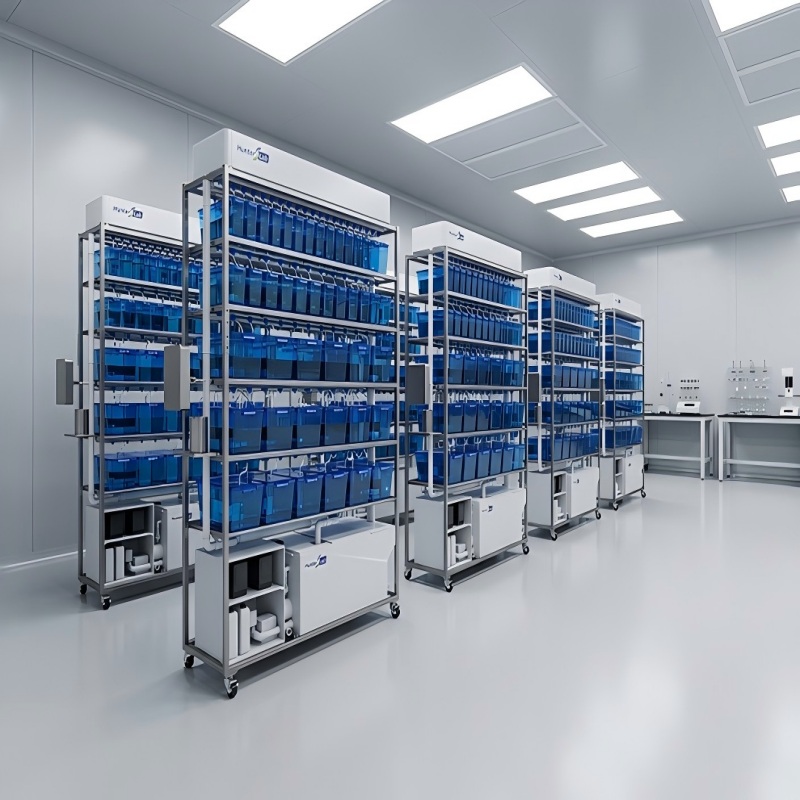
How Can a Zebrafish Automated Feeding System Be Retrofitted to Older Racks?
Retrofitting a Zebrafish Automated Feeding System to an older rack is usually possible, but it is not a plug-and-play purchase. A successful retrofit begins with the rack rather than the feeder: its tank geometry, aisle clearance, power, water-management layout, husbandry workflow, and cleaning routine all determine what can be added safely. For a core facility, the goal is not simply to automate a task. It is to make feeding more repeatable without creating new access, hygiene, or downtime problems.
The useful question is therefore not “Will this Zebrafish Automated Feeding System fit?” but “What must be verified before it is allowed to feed a live colony?” That distinction is important when dealing with older racks whose drawings, accessories, and control arrangements may have changed over years of use.
Start with a retrofit survey, not an equipment order
Before selecting a Zebrafish Automated Feeding System, document the existing rack in the same way you would document a facility modification. Photograph each rack face, measure usable overhead and side clearance, record tank rows and labels, and identify every point where routine work already occurs. Include lids, lighting hoods, manifolds, drain lines, service panels, and the path staff use to remove tanks.
Older racks often differ from their original configuration. A replacement light, a later-added drip tray, or a revised tank lid can be the actual compatibility constraint. Record the dimensions and locations that affect travel, mounting, and dispensing; do not rely on a generic rack name alone. A retrofit plan should also identify whether one feeder must serve a full rack, a rack segment, or a defined group of tanks.
This survey is the practical foundation of retrofitting. It distinguishes a workable installation from a system that physically mounts but blocks access to filters, tanks, or maintenance points.
Check compatibility in three separate layers
1. Mechanical compatibility
Mechanical compatibility covers mounting, reach, stability, and clearance. Confirm that the proposed Zebrafish Automated Feeding System can be anchored without drilling into unsupported rack members or interfering with doors, splash guards, and tank removal. Verify the vertical and horizontal alignment of every dispensing point against the actual tank openings. If the feeder travels along a rail or needs a parked position, measure the aisle and service envelope with people and carts in mind.
A useful acceptance criterion is simple: after installation, staff should still be able to inspect fish, open tanks, clean surfaces, and complete emergency husbandry without removing the automation hardware. If that cannot be demonstrated, the mounting concept needs revision.
2. Feed-delivery compatibility
A Zebrafish Automated Feeding System may use dry feed, a wet mixture, liquid diets, or more than one delivery method. The older rack must be evaluated for splashing, condensation, lid openings, tank spacing, and whether food reaches the intended water surface consistently. Published automated-feeder designs illustrate that dry feed can be mixed with water and distributed to aquatic tanks, while commercial systems commonly emphasize scheduled cycles and multiple diet options. Those examples describe possible architectures, not a promise that every legacy rack will accept the same configuration.
For older racks, assess where refill containers, tubing, mixers, and waste collection will sit. Keep food paths accessible for cleaning and separated from electrical connections. If a system uses a shared line, establish how the line will be flushed and how staff will recognize a blockage before it affects multiple tanks.
3. Electrical, controls, and workflow compatibility
The Zebrafish Automated Feeding System needs a stable power plan, safe cable routing, and a clear response when power or network connectivity is interrupted. Map available outlets, backup-power policies, grounding requirements, and locations exposed to splash. Older racks may not have convenient protected outlets near the feeding zone, so electrical work should be reviewed before installation rather than improvised after mounting.
Controls also need to fit the facility’s operating model. Decide who sets the feeding schedule, who can override it, who verifies food levels, and where feeding records are reviewed. If tank-level identification is used, test whether existing labels are readable at the intended scan position. A Zebrafish Automated Feeding System should reinforce the facility SOP, not create an undocumented parallel process.
Build a staged installation plan
Do not convert every rack on day one. Begin with one representative section that includes typical tank sizes and normal staff traffic. Install the hardware while tanks are protected from debris and while the rack can be observed closely. Then run the Zebrafish Automated Feeding System through its physical movements with no feed and no fish exposure risk. Watch for interference, vibration, cable strain, drips, and missed positions.
Next, use water-only trials to verify aiming, travel speed, and cleanup requirements. Only after the water-only trial is stable should the facility introduce the intended diet. This sequence makes it easier to identify whether a problem comes from mounting, software, feed handling, or the rack itself.
- Baseline current feeding schedules, diets, and tank groups.
- Inspect rack dimensions, access zones, power, and water-adjacent surfaces.
- Install a pilot configuration with a reversible mounting approach where feasible.
- Perform dry-run and water-only checks before live-feed commissioning.
- Compare automated delivery with the established manual schedule during a monitored transition.
Validate husbandry outcomes, not just hardware operation
The most important retrofit test is consistency at the tank level. During commissioning, staff should observe whether each tank receives the intended amount, whether food accumulates in unintended areas, and whether the process affects water clarity or routine cleaning. Review the results across different rows and tank positions; a Zebrafish Automated Feeding System can appear accurate at the front of a rack while behaving differently at the end of a travel path.
Set written acceptance criteria before the pilot starts. These can include delivery observation, equipment alarms, refill procedures, cleaning records, and a defined manual fallback. Keep manual feeding available until the team has documented stable operation over the facility’s normal schedule. This is especially important for compatibility questions that only emerge during daily use, such as access conflicts during water-quality checks or difficulty cleaning a dispensing area.
Common retrofit mistakes to avoid
The first mistake is treating rack age as the deciding factor. Age alone does not determine whether a Zebrafish Automated Feeding System can work; the relevant facts are geometry, condition, safe mounting points, service access, and current workflow. The second is assuming that a vendor statement about broad rack support replaces a site survey. Even a broadly adaptable platform needs confirmation against local tank lids, infrastructure, and SOPs.
The third mistake is planning only for normal operation. A good retrofit specifies how staff respond to an empty reservoir, a misaligned dispensing point, an alarm, a power interruption, or a cleaning event. A documented fallback is part of the installation, not an afterthought.
A practical decision framework for older racks
Move forward with a Zebrafish Automated Feeding System retrofit when the rack has safe mounting locations, preserved access to tanks and service points, a cleanable feed path, suitable power and cable routing, and staff capacity to validate the transition. Pause when the feeder would obstruct normal husbandry, when the feed path cannot be cleaned reliably, or when the existing rack has unresolved structural or electrical concerns.
For facilities evaluating retrofitting, a sound outcome is a measured change: a compatible feeder, a pilot rack, documented checks, and a transition that protects daily zebrafish care. Hunter Lab’s zebrafish-focused technical perspective can help facilities frame the right questions, but final installation decisions should be based on the specific rack, feed method, local SOPs, and validation results.








