
 EN
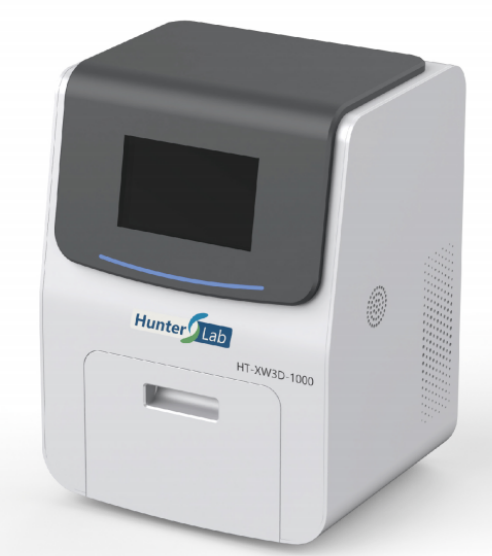
A zebrafish larva behavior analysis system with built-in temperature control improves experimental repeatability.
In larval behavior work, a small environmental shift can look like a biological result. A Zebrafish Larva Behavior Analysis System helps a laboratory treat temperature as a documented assay condition rather than a background variable. That distinction matters when locomotion, startle response, light–dark transitions, or compound effects must be compared across plates, operators, and study days.
For teams building a robust workflow, the question is not whether temperature matters. It is whether the platform makes that condition visible, stable, and reviewable throughout the run. This article explains the practical link between thermal control and repeatability without assuming that one setpoint fits every strain, age, or assay.
Why temperature belongs in the behavior-method record
Zebrafish larvae are ectothermic, so their movement and physiology respond to the surrounding water temperature. Searchable research on larval locomotion has examined temperature conditions from 22 to 30 °C, and reports that lower temperatures can coincide with lower motion activity in particular experimental settings. That does not establish a universal optimal temperature. It does show why a dedicated behavior-analysis platform should help a team hold the chosen condition steady and report it alongside the biological variables.
Temperature control is especially important when an assay is sensitive to baseline activity. A plate that equilibrates slowly, a room that changes with occupancy, or a device that is prepared differently from one session to the next can all introduce variation before analysis begins. The output may still look clean, but the baseline may no longer mean the same thing.
The repeatability problem is usually a chain of small differences
Behavioral repeatability rarely fails because of one dramatic error. More often, several modest differences accumulate: larvae wait for different lengths of time, water enters the chamber at a different temperature, one operator begins recording before equilibration, or a plate sits near a draft. No observation platform can remove every source of variation, but built-in temperature control can reduce one recurring environmental source at the point where observation occurs.
That is useful for consistency within a single day and across a multi-week screen. If the system logs or visibly confirms the setpoint and the laboratory applies the same equilibration rule each time, deviations become easier to investigate. That creates a clearer audit trail: teams can distinguish a possible treatment signal from a run-condition difference.
What built-in temperature control changes in practice
1. It turns an assumed condition into a checked condition
With a controlled behavior-analysis platform, operators can incorporate temperature verification into the pre-run checklist. The workflow becomes: prepare larvae, load the plate, allow the defined equilibration period, confirm the setpoint, then start acquisition. This is more defensible than relying on a room thermostat or an informal estimate of water temperature.
2. It supports comparable baselines
Before comparing treated and control groups, a team needs a baseline that was collected under comparable conditions. A controlled observation environment supports that goal by keeping a selected environmental variable closer to the intended protocol condition during observation. It does not replace validation; teams should still establish their own normal activity range for the developmental stage, strain, plate format, lighting program, and setpoint they use.
3. It reduces operator-dependent decisions
When temperature handling depends on individual judgment, different operators may make different choices about when a plate is ready. A system-centered workflow makes the readiness criterion more explicit. The platform becomes part of a shared operating procedure rather than an instrument used differently by each person.
Design a repeatable protocol around the system
Built-in control is most reliable when it is paired with a concise protocol. For each run, record the developmental stage, strain or line, plate format, medium, target temperature, equilibration duration, lighting sequence, recording window, and analysis settings. If a run deviates, capture the reason instead of silently treating it as interchangeable with the others.
- Define the target condition. Set a study-specific temperature based on the validated assay protocol, not a generic recommendation.
- Set an equilibration rule. Specify when the clock starts and what evidence indicates that the plate is ready.
- Use the same acquisition sequence. Keep plate loading, habituation, stimuli, and recording order consistent.
- Review controls first. Compare control-group activity across runs before interpreting compound-associated changes.
- Document exceptions. If maintenance, transfer delay, or a temperature excursion occurs, tag the run for review.
This makes the platform’s role clear: it is a controlled observation environment within a broader quality system. In our experience with live-imaging workflows, the most useful improvement is often not a more elaborate metric but fewer uncontrolled conditions before the metric is collected.
How to evaluate consistency without overclaiming
Teams evaluating a behavior-analysis system should ask operational questions. Can the chosen temperature be set and checked during acquisition? Is the plate environment managed consistently from one run to the next? Can operators record the condition in the assay record? Can the same protocol be applied across projects without relying on undocumented habits?
These questions are more informative than a claim that temperature control automatically guarantees repeatability. Biological variability remains real. Larval age, genetics, handling, light exposure, feeding history, and treatment preparation can all affect behavior. The value of an integrated temperature-controlled system is that it narrows one avoidable source of uncertainty, so remaining variation is easier to characterize.
A practical checklist before accepting a run
- Was the target temperature defined in the protocol and confirmed before recording?
- Did every plate receive the same acclimation and acquisition sequence?
- Were developmental stage and medium recorded with the behavior data?
- Did control-group activity fall within the laboratory’s expected range?
- Were any departures from the planned temperature control procedure flagged for review?
Once those answers are documented, the system contributes to a stronger interpretation of behavioral data. Consistency becomes something the laboratory can inspect, discuss, and improve—not simply something it hopes occurred.
Conclusion
A temperature-controlled behavior-analysis system improves experimental repeatability by making a behavior-relevant environmental condition more controllable and more visible in the workflow. Combine temperature control with defined equilibration, consistent handling, and run-level documentation. That combination will not eliminate biological variation, but it gives researchers a more credible foundation for comparing observations across plates, people, and time.








