
 EN
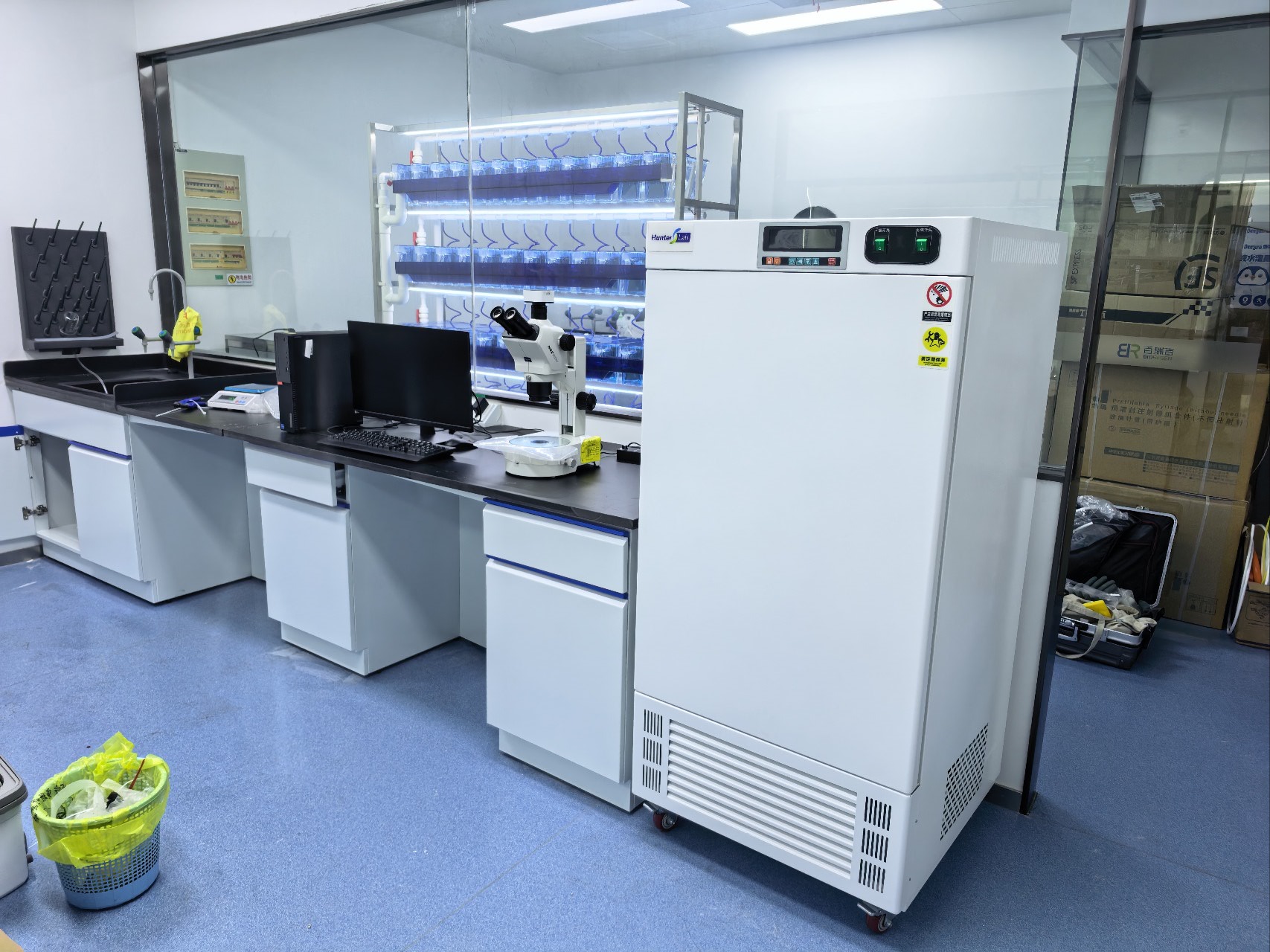
A Zebrafish Incubator with Independent Shelves Improves Embryo Throughput.
When a zebrafish facility begins to run several clutches, treatment groups, or time-sensitive collections at once, the bottleneck is rarely just bench space. It is the interval between collection, placement, checking, and handoff. A Zebrafish Incubator with independent shelves can make that interval easier to manage by giving teams defined locations for defined cohorts. The benefit is not a promise of faster biology; it is a clearer operating system for the work around the embryos.
For shared facilities, the question is practical: can the team place, identify, inspect, and retrieve embryos without turning one chamber into a mixed, hard-to-audit queue? Independent shelves create physical boundaries that support that discipline. They also give staff a sensible way to assess temperature uniformity across a real, loaded workflow rather than treating one display value as the entire answer.
Why embryo throughput depends on organization as much as capacity
Embryo throughput is often described as a number of embryos or plates per day. In day-to-day facility work, it is better understood as the number of cohorts that can move through a documented process without losing their identity, timing, or handling plan. A chamber may have usable volume, yet still create delays when dishes are stacked without a location rule or when one user must move another user’s samples to reach a requested clutch.
Independent shelves give each cohort, condition, or handoff window a visible home. A facility might allocate one shelf by collection block, one by developmental time point, or one by investigator. The correct scheme depends on the facility’s SOP, but the principle holds: separate positions reduce unnecessary handling and make status checks more deliberate.
- Faster visual checks: staff can inspect a defined shelf rather than search through a mixed stack.
- Cleaner traceability: shelf labels can mirror plate maps, collection logs, and time stamps.
- Less disruption: retrieving one cohort need not disturb every other cohort in the chamber.
- Easier escalation: a shelf-specific observation can be recorded and followed up without generalizing it to the entire incubator.
Temperature uniformity is a workflow requirement
Temperature deserves attention because zebrafish developmental timing is temperature-dependent. ZFIN describes 28.5°C as an optimal incubation temperature and notes that changing incubation temperature changes developmental rate. That does not make one setpoint appropriate for every protocol. It does mean a Zebrafish Incubator should be evaluated as part of the lab’s documented conditions, including the actual shelf positions used during routine loading.
The useful question is not simply, “Does the display reach the target?” Ask instead: “What do representative shelf locations experience when the chamber is loaded as we normally load it?” This distinction matters because door openings, plate arrangement, room conditions, and repeated access can affect the practical environment around the embryos. Independent shelves make this review more manageable because the team can compare named positions rather than relying on a vague top-versus-bottom impression.
A sensible shelf-mapping check
- Define the typical load: the plate or dish types, fill level, and number of cohorts used during a normal week.
- Place validated monitoring devices at representative shelf positions according to the facility’s calibration practices.
- Run the chamber under routine conditions, including realistic access events where appropriate.
- Record location, time, displayed value, and observed value in the same log used for embryo handling.
- Review the result against the protocol’s acceptance criteria before assigning critical work to every shelf.
This is the kind of detail where the setup matters a lot. A lightly loaded chamber, a fully loaded chamber, and a chamber opened frequently by several users may not represent the same operating condition. A useful incubator workflow leaves room for the facility to define and verify its own acceptance criteria.
Independent shelves support more reliable cohort separation
Temperature control and sample control are connected, but they are not the same thing. A team can have stable conditions and still lose time through preventable mix-ups. With independent shelves, the physical layout can reinforce the plan already written in the logbook: one shelf for a morning collection, another for a treatment group awaiting a specific observation window, and another for material that is ready for transfer.
That separation is especially helpful when several people share responsibility. A graduate researcher may know a clutch by sight; a technician covering the next shift needs an unambiguous shelf, label, and time record. The shelf becomes a small control point in the chain of custody. It does not replace labeling or SOPs, but it makes both easier to execute consistently.
Many facilities find that simple visual rules work well: shelf IDs, a defined left-to-right plate orientation, and a stated rule for empty positions. If a shelf is reserved for a time point, do not use it as overflow simply because it is temporarily empty. That small discipline protects the clarity that the separate layout was meant to create.
How to plan embryo throughput without overloading the chamber
The aim is not to fill every shelf at every moment. The aim is to make embryo throughput predictable. Start by mapping the daily flow: collection times, initial checks, intervention windows, imaging or assay handoffs, and expected removals. Then decide which steps need dedicated shelf space and which can share a location without confusing the record.
A practical planning table can include the cohort name, collection time, protocol temperature, shelf ID, expected check time, operator, and next destination. That information is already familiar to well-run zebrafish labs; the value of a shelf-based system is that the physical arrangement matches the documentation.
| Planning question | Why it matters |
|---|---|
| Which cohorts require separate handling windows? | Prevents unnecessary movement and mixed priorities. |
| Which shelf positions have been checked under normal loading? | Turns temperature uniformity into a documented operational decision. |
| Who may access each shelf during a shift? | Reduces avoidable door openings and unrecorded transfers. |
| What triggers a corrective action? | Links observations to a repeatable response rather than an improvised fix. |
What to evaluate when choosing a Zebrafish Incubator
When throughput is the binding constraint, a Zebrafish Incubator should be reviewed as a workflow component, not only as a box with a temperature setting. Begin with the shelves: are they independently usable, easy to identify, and compatible with the plates or dishes your facility actually uses? Then ask how the chamber supports your verification plan for temperature uniformity.
- Can shelf positions be labeled and incorporated into your SOP?
- Can normal loading patterns be reproduced during qualification checks?
- Is access practical enough that staff will not routinely rearrange other cohorts?
- Can the facility document deviations, observations, and corrective actions in a consistent way?
- Does the supplier understand zebrafish-focused workflows and the need to align equipment use with an experimental protocol?
Hunter Lab focuses on zebrafish instruments and applications. For a facility planning new incubation capacity, a technical discussion before purchase can help translate the above questions into a usable layout and verification plan. The final choice should still be based on the lab’s protocol, load pattern, space, and documented requirements.
Turn shelf separation into a repeatable facility practice
Independent shelves are most valuable when they support a routine. Define what each shelf means, record where each cohort belongs, verify conditions under realistic loading, and review whether the layout still matches the facility’s daily traffic. If your priority is dependable embryo throughput, the most important factor to evaluate first is not maximum occupancy alone. It is whether the chamber layout helps your team keep samples identifiable, accessible, and managed under the conditions your protocol requires.
A well-chosen Zebrafish Incubator will not eliminate the need for careful embryology, labeling, or temperature verification. It can, however, give those practices a more orderly physical structure. For busy multi-user labs, that is often the difference between adding capacity on paper and creating a workflow that remains workable when the day gets crowded.








